
How ECU Cloning Actually Works: EEPROM, Flash Memory, and Immobilizer Data Explained
The question behind every replacement module
Sooner or later, a module dies. An engine computer cooks itself, a mechatronic unit fails, an EIS stops recognizing keys. The part itself is often findable — salvage yards and online marketplaces are full of used modules, and dealers can order new ones. Yet anyone who has tried the obvious move knows how it ends: the used ECU plugs in, everything lights up, the engine cranks, and the car flatly refuses to start.
The reason is identity. A modern control module is not a generic part like an alternator. It is a small computer that has spent its whole life married to one specific vehicle, and it carries that marriage around in memory. Cloning is the bench discipline of moving that identity — completely and exactly — from a failing module into a healthy one, so the replacement wakes up believing it has always lived in your car.
This article is the deep version of how that works: what is actually stored where, what a clone transfers, why plug-and-play fails, and where the honest limits are. It is the purest expression of what a mail-in bench workshop does all day.
The memory map of a modern module
The scale of vehicle electronics surprises people who have not looked recently. SAE International, the engineering society that writes many of the underlying standards, has documented that modern vehicles run software on the order of 100 million lines of code, distributed across dozens of electronic control units — with luxury platforms carrying well over 100 modules on their networks, a figure echoed in MotorTrend coverage of vehicle electrical architectures. Each of those modules follows roughly the same internal pattern, and understanding that pattern is understanding cloning.
Microcontroller internal flash — the program and the calibration. The module's processor contains flash memory holding two things: the program code (the firmware — the logic of how an engine computer manages an engine) and the calibration (the thousands of tables and constants tuned for a specific engine, transmission, and market). Two modules with the same part number generally share the same program; their calibrations may differ by application.
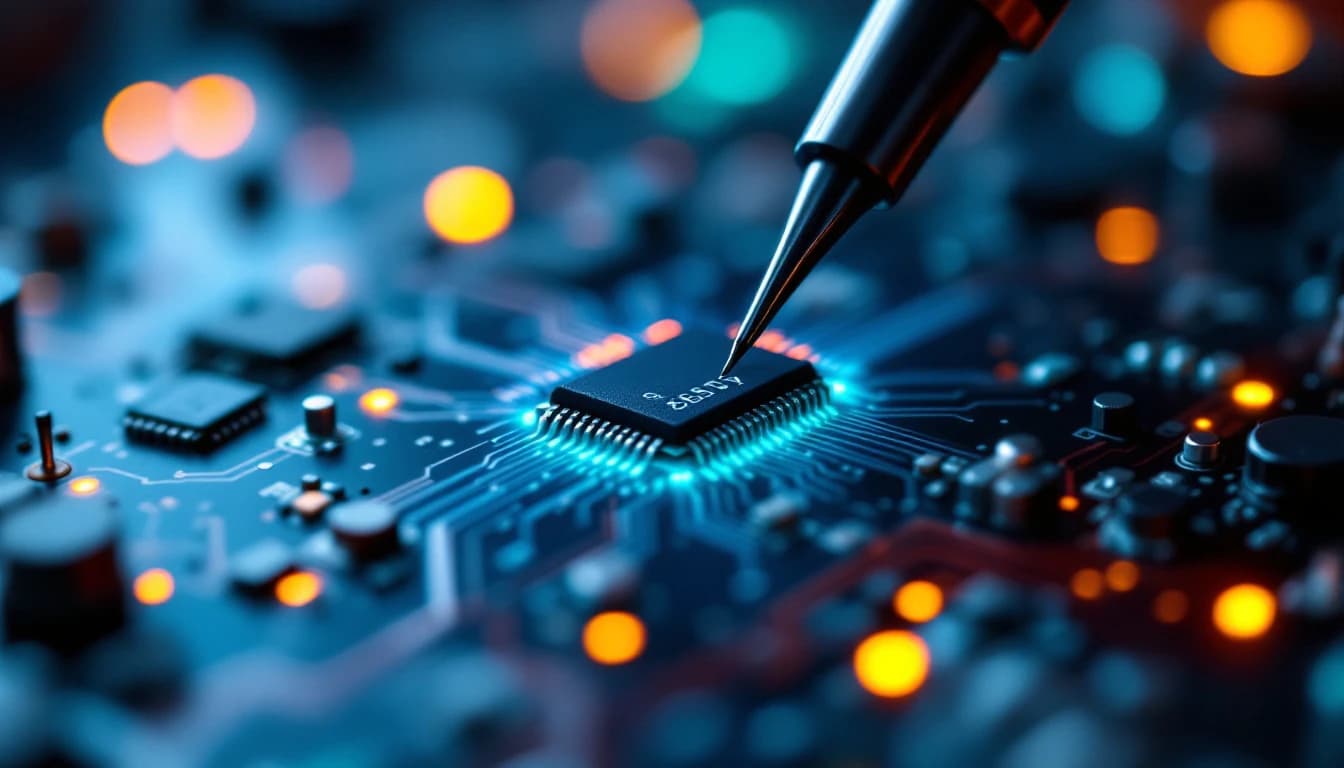
EEPROM — the identity. Separately, either as a dedicated chip on the board or as emulated storage inside the microcontroller, lives the EEPROM: small, non-volatile, and rewritten throughout the module's life. This is where the vehicle-specific soul resides:
- Immobilizer security data — the secret values, key registrations, and synchronization data that let this module participate in the anti-theft handshake with the rest of the car
- The VIN — written into the module and cross-checked by other modules and diagnostic systems
- Adaptations and learned values — throttle adaptations, transmission clutch-fill points, fuel trims, component coding
- Injector coding — on many diesel and direct-injection platforms, per-cylinder correction codes for the exact injectors installed
- Counters and history — odometer-related values in some modules, fault memory, operating-time counters
Here is the sentence that explains nearly every failed used-module swap in the world: the flash makes the module a working computer; the EEPROM makes it belong to one particular car. A salvage-yard module has perfectly good flash and someone else's EEPROM.
What the tools conceptually do
Skipping brand names and staying conceptual, bench access to those memories happens a few ways, in rough order of preference:
Diagnostic-connector service modes. Some modules can be read and written through their normal communication interface using manufacturer service or programming sessions. Least invasive, but usually the most restricted — security data is often exactly what these modes refuse to export.
Bench harness mode. The module comes out of the car and is wired on the bench to power, ground, and communication lines. Many controllers expose far deeper access on the bench — including boot or service modes where the microcontroller can be placed in a state that permits full reads of flash and EEPROM — than they ever would in the vehicle. This is the workhorse of professional cloning, and it is why the work is inherently a mail-in discipline: the module has to be on a bench anyway.
In-circuit and chip-level access. When a module offers no cooperative mode, the board itself is the interface — reading a discrete EEPROM chip in place, or in the last resort removing it from the board, reading it in an adapter, and reinstalling it. Slower and more delicate, but decisive: memory that exists can ultimately be read.
Bench work also has a safety property worth naming: a regulated bench power supply removes the classic in-vehicle failure mode where a voltage sag mid-write corrupts a module. When the write matters — and in cloning, every write matters — the bench is simply the more controlled operating room.
What a clone transfers — and what a virgin or used module lacks
A complete clone moves the original module's flash contents (program and calibration as appropriate for the platform) and its EEPROM contents (immobilizer data, VIN, adaptations, injector coding, counters) into a healthy donor of the same type. Done properly, the vehicle cannot tell the difference — the new hardware presents the old identity, the immobilizer handshake succeeds, and every adaptation the car spent years learning is still there.
Compare the three states a replacement module can arrive in:
A cloned module carries your immobilizer data, your VIN, your adaptations. It starts the engine on the first try and drives normally, because from the network's point of view nothing changed except the silicon got healthier.
A virgin (new) module is blank identity-wise. It has valid firmware but no marriage to any car. It must be programmed and then married to your vehicle's immobilizer through manufacturer processes — possible, but a dealer-tooling-and-online-account affair on modern platforms, and the moment key security is involved you are in appointment territory.
A used module is the worst of the three: fully married to the wrong car. It will not pass your vehicle's immobilizer handshake, its adaptations describe someone else's worn engine, its VIN contradicts every other module on the bus, and its injector coding may be flatly wrong for your hardware. This is covered at length in why plug-and-play used ECU swaps fail, and the related problem of modules that lock themselves to a VIN is unpacked in what a VIN-locked module means.
Why used ECUs crank but never start
It helps to see the failure from the car's perspective. Vehicle anti-theft is a committee: the immobilizer or security module, the engine computer, and often a body controller or ignition-switch module all hold matching secret data and challenge each other at every start. The National Insurance Crime Bureau reported roughly one million U.S. vehicle thefts in a recent year — immobilizer architecture is one of the industry's principal defenses, and it is intentionally unforgiving.
Drop a used engine computer into that committee and the handshake fails on the first exchange: the newcomer holds the donor car's secrets, not yours. The security system does exactly what it was built to do against a foreign module — it withholds injection and spark. The engine spins merrily and never fires. No amount of key-cycling changes the outcome, because nothing is broken. The system is working.
Cloning sidesteps the entire fight. Because the replacement module arrives carrying your original security data, the committee never learns that the hardware changed. There is no re-marriage procedure, no security relearn, no dealer session — the handshake that succeeded yesterday succeeds today.
"The tow-ins that make me shake my head are the ones where somebody bought three different used computers off the internet trying to get lucky. Immobilizers do not do lucky. Clone the dead module's data into one good donor and the car starts like nothing ever happened — I have watched that exact story play out on domestics, Germans, and Japanese cars alike for fifteen years." — Independent automotive electronics technician, 15+ years of bench module repair (anonymized)
Cloning vs dealer new-module programming
Both paths can end with a running car. They get there very differently:
| Bench cloning (mail-in) | Dealer new-module programming | |
|---|---|---|
| Replacement hardware | Same-type donor module (used or new) | New module at retail parts pricing |
| Identity and immobilizer | Your original data transferred — no relearn | New module must be married to the car with factory tooling |
| Adaptations and injector coding | Preserved from your original module | Start over from defaults; some values re-entered or relearned |
| Vehicle location | Stays home — only the module ships | Vehicle at the dealership, often towed if it will not start |
| Typical cost shape | One flat bench service fee, plus your donor module and customer-paid return shipping from $14.95 | Parts commonly well over $1,000 before programming labor, per repair-cost data tracked by Kelley Blue Book |
| Coverage | Broad on established platforms; honest limits on newest encrypted-seed designs | Effectively universal, at dealer pricing |
| Fits older vehicles' economics | Yes — the point | Often exceeds the repair budget of a 12-year-old car |
That last row matters more every year. Consumer Reports has covered the steady climb of average U.S. vehicle age to roughly twelve and a half years — an enormous fleet of out-of-warranty cars whose owners need module-level repairs priced like repairs, not like new-car options. Cost benchmarks from Kelley Blue Book put dealer engine-computer replacement commonly well over $1,000 before diagnosis, which for a high-mileage vehicle can be the difference between fixing and scrapping. Cloning exists in that gap.
When cloning is NOT possible — the honest limits
A bench shop earns trust at the edges, so here are the real ones:
Destroyed memory cannot be read. Cloning presumes the original module's data still exists. Water intrusion that corroded the board before power was cut, severe overvoltage events, physically cracked silicon, fire — sometimes the EEPROM or flash is unrecoverable, partially or entirely. A failing-but-alive module is an excellent cloning candidate; a truly dead memory chip may be a data-recovery gamble or a dead end, and we will say which after evaluation rather than promising miracles. Uncertain cases can start with an hourly bench evaluation instead of a service fee.
Encrypted-seed and server-anchored platforms resist bench access. The newest generation of vehicle architectures increasingly ties module security to manufacturer server calculations and hardware-anchored cryptography — a direction NHTSA cybersecurity best-practice guidance actively encourages automakers to take. On those platforms, a full clone may be partially or wholly impossible regardless of skill or tooling. This is why every service we run is scoped to verified platforms and why fitment is confirmed from your module's label and VIN before you ship — coverage claims are made per-module, never by hand-waving.
Mismatched donors make bad clones. A donor must genuinely match — same module family, compatible hardware revision. Part of the bench job is verifying the donor is a legitimate target before any writing happens, which is also why we ask for label photos of both units up front.
Cloning fixes identity, not mechanics. A clone resurrects a module's role in the car. It does not repair wiring damage, failed sensors, or the mechanical problem that may have killed the original module in the first place.
Cloning across the catalog — the same idea, six accents
Every platform dresses the concept differently, which is exactly why per-module services exist:
- GM E38 / E67 / E92: the GM ECM clone moves the VIN, security link, and calibration into a donor ECM so a failed truck or SUV computer is replaced without a dealer security-relearn session.
- Ford PCM: the Ford PCM clone and VIN transfer carries the PATS immobilizer marriage and VIN across, so the donor computer passes the anti-theft handshake immediately. Chrysler-family GPEC2 controllers get the same treatment in their own service.
- Mercedes EIS: on Mercedes, the ignition switch itself is a computer holding the key data — Mercedes EIS cloning transfers that identity into a healthy EIS so your existing keys keep working.
- BMW DME: BMW gates starting on the ISN, a secret shared between the DME and the immobilizer chain — the BMW DME ISN read and match reads it from the failed unit and aligns the replacement.
- JLR CPLA: Jaguar Land Rover's CPLA-family engine computers are cloned complete with their security marriage in the JLR CPLA ECM clone.
- VW / Audi DSG: even the transmission carries identity — the DSG mechatronic clone moves immobilizer participation and adaptation data into a replacement mechatronic unit so the gearbox wakes up already married to the car.
Different boards, different memories, different protocols — one identical idea: read the identity out of the original, write it into the donor, return a module the car cannot distinguish from the one it grew up with.
Proof of ownership and the legitimate-repair frame
Cloning handles immobilizer secrets, so the line gets drawn brightly: proof of ownership is required for all key, immobilizer, and security-related work — title, registration, or equivalent documentation matching the vehicle — before anything is performed. The same data that lets a legitimate owner repair a dead module could, misused, defeat the protections that keep the NICB's theft statistics from being worse, and a professional bench treats that responsibility as part of the job. The professional locksmith association ALOA, whose certifications our technicians carry, writes ownership verification into its code of ethics for precisely this reason.
Everything described here is repair: restoring a vehicle you own, with modules from that vehicle, to the operating state it already had. Odometer-bearing memory is handled within that same frame — values are preserved truthfully through cloning, never altered to misrepresent mileage, which federal law prohibits.
The mail-in workflow
- Verify first. Text us your VIN, the module type, and clear photos of the module labels — the failing original and the donor if you have one. We confirm the platform is supported and the donor is compatible before you ship.
- Provide proof of ownership for any immobilizer-related work.
- Ship both modules to PO Box 120241, Arlington TX 76012 if you ship USPS — or 1168 W Pioneer Parkway, Arlington TX 76013 if you ship UPS or FedEx (UPS and FedEx cannot deliver to a PO Box) — anti-static bags, padded box, tracking.
- Bench read and archive. The original is powered on a regulated supply and its memories are read and archived before anything else happens. Your data exists in two safe places before any write.
- Clone and verify. The identity moves into the donor, and the donor is verified on the bench.
- Return with tracking via the customer-paid return-shipping tier you chose at checkout, from $14.95 standard with faster options.
- Install and start. No relearn procedure, no dealer visit — the handshake that worked before works now.
Frequently asked questions
How does ECU cloning actually work? Cloning reads two kinds of memory out of your original module — the program and calibration held in microcontroller flash, and the vehicle-specific identity held in EEPROM — and writes them into a healthy module of the same type. Because the immobilizer data, VIN, and adaptations all transfer, the replacement passes the anti-theft handshake and runs immediately, with no marriage procedure.
What exactly is stored in the EEPROM? The EEPROM holds the module's identity: immobilizer security values and key registrations, the VIN, learned adaptations, injector coding on many platforms, and various counters and history. It is the reason two physically identical modules are not interchangeable — the flash makes a module a computer, the EEPROM makes it belong to one specific car.
Why will a used ECU from a salvage yard not start my car? Because it is still married to the donor vehicle — its EEPROM carries the donor's immobilizer secrets, so your car's anti-theft system rejects it exactly as designed and withholds injection and spark. The engine cranks but never fires. Cloning your original module's data into that same used unit is what turns it into a working replacement.
Do I lose my adaptations, injector coding, or mileage data in a clone? No — preserving them is the point of cloning. Adaptations, injector coding, and counter data transfer with the rest of the EEPROM contents, so the vehicle keeps every value it spent years learning. Odometer-bearing values are preserved truthfully and are never altered to misrepresent mileage, which federal law prohibits.
Can every module be cloned? No, and any shop claiming otherwise should worry you. Cloning requires readable memory and a bench-accessible platform: physically destroyed EEPROM or flash may be unrecoverable, and the newest encrypted-seed, server-anchored architectures can block full bench access entirely. That is why fitment is verified from your VIN and module label before you ship anything.
Is cloning legal? Yes — cloning your own vehicle's data into a replacement module, with documented proof of ownership, is ordinary repair work. The bright lines are ownership and honesty: we require title or registration matching the vehicle for all immobilizer-related work, and mileage data is never manipulated. Repairing what you own is exactly what the process exists for.
Do I need to send the vehicle or visit the workshop? No — the vehicle never moves, which is the entire advantage of bench cloning. You ship the failing module and the donor to the workshop, the transfer happens on a regulated bench, and both the finished module and your archived data protection travel back to you with tracking via the return-shipping tier you chose at checkout.
The bottom line
ECU cloning is not a trick — it is a precise consequence of how modules are built. Program code and calibration live in flash; the identity that marries a module to one specific vehicle lives in EEPROM. Read both from the failing unit, write both into a healthy donor, and the car meets a replacement it cannot distinguish from the original: immobilizer handshake intact, adaptations intact, no relearn, no dealer session, no tow.
That is why cloning beats a bare used module every time on an immobilized car, and why it routinely beats dealer new-module programming on cost for the aging fleet that needs it most. The honest limits are real — destroyed memory, encrypted-seed platforms, mismatched donors — and the workflow respects them by verifying your module and VIN before anything ships. Proof of ownership is required for all immobilizer-related work, always.
If a module in your car is failing, start at the matching service page — from the GM ECM clone to Mercedes EIS cloning to the DSG mechatronic clone — or text us your VIN and module label photos and a technician will tell you, before you ship, whether your problem is a bench job. Most of the time, it is.
Ship your module today
Flat-rate pricing, 24-hour bench turnaround, return speed your choice at checkout. Most jobs back on your bench within a week.
More from the Lab
Why a Used ECU From eBay or the Junkyard Will Not Start Your Car — and How Bench Cloning Makes It Truly Plug-and-Play
11 min · July 9, 2026
VW / Audi P1570 Explained: Immobilizer Blocked ECU, Used-ECU Swaps, and the Two Real Fixes
15 min · July 26, 2026
Car Module Repair vs Replacement vs Reprogramming: How to Decide Before You Spend
14 min · July 26, 2026
Can a Mail-In Service Really Program a Module to My VIN Without the Dealer?
13 min · July 26, 2026