
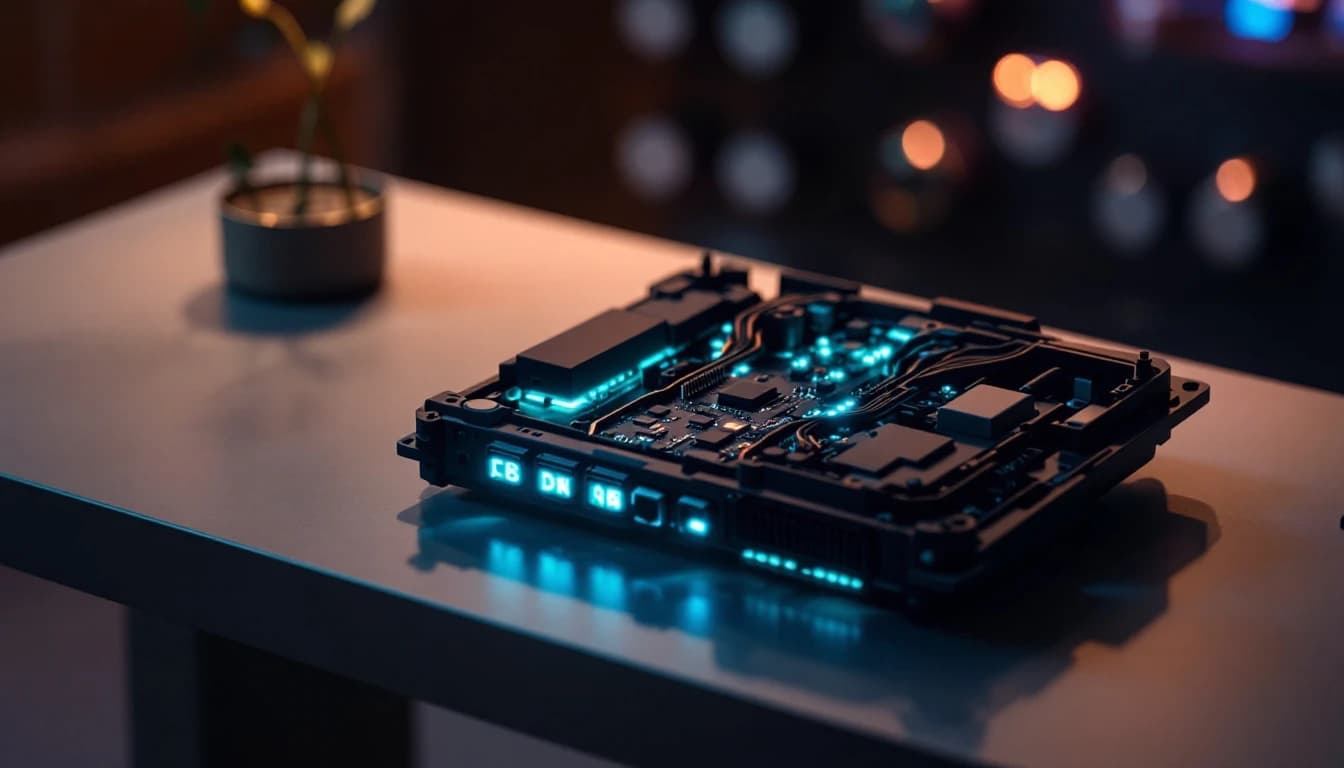
Lexus Denso ECU Clone: Used 89661 ECM Plug-and-Play (2026)
Who this is for
You are reading this because one of these is true:
- Your Lexus engine ECU (ECM) failed and you sourced a used replacement, but the used unit cranks the engine without ever letting it run.
- You bought a used Denso 89661 ECM on eBay or pulled one from a salvage car, installed it, and the car will not start even though the engine turns over.
- A shop or dealer told you the replacement ECM has to be programmed and married to the car, and you want a faster, cheaper, plug-and-play path that keeps your existing keys.
- You want your current keys to keep working with no relearn at the dealer.
If your Lexus uses a Denso 89661-series engine ECU and the only problem after the swap is a no-start with the engine cranking, our Lexus Denso ECU clone service was built for exactly this. It covers ES, IS, GS, RX, and LS, in both gas and hybrid configurations, as long as a part-number-matched donor is used.
Why a used Lexus ECM cranks but will not run
Lexus engine ECUs are made by Denso and carry part numbers in the 89661 family. Unlike a generic engine controller, these units store vehicle-specific data, including the VIN and immobilizer key data, inside the ECM itself.
Here is what happens when you install a used donor 89661 from another car:
- You turn the key. The transponder or smart-key system reads your key and asks the car's security to authorize start.
- The donor ECM holds a different car's stored VIN and immobilizer data.
- Your key does not match the data inside the donor ECM.
- The ECM refuses to allow fuel and the engine never catches, even though the starter cranks normally.
The starter cranks because cranking is a separate circuit from the fuel-and-run authorization. That mismatch between cranking and running is exactly what confuses people: the car turns over strongly and sounds healthy but never starts. The fix is not another ECM, and it is not a tune. The fix is to make the donor hold your data instead of the previous car's data, which is what cloning does.
This vehicle-specific data is part of why Lexus and Toyota anti-theft electronics are so effective. Engine immobilizers were rolled out broadly across the industry from the late 1990s, and the Insurance Institute for Highway Safety has documented sharp reductions in theft-loss frequency on immobilizer-equipped vehicles, including a 64% drop in whole-vehicle theft once protection is present. The National Highway Traffic Safety Administration highlights engine-integrated authentication as one of the strongest anti-theft strategies because it cannot be hot-wired around, and the FBI's national crime data tracks the hundreds of thousands of motor-vehicle thefts that drove the technology's adoption. The same robustness that deters thieves is what blocks a plain used-ECM swap.
What the clone does, and why it is plug-and-play
Cloning copies the data off your original Denso ECM and writes it onto the donor ECM. After the clone, the donor behaves as if it were always your car's ECM: same VIN data, same immobilizer key data, so your existing keys authorize start with no further programming.
Because the clone makes the donor recognize your current keys, there is:
- No dealer relearn or immobilizer registration.
- No new keys to cut or program.
- No tuning or adaptation drive, assuming a part-number-matched donor.
The result is a unit you bolt in, turn your existing key, and the car starts. That is what plug-and-play means here.
The part number must match: the 89661-series
Denso Lexus ECMs carry 89661-series part numbers, and the characters after 89661 identify the specific calibration: engine family, transmission, market, and model year. A part-number-matched donor is required for a clean clone, ideally identical to your original.
Here is why the match matters:
- The engine and transmission calibration must match your car, or the engine will run poorly or set codes even after the immobilizer data is cloned.
- The hardware revision must be compatible so the data writes correctly to the donor's memory.
- A matched part number means the clone is genuinely plug-and-play, with no surprises.
If you are sourcing a donor yourself, photograph the label on your original ECM, read the full 89661 part number, and buy a donor with the same number. If you are unsure, send us the number before you buy and we will confirm compatibility.
Models and configurations we cover
The Denso 89661 clone applies across the Lexus lineup, gas and hybrid, where the engine ECU is a 89661-series Denso unit storing VIN and immobilizer data:
| Model line | Configurations |
|---|---|
| ES | Gas and hybrid |
| IS | Gas |
| GS | Gas and hybrid |
| RX | Gas and hybrid |
| LS | Gas and hybrid |
Year and trim boundaries vary. The deciding factor is the 89661 Denso ECM with stored vehicle data, plus a part-number-matched donor. If you are unsure where your car falls, the services overview lists the modules we handle and you can send us your VIN and ECM part number.
Symptoms and failure modes
The symptom set is narrow and consistent.
Cranks but will not start after a used-ECM swap
This is the signature symptom. The starter spins the engine at normal speed but it never fires. Because cranking works, people chase fuel pumps, relays, and sensors before realizing the block is the immobilizer data mismatch, not a hardware fault.
Security or immobilizer indicator behavior
After key-on, a security or immobilizer indicator may blink or stay lit, signaling that the key was not authorized by the ECM. On a healthy start it illuminates briefly and goes out.
No run despite good spark and fuel pressure
The ECM withholds the run condition because the immobilizer data does not match your key. Spark and fuel pressure can be present while the engine still refuses to start.
Original ECM symptoms that lead to a swap
People usually reach a swap because the original ECM failed: no communication, internal driver failure, water intrusion, or capacitor and solder issues. When the original board is genuinely dead but its stored data is still readable, a donor plus a clone is the practical fix.
The clone process, step by step
Cloning is done on the bench, off the car. We copy your original ECM's data onto the donor so the donor authorizes your existing keys. Because this touches immobilizer data, it is precisely the kind of security-sensitive work the National Automotive Service Task Force governs through its Secure Data Release Model, and we verify ownership on every clone for that reason.
- Receive both units. You ship your original Denso ECM (even a failed one usually still has readable data) and your part-number-matched donor ECM.
- Read the original. We read the VIN and immobilizer data from your original ECM on the bench.
- Verify the donor. We confirm the donor's 89661 part number and hardware revision match, then read its current state.
- Write the clone. We write your data onto the donor so it now authorizes your existing keys.
- Verify. We confirm the data wrote correctly and the donor is configured to recognize your keys.
- Return ship. The donor goes back to you ready to install. You plug it in, turn your existing key, and the car starts.
Because the clone makes the donor recognize your current keys, there is no relearn and no dealer programming. The how it works page walks through the full mail-in flow including labels and timing.
Turnaround and shipping
We run a 24-hour bench turnaround once both units arrive. Mail-in means you pay first, ship both ECMs to our Arlington, Texas bench, we clone within a day of receipt, and return shipping is a flat-rate tier you choose at checkout (from $24.95). The address for units is:
Auto Module Lab, PO Box 120241, Arlington TX 76012 if you ship USPS — or 1009 Oakwood Ln # 120241, Arlington TX 76012 if you ship UPS or FedEx (UPS and FedEx cannot deliver to a PO Box).
We serve customers nationwide; the bench is in Texas but the mailbox is open to all fifty states.
What to ship
To get a clean, plug-and-play result, send the following:
- Your original Denso ECM, even if it is dead. The stored VIN and immobilizer data usually survive a board failure, and your original is the source of truth for your key data.
- A part-number-matched donor ECM (89661-series matching your original).
- A note with your name, return address, phone, and the VIN.
You do not need to send keys. The clone copies the data your existing keys already use, so your keys keep working untouched. If your original ECM is so badly damaged that the data is unreadable, the procedure changes and we will tell you before charging you.
What this service does NOT fix
Honesty saves everyone time, so here is the boundary clearly:
- It does not fix mechanical no-starts. If the engine cranks but will not start because of compression loss, a failed crank or cam sensor, a dead fuel pump, or timing problems, cloning the immobilizer data will not help. Confirm the no-start is immobilizer-data related before shipping.
- It is not a performance tune. We are not modifying fuel, timing, or rev limits. This is a vehicle-data clone only.
- It does not defeat or bypass emissions equipment. We do not delete catalysts, EGR, air-injection, or readiness monitors, and we do not disable any emissions function. The clone preserves your factory calibration. Tampering with federally required emissions controls is illegal under the Clean Air Act, and per the U.S. Environmental Protection Agency, defeat-device enforcement drew $55.5 million in civil penalties across 172 cases in FY2020-2023. We will not do it.
- It does not add new keys. The clone keeps your current keys working; it does not create extras. Additional keys are a separate key service.
- It does not work with a mismatched donor. If the donor's 89661 part number does not match, the engine may run poorly or set codes even after a clean data clone. Match the part number.
- It does not repair a physically dead donor. The donor must be a functioning ECM. We clone onto it; we do not resurrect a bad board.
Price versus the dealer
Here is the honest cost comparison for a typical immobilizer-data no-start after a used-ECM swap.
| Path | Typical cost | Keeps your keys? | Time |
|---|---|---|---|
| Auto Module Lab clone (mail-in) | $250 flat | Yes | 24-hour bench + shipping |
| Dealer: new ECM + programming + relearn | $800-1,500+ | Sometimes | Multiple days, appointment |
| Tow + dealer diagnosis first | Add $100-250 tow | n/a | Adds days |
A new factory Lexus ECM alone frequently runs well into the hundreds before any programming labor, and dealer programming plus an immobilizer relearn adds shop time on top. Per AAA's Your Driving Costs study, maintenance and repair already account for thousands of dollars a year of ownership cost, so a four-figure ECM-plus-relearn bill lands hard on top of that baseline. A $250 clone that keeps your existing keys and arrives plug-and-play is usually the lowest-friction outcome for a car that is otherwise sound.
What the bench sees
"The number-one mistake we see is people buying a second used 89661 when the first one cranked but wouldn't run. The donor was never the problem — the immobilizer data inside it belongs to another VIN. Clone your original's data onto a part-matched donor and your existing keys just work, no dealer relearn."
— Master automotive locksmith, 13+ years cloning Denso ECMs
Frequently asked questions
Will my existing keys still work after the clone?
Yes. That is the entire point. We copy your original ECM's VIN and immobilizer data onto the donor, so the donor authorizes the exact keys you already carry. No relearn, no new keys.
Do I have to go to a Lexus dealer?
No. The clone is done on our bench, off the car. When you install the donor, it already recognizes your keys, so there is no dealer relearn and no programming appointment.
My original ECM is completely dead. Can you still clone it?
Usually yes. The stored VIN and immobilizer data commonly survive the failures that kill the rest of the board. Send it in. If the data turns out to be unreadable, we will tell you before charging and discuss alternatives.
How do I find the 89661 part number?
Look for the printed label on your ECM. The part number is in the 89661 family followed by additional characters. Photograph it and match your donor to it. If unsure, send us the number and we will confirm.
Does this work on hybrid Lexus models?
Yes, where the engine ECU is a Denso 89661 unit storing VIN and immobilizer data and the donor part number matches. Send your VIN and ECM part number and we will confirm.
Will this clear a check-engine light or fix rough running?
Only if those symptoms were caused by a mismatched-calibration donor. With a part-number-matched donor, persistent rough running points to a mechanical or sensor issue separate from the clone.
Is cloning legal?
Yes. Cloning your own ECM data onto a part-matched replacement for your own vehicle is a standard module-programming repair. We verify ownership, and we do not perform emissions defeats or anything that bypasses federal safety or emissions requirements.
Ready to fix it
If your Lexus cranks but will not start after a used Denso 89661 ECM swap, a clone is almost certainly your fastest and cheapest path back on the road. Order the Lexus Denso ECU clone, ship us your original plus a part-number-matched donor, and we will return a plug-and-play unit within 24 hours of receipt, shipped back via the flat-rate return tier you chose at checkout (from $24.95). Questions about your specific 89661 part number or model? Reach out before you buy a donor and we will confirm the match. You can also read more about who runs the bench on the Adrian Torres page.
Ship your module today
Flat-rate pricing, 24-hour bench turnaround, return speed your choice at checkout. Most jobs back on your bench within a week.
More from the Lab
Toyota & Lexus ECU Immobilizer Reset: Adding New Keys to Older Turn-Key Models Without a Dealer ECM
13 min · July 13, 2026
Toyota Lexus Denso ECU IMMO Off for Swaps & Builds (2026)
12 min · June 18, 2026
Toyota and Lexus All Keys Lost: What Push-to-Start Smart Key Recovery Really Costs (Mail-In Bench Guide)
12 min · July 20, 2026
Toyota & Lexus Won't Start? Immobilizer, Smart Key, and Denso ECU Options
12 min · July 13, 2026