
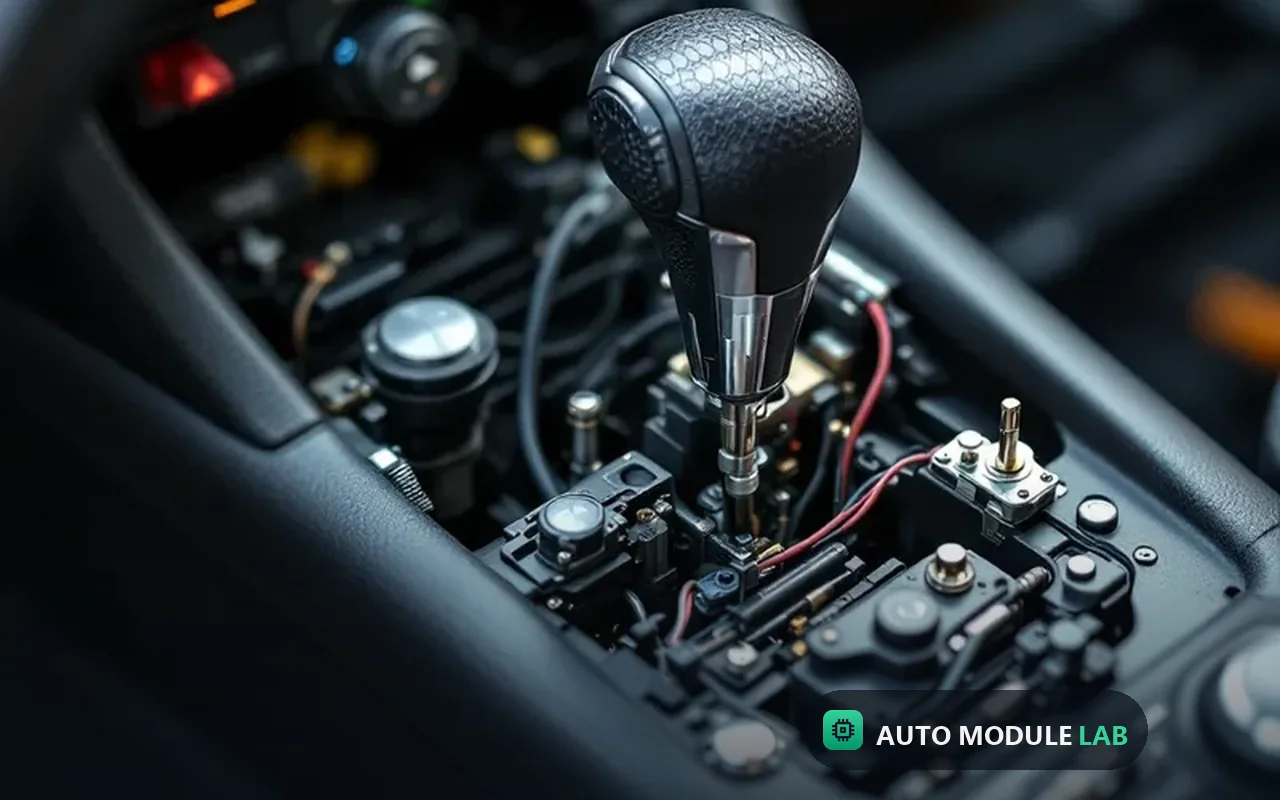
BMW ELV Steering Lock Counter Reset and Repair Guide 2026
Who this is for
This guide is for the BMW owner, independent shop or locksmith staring at a car that will not crank, with a steering-lock warning on the dash and a wheel that stays locked. If you drive an E60 5-series, an E81, E82, E87 or E88 1-series, an E84 X1, an E89 Z4, or an E90 through E93 3-series, and the car suddenly refuses to start while showing a yellow or red steering-lock symbol, you are very likely dealing with the electronic steering lock and its counter inside the CAS module.
It is also for the technician who has already scanned the car, sees ELV or steering-lock fault codes, and wants the correct fix rather than throwing a new column at it. Auto Module Lab is a nationwide mail-in shop based in Arlington, Texas, and the CAS-side ELV reset is a bench operation, so the car can stay in your driveway in any state while the module travels to us.
What the ELV and the CAS counter actually are
ELV is short for Elektrische Lenkradverriegelung, German for electric steering-wheel lock. BMW also calls it the electronic steering lock or steering-column lock. It is a motorized bolt that physically engages into the steering column to immobilize the wheel when the car is off, and retracts when the car authorizes a start. On these E-chassis cars the steering lock is electronic rather than a mechanical key tumbler, and it is wired into the start authorization chain.
The CAS, or Car Access System, is the immobilizer brain. When you press start, the key talks to the CAS, the CAS commands the ELV to retract the locking bolt, and only after the bolt clears does the engine crank. Critically, the CAS keeps an internal counter and status data for the ELV. Every lock and unlock cycle is tracked, and the CAS expects the ELV to report back that it completed the move within an acceptable voltage and time window.
When the ELV fails to confirm a clean unlock, often because the supply voltage sagged during the move, the CAS can latch the ELV into a fault state. Once latched, the CAS will not authorize a start even after you fix the underlying voltage problem, because the stored counter and status data still say the steering lock is in an unsafe condition.
Where this applies
| Chassis | Model | Typical years |
|---|---|---|
| E60 / E61 | 5-Series | 2004-2010 |
| E81 / E82 / E87 / E88 | 1-Series | 2004-2013 |
| E84 | X1 | 2009-2015 |
| E89 | Z4 | 2009-2016 |
| E90 / E91 / E92 / E93 | 3-Series | 2005-2013 |
These are the platforms where the CAS-tracked ELV counter behaves the way this service addresses. Later F-chassis cars moved to different architectures.
How the fault happens, in plain terms
The ELV motor and gears move the locking bolt every time you walk away from the car and every time you start it. Two things drift over the years: the small motor loses torque as brushes and gears wear, and the 12-volt system voltage sags as the battery ages. The ELV unlock move pulls a brief but real current spike, and if the battery is weak, voltage can dip low enough that the motor stalls or the CAS reads an out-of-spec confirmation.
When that happens, the CAS records the ELV as faulted and bumps the counter into a state it will not clear on its own. From the driver's seat the result is abrupt and total: the steering-lock warning appears, the wheel stays locked, and the car will not crank. Because the steering lock sits directly in the start authorization path, this is a hard no-start, not a slow degrade.
The most common single trigger is low battery voltage, which is why the first thing we tell every caller is to check or replace the battery before anything else. Battery and charging faults are a leading source of no-start calls in general; AAA has reported responding to more than 2 million dead-battery rescues in a single year, and the same undervoltage conditions that strand a car are exactly what tips a marginal ELV into a latched fault. Heat makes it worse: AAA's testing has long shown high temperatures shorten battery life and accelerate the failures that leave drivers stranded.
Battery and charging trouble is consistently one of the top reasons cars are towed in or breakdowns are reported. The U.S. Department of Energy notes that extreme heat can substantially reduce the usable range and performance of vehicle batteries, the same thermal stress that degrades a 12-volt starter battery toward the voltage sag that trips the ELV. The broader trend matters too: the average age of a car on U.S. roads has climbed past 12.6 years according to S&P Global Mobility, and older cars run older batteries and older lock motors, which is precisely the combination that produces these faults. Electronic steering locks themselves spread as keyless ignition went mainstream; passive keyless entry and push-button start are now standard on a large share of new vehicles, a shift documented in coverage from outlets such as Consumer Reports and analyzed in industry work on vehicle electronics architecture by firms like McKinsey.
What we actually do: counter reset and CAS-side repair
Auto Module Lab does not sell you a new steering column. We work on the data side of the problem. There are two parts to the fix:
- ELV counter reset. We read the CAS module and reset the stored ELV counter and status data so the module no longer believes the steering lock is in an unsafe, faulted condition. This is what clears the latched no-start.
- CAS-side ELV data repair. Where the stored lock data is corrupted rather than simply tripped, we repair the relevant CAS-side data so the immobilizer chain validates cleanly again and the car authorizes a normal start.
"Nine times out of ten the ELV that lands on my bench did not fail because the lock motor died, it failed because a tired battery sagged during the unlock and the CAS latched the counter. Replace the battery first, then let me reset the counter, and the car stays fixed. Reset it with the weak battery still in the car and you will be back here in a week."
— Master automotive locksmith, 15+ years on BMW CAS and immobilizer systems (anonymized)
Because we keep working with your original CAS and your original keys, nothing about your immobilizer pairing changes. The car still recognizes the same keys, the engine ECU still talks to the same CAS, and you are not introducing an emulator that hangs off the column forever. You get the genuine system back in a known-good state.
Reset and repair versus replacing the column
The dealer answer to a latched ELV fault is frequently a new steering-column lock or a new CAS, followed by coding and key adaptation. That is a parts-heavy path. The CAS-side reset and repair targets the actual stored-data problem, keeps your matched components, and avoids the column swap entirely in the large majority of cases.
Symptoms checklist
You are likely a candidate for this service if you see several of these together:
- No crank, no start, with a steering-lock warning lamp (yellow or red steering-wheel-with-lock symbol).
- The steering wheel is physically locked and will not free up when you press start.
- The fault appeared suddenly, often after the battery had been getting weak or after a jump start.
- A scan tool shows ELV, steering-lock, or steering-column-lock fault codes referencing the CAS.
- The dash may show messages such as steering lock defective or similar wording.
If the wheel is locked but the car still cranks and runs, or if there is no steering-lock message at all, the problem may be elsewhere and you should describe exactly what you see when you contact us.
The mail-in process, step by step
The whole point of Auto Module Lab is that a bench fix does not require the car. Here is how a BMW ELV reset moves through our Arlington workshop.
Pay and book online. You order the ELV counter reset on our service page and tell us the exact chassis, model year and the fault you are seeing. Payment is up front so the bench work is queued the moment your module arrives.
Pull and ship your CAS module. We send clear removal notes for your specific chassis. You remove the CAS, pack it well, and ship it to:
Auto Module Lab USPS: PO Box 120241, Arlington, TX 76012 UPS/FedEx: 1009 Oakwood Ln # 120241, Arlington, TX 76012
24-hour bench turnaround. Once your module is in hand, our techs reset the ELV counter and repair the CAS-side lock data on the bench. Standard turnaround is 24 hours from receipt, not counting transit.
Flat-rate return shipping. We ship the repaired module back to you via the return option you chose at checkout (from $24.95, or overnight $94.95). You reinstall it, reconnect a healthy battery, and the car should crank and start normally with your existing keys.
Our team of more than 20 technicians runs this kind of bench work daily across customers in Dallas, Houston, Austin, San Antonio and Miami, as well as nationwide, so your module is not sitting in a queue behind a one-person operation.
What to ship
Send the CAS module itself, removed from the vehicle. Include a note with:
- Your exact chassis and model year (for example, E90 330i, 2008).
- The VIN.
- A short description of the symptoms and any fault codes you pulled.
- Your return shipping address and a contact phone number.
You do not need to send keys for a standard ELV counter reset, because we are working on the stored CAS data, not re-pairing keys. If your situation is more complicated, we will tell you before you ship.
What this does NOT fix
Honesty matters more than an easy sale, so here is the boundary of this service:
- A mechanically seized or burnt-out ELV motor. If the steering-lock motor itself is physically jammed or the windings are burnt, resetting the counter will not bring it back to life. That unit needs replacement. The CAS-side reset addresses the data latch, not a dead motor.
- A weak or dead battery. This is a trigger, not a target. If you reset the counter but leave a failing battery in the car, the low-voltage condition can trip the fault again. Replace a marginal battery first.
- Unrelated no-crank causes. A bad starter, a failed ignition relay, or a separate immobilizer problem will not be solved by an ELV reset. Describe your symptoms accurately so we can tell you whether this is the right service.
- Physical steering-column or lock-bolt damage. Mechanical damage to the column or the locking bolt is a hardware repair, not a data reset.
When the ELV counter latch is the cause, the reset clears it cleanly. When the motor is genuinely dead, we will tell you so rather than charge you for a fix that cannot work.
Why the counter latches instead of self-clearing
A reasonable question is why the CAS does not simply try the ELV again and move on once voltage recovers. The answer is that the steering lock is a safety and security component, and the designers deliberately made it fail safe rather than fail forgiving. If the CAS cannot positively confirm that the locking bolt retracted cleanly, allowing a start anyway would risk authorizing a car whose steering could still be partly locked, or whose immobilizer state is genuinely unknown. So the module latches the fault and refuses to start until the stored state is explicitly cleared.
That conservative design is exactly why a weak battery is so dangerous to these cars. The ELV unlock move draws a current spike at the worst possible moment, the instant you are asking the car to start, which is also when a tired battery is most likely to sag. One marginal start attempt on a cold morning can be enough to drop voltage low enough that the ELV move falls out of spec, and the latch trips. The car may even have started fine the previous evening. To the owner it feels random; on the bench it is a recognizable pattern.
Understanding this also explains the order of operations we insist on. The reset clears the latched state, but if the battery that caused it is still weak, you are one cold start away from tripping it again. Fix the power source first, then clear the data, and the problem stays gone.
Reset versus emulators and bypasses
You will find online advice suggesting emulators or steering-lock bypass devices for these cars. We do not recommend that route for most owners, and it is worth saying why. An emulator permanently fakes the ELV's responses to the CAS, which can mask a genuinely failing lock and leaves a non-original device hanging on the immobilizer chain indefinitely. Some bypasses also disable the steering lock function entirely, which changes how the car behaves and is not what most owners actually want.
The CAS-side counter reset is different in kind. It restores your genuine system to a known-good state and lets the real ELV do its real job. You keep the original behavior, the original security, and the original parts. Where the ELV motor is genuinely dead, the honest answer is to replace that motor, not to paper over it with an emulator. We would rather tell you that than sell you a workaround that hides a real fault.
Price versus the dealer
| Path | Typical cost | Keeps your keys and CAS pairing | Turnaround |
|---|---|---|---|
| Auto Module Lab ELV counter reset (mail-in) | 250 dollars | Yes | 24 hours on the bench |
| Dealer steering-column lock or CAS replacement | 700 to 1500-plus dollars | Often requires re-coding | Days, plus appointment wait |
| New ELV unit plus coding at an independent | Several hundred in parts plus labor | Sometimes | Varies |
The reset is a fraction of the column-replacement path, and because we keep your original CAS and keys, there is no re-keying step bolted onto the bill. Repair over replacement is also a cost lever that consumer-finance sources repeatedly highlight: keeping an older vehicle running with targeted repairs is generally far cheaper than the cascading parts-and-labor bills a dealer path produces, a point made in personal-finance reporting from outlets such as Edmunds on repair-versus-replace economics.
Frequently asked questions
Will the reset clear the steering-lock warning permanently?
If the cause was a latched ELV counter or corrupted CAS-side lock data, yes, the reset clears it and the warning goes away once you reinstall and start the car. If you leave a weak battery in place, the underlying low-voltage trigger can cause it to return, which is why we insist on a healthy battery first.
Do I have to remove the CAS myself?
Yes, for the mail-in service you remove and ship the CAS module. We provide removal guidance for your chassis. If you are not comfortable doing it, any competent independent shop can pull the module for you.
Will my keys still work after the reset?
Yes. We do not touch your key pairing. You keep your original keys and your original CAS, just with the ELV data restored to a good state.
My wheel is locked but the car still cranks. Is this the same service?
Possibly not. A hard no-crank with a steering-lock warning is the classic ELV-counter case. A wheel that locks while the car still cranks may point elsewhere. Tell us exactly what you observe and we will confirm before you ship anything.
How do I know if it is the counter or a dead motor?
Often you cannot be fully certain from the driver's seat, which is why we tell you the honest limit up front. The most common case by far is a latched counter, especially when the fault followed a weak battery. If the bench work reveals a genuinely dead motor, we will let you know.
Is this legal and safe?
Yes. We are restoring your own vehicle's immobilizer data to a working state on the original module. We do not defeat security; we repair the stored lock data so the genuine system functions as designed.
Get your BMW back on the road
If your E60, E8x, E84, E89 or E9x BMW has a steering-lock warning and will not crank, the fastest and cheapest path is almost always a CAS-side ELV counter reset rather than a new steering column. Check your battery first, then mail us the module. See the BMW ELV counter reset and steering lock service for ordering details, browse the full list of mail-in services, read how the mail-in process works, or learn more about founder Adrian Torres, an automotive locksmith since 2012. Pack the CAS, ship it to Arlington, and most cars are back to a clean start within a day of the module reaching our bench.
Ship your module today
Flat-rate pricing, 24-hour bench turnaround, return speed your choice at checkout. Most jobs back on your bench within a week.
More from the Lab
Electronic Steering Lock Failure by Brand: ESL and ELV
14 min · August 17, 2026
BMW Key Not Detected, No Crank: The CAS-Era Diagnosis Ladder Before You Replace Anything
11 min · July 29, 2026
VW / Audi ELV / ESL Electronic Steering Lock Failure: Why the Column Stays Locked and What a Bench Clone Actually Fixes
14 min · August 10, 2026

BMW Module Repair vs Replacement: FRM, CAS, FEM/BDC, DME, EWS and ELV Compared
15 min · July 26, 2026