
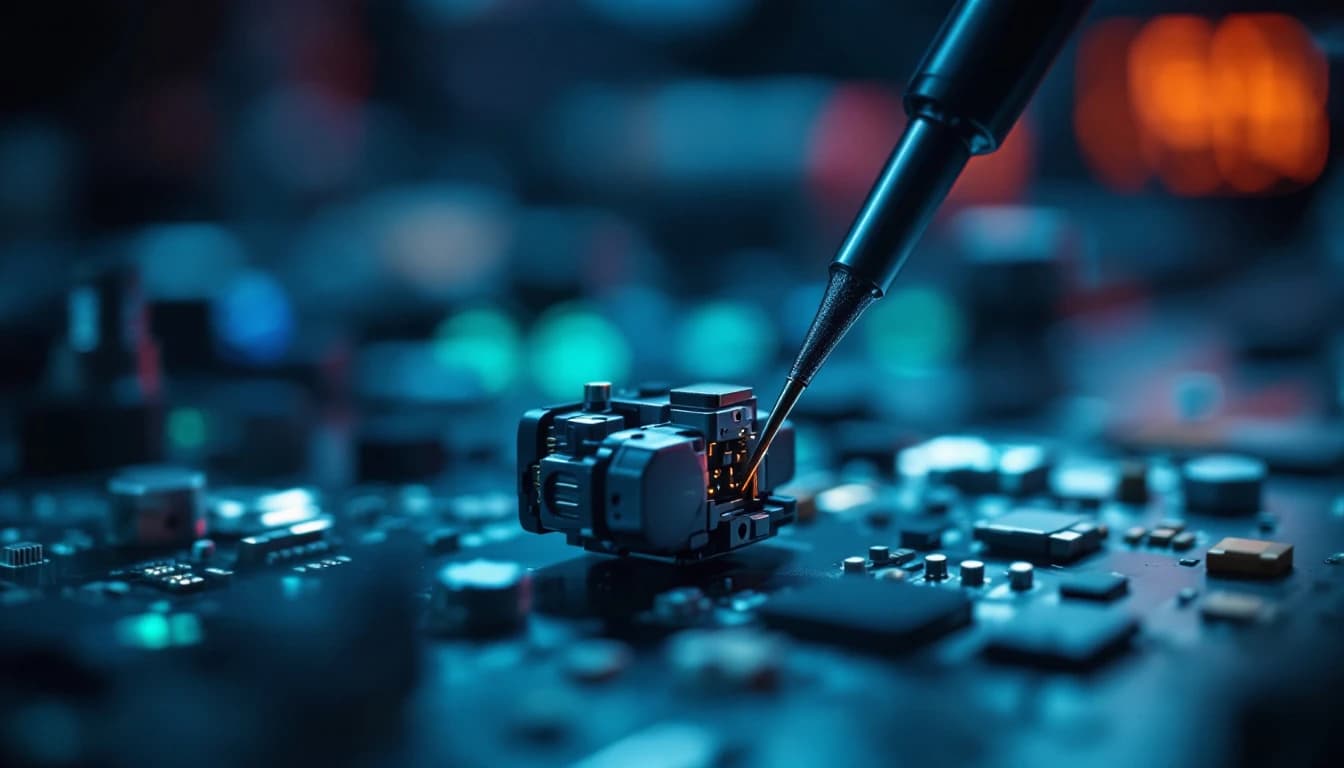
Mercedes ESL ELV Repair and Clone Guide (W204 W212) 2026
Who this is for
This guide is for the Mercedes owner, locksmith or shop facing a no-start where the steering column is locked, the dash shows a steering-lock or ESL fault, and the car simply will not come alive. If you have a W204 C-Class, W207 E-Coupe, W212 E-Class or X204 GLK from roughly 2007 to 2015, and turning the key or pressing start produces a locked wheel and a dead dash, you are almost certainly looking at a failed Electronic Steering Lock.
It is also for the technician who has already identified the ESL as the culprit and wants the right fix: not a permanent emulator hanging off the column, but a repaired or cloned genuine unit that stays matched to the car. Auto Module Lab is a nationwide mail-in shop in Arlington, Texas, and the ESL is a bench job, so it does not matter which state the car is in.
What the ESL/ELV actually is
ESL stands for Electronic Steering Lock; the German abbreviation ELV (Elektrische Lenkradverriegelung) means the same thing. It is the motorized lock that physically engages a bolt into the steering column to immobilize the wheel when the car is off, and retracts it when the car authorizes a start. On these Mercedes platforms the steering lock is electronic rather than a simple mechanical key tumbler, and it is tied into the immobilizer chain.
That chain matters. When you start one of these cars, the key talks to the EIS (Electronic Ignition Switch, the module the key inserts into), the EIS authorizes the ESL to retract the locking bolt, and only then does the column free up and the start proceed. The ESL is therefore a security component, not just a convenience motor. Electronic locks like this proliferated as the industry shifted to keyless ignition; passive keyless entry and push-button start are now standard equipment on the large majority of new vehicles sold, according to industry tracking widely reported by outlets such as Consumer Reports, and Mercedes was an early and heavy adopter of the electronic column lock.
The reason carmakers build a motorized lock into the immobilizer chain at all is theft deterrence, and the data says electronic immobilizing works. Per NHTSA's Federal Motor Vehicle Safety Standard No. 114, every covered vehicle must have a starting system that blocks engine activation and either steering or self-mobility once the key is removed, and an electronic steering lock is one way to satisfy that. The payoff is measurable: the Insurance Institute for Highway Safety / Highway Loss Data Institute found that adding an electronic anti-theft upgrade to vehicles that lacked one cut theft-claim frequency by 53 percent, and whole-vehicle theft by 64 percent. The catch is that the same motorized hardware that deters thieves is also a wear item, which is why these locks fail.
Inside the ESL housing is a small electric motor driving a set of plastic reduction gears that move the locking bolt. Those plastic gears are the classic failure point.
Where this applies
| Platform | Model | Typical years | Notes |
|---|---|---|---|
| W204 | C-Class sedan / coupe | 2008-2014 | Most common ESL failure platform |
| W207 | E-Class Coupe / Cabriolet | 2010-2017 | Shares the column-lock design |
| W212 | E-Class sedan / wagon | 2010-2016 | Same ESL family |
| X204 | GLK SUV | 2010-2015 | Same ESL family |
Other Mercedes platforms of the era use related steering locks, but the W204, W207, W212 and X204 are the ones we see most and the ones this service targets.
How the failure happens, in plain terms
The ESL motor cycles every single time you lock and unlock the car. Over years and tens of thousands of cycles, two things wear: the small DC motor itself loses torque, and the plastic drive gears chip, crack or strip teeth. Eventually the motor cannot reliably retract the locking bolt, or the gears slip, and the bolt stays engaged. The EIS asks the ESL to unlock, the ESL cannot complete the move, and the car refuses to start because the immobilizer chain is broken.
From the driver's seat this looks like a sudden, total failure: yesterday it started fine, today the wheel is locked and the dash is dark or showing a steering-lock warning. Because the ESL sits in the start authorization path, a failed ESL is a hard no-start, not a degraded one.
The reason the plastic gears are the weak point is simple cost and packaging engineering, and it is a known wear pattern on these platforms. That is good news for repair, because a worn motor and worn gears are exactly the kind of failure that can be rebuilt.
Repair or clone, and why that beats an emulator
There are two honest ways to deal with a failed ESL, and a third way we deliberately do not push.
Repair the OEM unit. We open the original ESL, replace the worn motor and the failed plastic gears with correct replacements, reassemble it, and bench-test that the locking bolt cycles reliably. Because it is your original ESL, it is still matched to your EIS and your keys. Nothing needs to be coded.
Clone to a donor. If your original ESL is damaged beyond a clean rebuild, we clone the data from your unit into a donor ESL so the donor takes on your car's identity. The cloned unit is then matched to your EIS and keys exactly as the original was. Again, no dealer SCN coding is required, because the cloned unit carries your original data.
The emulator route, which we do not favor. An ESL emulator is an aftermarket box that fools the EIS into thinking the steering lock is present and happy, while a separate device or a deleted lock handles the physical column. Emulators work, but they replace a genuine, matched component with a permanent aftermarket workaround, can complicate future diagnostics, and leave the car in a non-factory state. Repairing or cloning keeps the real OEM part in the car, matched to the EIS and the keys, which is cleaner and more durable.
The distinction is the whole point of this service: an emulator removes the OEM ESL from the equation; our repair and clone keep it.
Failure modes and symptoms you will recognize
- Locked steering wheel with a no-start. The wheel will not turn and the car will not start, the signature ESL failure.
- Steering-lock or ESL warning on the dash. A message about the steering lock, or a steering-lock symbol.
- Intermittent no-start that became permanent. Many ESLs warn you first with occasional failures to unlock before failing completely.
- Audible motor that never completes. You may hear the ESL motor whir or click without the bolt actually retracting.
- Dead dash on start attempt. Because the start authorization stalls at the ESL, the car can appear electrically dead when you try to start it.
If you have confirmed the ESL as the failed component, repair or clone is the matched-part fix.
The exact mail-in process
- Order online. Choose the Mercedes ESL motor repair and clone service at 250 dollars and pay. You receive a confirmation and packing slip.
- Remove the ESL and ship it. Remove the steering lock unit from the column and mail it to Auto Module Lab, PO Box 120241, Arlington TX 76012 if you ship USPS — or 1009 Oakwood Ln # 120241, Arlington TX 76012 if you ship UPS or FedEx (UPS and FedEx cannot deliver to a PO Box), with the packing slip and order number.
- Bench repair or clone, then verify. We assess your unit, either rebuild the motor and gears or clone to a donor, and bench-test that the locking bolt cycles correctly and the unit is matched to your car's data.
- Flat-rate return shipping. We ship the repaired or cloned ESL back via the return tier you chose at checkout (from $24.95). You reinstall it, it talks to your EIS, and the car starts normally with your existing keys.
No dealer visit, no SCN coding, no new key programming.
What to ship and what you need
For this service we need the ESL unit itself.
- The Electronic Steering Lock, removed from the column, in a rigid box with padding.
- The packing slip with your order number.
- If you are sending a donor unit for cloning, include it; otherwise we source the donor.
You do not need to send the EIS, the keys, or the rest of the column. The repair and the clone both happen at the ESL, and because we keep your original data, your EIS and keys stay valid.
What this service does NOT fix, stated honestly
- It is not a fix for an EIS fault. If the actual failure is in the EIS rather than the ESL, repairing the steering lock will not solve a no-start. We can advise, but the EIS is a separate component.
- It is not a key-programming service by itself. Because we keep your ESL matched to your existing keys, you do not need new keys. If you also have a lost-key or add-key situation, that is a different job.
- It does not repair a mechanically damaged steering column. If the column itself, the lock bolt seat, or the housing is physically broken, that is a mechanical repair beyond the electronic ESL rebuild.
- It is not an emulator and does not behave like one. This is deliberate. We restore or clone the genuine part rather than emulate it. If you specifically want an emulator, this is not that service.
- It has nothing to do with emissions. The steering lock is a security and convenience component, not an emissions control. We do not perform any emissions work.
If your no-start turns out to be an EIS or column problem rather than the ESL, we will tell you before you spend money on the wrong fix.
Price versus the dealer
The dealer answer to a failed ESL is usually a new steering lock plus the coding to marry it to the car, and that bill adds up quickly once parts and programming labor are counted. Keeping your matched OEM unit is both cheaper and cleaner.
| Path | Typical cost | What you get | Trade-offs |
|---|---|---|---|
| Auto Module Lab repair or clone | 250 dollars | Matched OEM ESL, no coding needed | Mail-in turnaround |
| Dealer new ESL + coding | Often 800-1,500+ dollars | New part, factory coded | Costly, requires the car at the dealer, SCN coding |
| Aftermarket emulator | 100-300 dollars | Car starts | Non-factory, permanent workaround, possible diagnostic quirks |
| Used coded ESL | Variable | A part that still needs matching | Coding or matching usually still required |
The matched-part advantage is the real story. Because a repaired or cloned ESL carries your original data, it slots back in with no dealer SCN coding and no new keys, which is exactly what an emulator or a random used unit cannot promise. The broader reason these jobs keep coming is reliability economics: electronic content has grown so much that software and electronics now account for a large and rising share of total vehicle value, according to McKinsey, and motorized security components like the ESL are a predictable wear item within that content.
There is also no theft argument for ripping out the OEM lock. Vehicle theft remains a real and rising problem at the national level, with the Insurance Information Institute's auto-theft statistics recording 1,020,729 stolen vehicles in 2023, and the FBI Uniform Crime Reporting Program's Motor Vehicle Theft, 2019–2023 special report showing reported thefts rising from 308,888 to 789,444 over that span, a roughly 105 percent increase. Keeping the factory steering lock matched and working preserves the deterrent the car was designed with, where dropping in a permanent emulator quietly removes a piece of it.
Frequently asked questions
Do I need to reprogram my keys after an ESL repair or clone?
No. Because we keep your ESL matched to your original EIS and keys, your existing keys keep working. No new key programming is needed.
What is the difference between this and an ESL emulator?
An emulator is an aftermarket device that tricks the EIS into thinking the steering lock is fine while removing the real one from the picture. We instead repair your genuine ESL or clone it to a donor, keeping the OEM part matched to the car. It is a factory-state fix rather than a workaround.
How do I know it is the ESL and not the EIS?
A locked wheel with a steering-lock warning points strongly to the ESL. A no-start with key-recognition or ignition-switch faults can point to the EIS. If you are unsure, describe the symptoms when you order and we will help you confirm before you ship the wrong part.
Does this require dealer SCN coding?
No. That is the core advantage. Because the repaired or cloned unit carries your original ESL data, it is already matched to your car, so there is no SCN coding step at a dealer.
Will the repair last, or will the plastic gears fail again?
We replace the worn motor and the failed plastic gears with correct replacement parts and bench-test the cycle before it ships. The rebuild addresses the exact wear items that caused the failure.
Do you need the whole steering column?
No. We need the ESL unit removed from the column. The rest of the column and the EIS stay with your car.
Can you clone if my original ESL is badly damaged?
Often yes. If your original unit cannot be cleanly rebuilt but its data is readable, we clone that data into a donor ESL so the donor becomes matched to your car. If the data itself is unrecoverable, we will tell you honestly.
What the bench sees
Nearly every W204 and W212 steering-lock failure I open up is the same story: the little DC motor is tired and the plastic reduction gears have stripped a tooth or two, so the bolt will not retract and the EIS never gets its green light. An emulator hides that, it does not fix it, and now the car is in a non-factory state forever. Rebuild the motor and gears or clone to a donor and the unit goes back matched to the EIS and the customer's keys, no SCN coding, no new keys. — Master automotive locksmith and module bench technician, 15+ years experience (anonymized)
The bottom line
A failed Electronic Steering Lock on a W204, W207, W212 or X204 is a hard no-start with a locked wheel, and the worn motor and cracked plastic gears inside are the usual cause. The right fix keeps the genuine, matched OEM part in the car: we repair the motor and gears, or clone your ESL to a donor, so the unit stays matched to your EIS and your existing keys with no dealer SCN coding. That is cleaner and more durable than dropping in a permanent emulator.
If your ESL has failed, start with the Mercedes ESL motor repair and clone service. Review the full services list, see how the mail-in process works, or read about founder Adrian Torres and the bench experience behind every repair. Ship the ESL to PO Box 120241, Arlington TX 76012 if you ship USPS — or 1009 Oakwood Ln # 120241, Arlington TX 76012 if you ship UPS or FedEx (UPS and FedEx cannot deliver to a PO Box); return shipping is a flat-rate option chosen at checkout (from $24.95).
Ship your module today
Flat-rate pricing, 24-hour bench turnaround, return speed your choice at checkout. Most jobs back on your bench within a week.
More from the Lab
Electronic Steering Lock Failure by Brand: ESL and ELV
14 min · August 17, 2026
Mercedes ELV/ESL Emulator: How the Steering-Lock Bypass Works and When You Need It
12 min · July 13, 2026
VW / Audi ELV / ESL Electronic Steering Lock Failure: Why the Column Stays Locked and What a Bench Clone Actually Fixes
14 min · August 10, 2026
Mercedes Immobilizer & Key Systems by Generation: EIS/EZS, ELV, ESL, FBS3 vs FBS4
11 min · July 10, 2026