
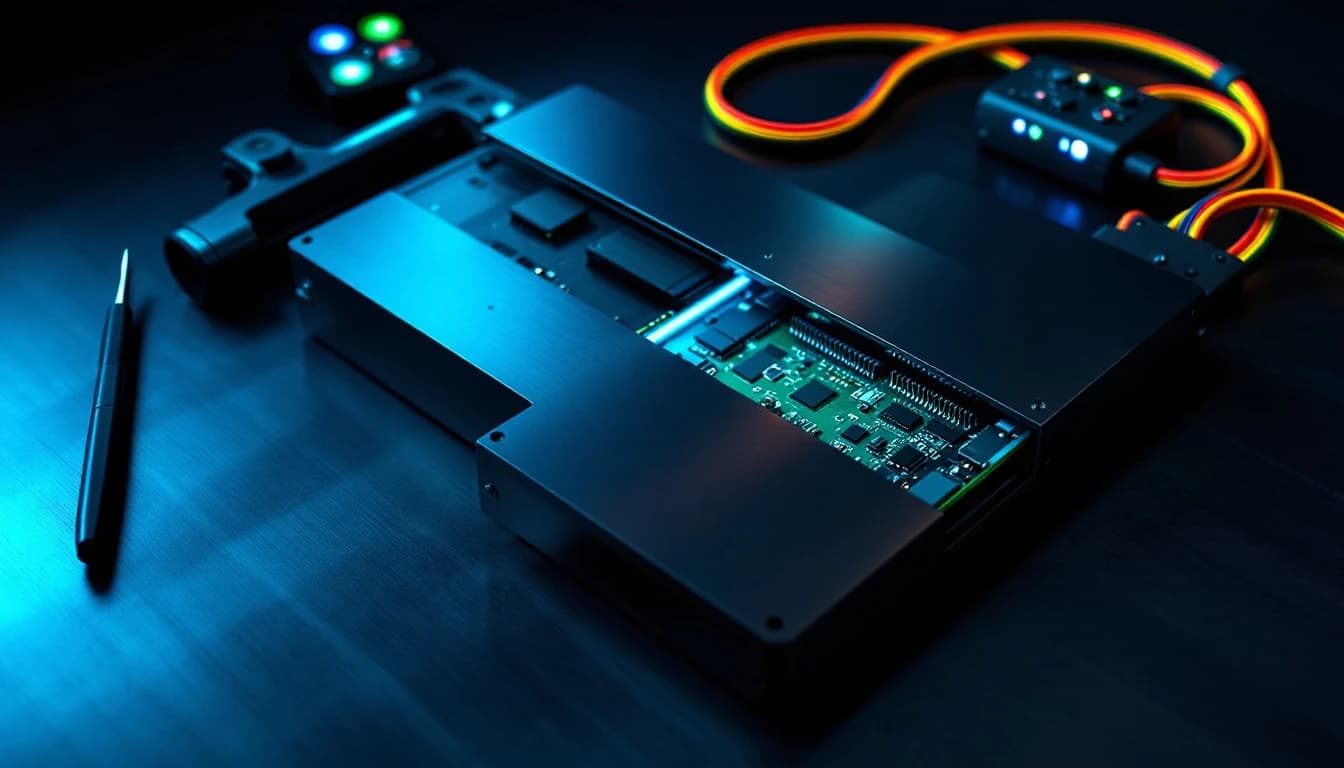
BMW MS45 IMMO OFF: The Instant Online EWS Delete File Service (2026)
Who this is for
This guide is for the DIY tuner, independent shop, or engine-swap builder who is staring at a BMW Siemens MS45 DME that starts and then stalls after a couple of seconds. That behavior almost always means the immobilizer handshake failed, and the engine control unit is cutting fuel and spark because it did not get the answer it wanted from the EWS module. If you have pulled an MS45 out of a donor car, dropped an M54 or N46 into a project chassis, or lost the matching EWS and key sync, you are exactly the person this was written for.
You need to own lawful title to the vehicle and the ECU. This is a service for engine swaps, standalone and off-road builds, motorsport, and legitimate repair. It is not a theft tool, and it is not an emissions defeat device. Removing the EWS check does nothing to your catalytic converters, oxygen sensors, or emissions software, and we will not help anyone strip the anti-theft link out of a car they cannot prove they own. The National Highway Traffic Safety Administration treats electronic immobilizers as a core layer of vehicle theft prevention, and we treat lawful ownership as a hard requirement before we touch a single byte.
You also need your own bench read and write tooling. This is an online file service, not a mail-in job by default. You read the flash on your bench, you upload it, we verify and patch it, you pay, and you download the finished file in seconds. If your read does not match a software fingerprint we recognize, we route you to the mail-in path instead and you are not charged. That is the whole deal, and the rest of this article explains every step of it.
What MS45 is
The MS45 is a Siemens (later Continental) engine management system used on M54 and N46-era BMWs. The specific control unit this service targets carries Siemens hardware number 5WK93012 and BMW DME part number 6577365. Internally it uses an external flash memory device holding a full 1 MB image, which is exactly 1,048,576 bytes when you read it out on the bench. That 1 MB read is the file you upload, and it is the file we hand back to you patched.
It helps to understand what an engine control unit actually is before you start rewriting one. Bosch, one of the largest suppliers of automotive ECUs, describes the engine control unit as the central computer that governs fuel injection, ignition timing, and air management by reading sensors and driving actuators dozens of times per crankshaft revolution. The MS45 is Siemens hardware rather than Bosch, but the architecture is the same idea: a microcontroller, a block of calibration and program memory in flash, and a set of routines that must all pass before the engine is allowed to keep running. One of those routines is the immobilizer check, and that is the routine we are targeting.
Software content in cars has grown enormously, and the MS45 sits at the beginning of that curve rather than the end. McKinsey has documented how the volume of software and electronics in vehicles has climbed to the point where lines of code are now measured in the tens of millions across a modern car. An MS45 is a tiny fraction of that by comparison, but the principle that matters here is the same: the engine will not run unless the software says it may, and the software includes a security gate that must be satisfied on every start.
The reason people end up here is almost always a broken link between the DME and the rest of the car. Swap the engine into a chassis with a different body computer, install a used DME without pairing it, or damage the EWS module, and the MS45 will crank, fire briefly, and die. The fix is to tell the DME to stop asking the EWS for permission. Once the check is patched out, the DME runs on its own logic and does not care whether an EWS module is even present.
How the EWS lock works
EWS stands for the BMW electronic immobilizer system, and on these cars it is a rolling-code handshake between the DME and a dedicated immobilizer module. At key-on, the DME sends a challenge, the EWS module answers with a value derived from a shared secret, and the DME compares that answer against what it expects. If the two match, the DME releases fuel and ignition and the engine runs. If they do not match, the DME allows the engine to start briefly and then cuts it, which is the classic start-then-stall symptom.
This challenge-and-response pattern is not unique to BMW. Modern diagnostic and security services on the vehicle bus are standardized under ISO 14229, the Unified Diagnostic Services specification, which defines the security-access routines that let a control unit gate sensitive functions behind a seed-and-key exchange. The EWS handshake predates and differs from the exact UDS security-access service, but it is the same conceptual mechanism: prove you know the secret, or you do not get to operate.
Immobilizers of this kind have been extremely effective at their intended job. Insurance-loss data compiled by the Insurance Institute for Highway Safety documented a viral theft trend targeting vehicles that lacked engine immobilizers, and found that after an anti-theft software update was deployed, whole-vehicle theft claim frequency for the affected models fell by roughly 53 percent. Whole model lines suffered waves of theft precisely because they lacked an engine immobilizer that a thief could not trivially bypass. That is the point worth keeping in mind: the EWS system exists to stop thieves, and it works. Immo-off is not about defeating that protection on a car in the field. It is about the specific case where a legitimate owner has broken the handshake themselves through a swap or a repair and needs the engine to run again.
When you delete the EWS check on an MS45, you are not disabling the immobilizer on a whole car. You are telling one DME to skip one comparison. The physical keys, the door locks, and any aftermarket alarm you fit are entirely separate. If you want theft protection on a swapped car, you add it back with a proper aftermarket immobilizer or alarm. What immo-off does is decouple the engine from a factory EWS module that is no longer in the picture.
Why no checksum step is needed on MS45
This is the part that surprises people who have done immo-off work on other platforms, so read it carefully. On many ECUs, any change to the flash image has to be followed by recalculating one or more checksums, because the bootloader or the main program verifies those checksums on startup and refuses to run if they are wrong. Get the checksum step wrong on those platforms and the ECU either rejects the file or bricks.
On this MS45 software, that is not the case for the immo bytes. The immobilizer-related bytes we change are not covered by a boot-time verification that would reject the modified file. In plain terms, MS45 needs no checksum correction for this operation. The patched file flashes and runs exactly as written, with no additional recalculation step, and this has been confirmed on a real car, not just in theory or on a bench simulation.
That matters for two reasons. First, it removes an entire class of mistakes. There is no checksum routine to get wrong, so there is no way to hand you a file that passes our patch but fails the ECU's internal verification. Second, it keeps the turnaround genuinely fast. Because there is no extra correction pass to compute and validate, the file can go from uploaded read to verified patched download in seconds rather than minutes or hours.
None of this means the file is edited carelessly. The bytes that carry the immobilizer decision are specific and known for this exact software version, and they are the only thing that changes. Everything else in your 1 MB image, including your calibration, your adaptations, and your VIN data, comes back untouched. The absence of a checksum step is a property of the MS45 software, not a shortcut we invented, and it is one of the reasons this particular ECU is well suited to an instant online service.
If you are cross-shopping this against services for other BMW DMEs, do not assume the no-checksum behavior carries over. It is specific to the MS45 software fingerprint we support. Other DME families, including some that look superficially similar, do require checksum correction, and applying MS45 assumptions to them is how ECUs get bricked. The reason checksums exist at all on control units is that flash memory can be corrupted or partially written, and as Bosch explains, the engine control unit runs safety-relevant code that must be intact to operate; on MS45 the immo bytes simply happen to sit outside the region that boot-time verification guards.
Online byte-verification and brick-safety
The single biggest risk in any flash-modification service is writing the wrong bytes to the wrong software. A DME is not a generic memory chip; it expects a specific program at specific addresses, and a patch built for one software revision can corrupt another. A wrong write can brick an ECU, and a bricked MS45 is a paperweight until it is recovered on the bench, if it can be recovered at all. Everything about how this service is built exists to make that outcome impossible on our end.
The service is version-locked and byte-verified. When you upload your 1 MB read, the file is fingerprinted and compared against the known-good MS45 software we support. If your file matches that fingerprint, the patch is applied to the exact byte locations that are correct for that software, and nothing else is touched. If your file does not match, the system refuses to write. It will not guess, it will not apply a close-enough patch, and it will not hand you a file it is not certain about. This is the honest and safe default: a refusal is better than a brick.
That refusal is also where the pricing honesty comes in. If we cannot match your file, you are not charged. You are routed to the mail-in service instead, where the ECU can be read, identified, and handled directly on the bench. You never pay for a file we could not verify. The fingerprint gate is not a sales funnel; it is a safety interlock that happens to also protect your wallet.
Byte-level verification like this is the same discipline that regulators and standards bodies expect around any security-relevant vehicle software. The diagnostic and reprogramming services defined by ISO 14229 exist precisely because writing to a control unit is dangerous when it is done blindly, and the standard formalizes the routines that confirm you are talking to the right module in the right state before any memory is altered. Our fingerprint-first approach is a plain-language version of that same caution: identify the software beyond doubt, then write, or do not write at all.
To be clear about what the service does not do: it does not read your ECU for you, and it does not write the file back for you. You need your own bench read and write tool. We take a verified read, return a verified patched file, and the flashing back onto your DME is on you. If you are not equipped for bench work, the mail-in path at the BMW DME EWS delete service is the route to take, because there the physical read and write are handled directly.
Start-then-stall vs no-crank
Diagnosis matters, because immo-off only fixes one specific failure mode. The symptom that immo-off addresses is start-then-stall: the engine fires, runs for one to a few seconds, and then dies as the DME cuts fuel and ignition because the EWS handshake did not pass. If that is what your car does, and you have a known reason for the handshake to be broken such as a swap or a used DME, then immo-off is the correct fix and it will resolve the stall.
A no-crank condition is a different animal entirely. If the starter does not turn the engine over at all, that is not an immobilizer-fuel-cut problem in the sense immo-off addresses. No-crank points at the battery, the starter, the ignition switch, the neutral safety or clutch interlock, a wiring fault, or a body-side security state that prevents the starter from being energized. Deleting the EWS check in the DME will not make a no-crank car crank, because the DME immo cut acts on a running engine, not on the starter circuit. If you buy immo-off expecting it to cure a no-crank, you will be disappointed, and you will have spent money on the wrong fix.
So before you upload anything, confirm the symptom. Does the engine crank? If yes, does it start and then stall after a second or two? If yes to both, and you have a legitimate swap or repair reason for the handshake to be broken, you are in the right place. If the engine does not crank at all, stop and diagnose the starting and security systems first. Immo-off is a precise fix for a precise problem, and matching the fix to the symptom is the difference between a running car and a wasted afternoon.
This start-then-stall behavior is the immobilizer doing its designed job, which is to let a would-be thief think the car is starting and then deny them a running engine. The National Highway Traffic Safety Administration frames electronic immobilization as one of the most effective theft deterrents precisely because it stops the engine from sustaining, and that is the exact mechanism you are working around when a legitimate swap has broken the handshake. A no-crank fault is unrelated to this mechanism entirely.
There is one more honest caveat. Immo-off assumes the DME itself is healthy and the only thing standing between you and a running engine is the EWS handshake. If the DME has a hardware fault, if the crank or cam sensors are dead, or if there is a fueling or ignition fault unrelated to the immobilizer, patching the immo bytes will not help. Immo-off removes the EWS gate. It does not repair an engine that has other reasons not to run.
Price and alternatives
The online MS45 immo-off service is a flat 150 US dollars, and the patched file comes back in seconds once your read is verified. There is no subscription, no per-attempt fee, and no charge at all if your file cannot be matched. Here is how the online path compares to the mail-in fallback and to doing nothing.
| Option | What you do | Turnaround | Cost | Best when |
|---|---|---|---|---|
| Online immo-off (this service) | Bench-read, upload, verify, pay, download | Seconds after verification | 150 USD | You own bench read/write tools and your file matches the known MS45 software |
| Mail-in DME EWS delete | Ship the DME, we read/write on the bench | Days, plus shipping both ways | Quoted at mail-in | Your file will not fingerprint, or you have no bench tooling |
| Do nothing | Leave the EWS handshake broken | N/A | 0 USD | Never, if you actually need the engine to run |
The economics favor the online path heavily when you are set up for bench work. You already own the read/write tool, the file moves in seconds, and the fingerprint gate means you only pay when the job can actually be done safely. The mail-in route at the BMW DME EWS delete service exists for two clear cases: your read does not match a software we support, or you simply do not have bench tooling and would rather ship the unit. If you want the wider picture of which ECUs can be done as a file at all, the online immo-off versus mail-in guide covers every calculator we run. Neither path is a defeat device, and neither changes anything about the vehicle's emissions systems. As the United States Environmental Protection Agency makes clear through its air enforcement program, tampering with emissions controls is a serious violation, and immo-off touches none of that hardware or software. Removing an EWS handshake is unrelated to catalyst, evaporative, or air-injection controls, and this service is explicitly not sold as an emissions workaround.
If you want to check what your specific file needs before you commit, start with the calculator tools, which will tell you quickly whether your read looks like a supported MS45 image. If you would rather understand the full workflow first, the how-it-works page walks through upload, verification, payment, and download end to end.
What experts say
The people who do this work every day are blunt about two things: identify the software before you write, and match the fix to the symptom. The convenience of an instant online file does not change either rule, and anyone who tells you a wrong write is harmless has not recovered enough bricked units.
Immo-off is not magic and it is not a shortcut around diagnosis. If the file does not match the software, you do not write it, full stop. And if the car does not even crank, immo-off was never going to help you. The two most expensive mistakes I see are writing an unverified file and buying immo-off for a starting fault. Get the read right, confirm the symptom is start-then-stall, and the rest is fast and boring, which is exactly how it should be.
— Master automotive locksmith, 15+ years on the bench (anonymized)
That caution is backed by how theft protection is designed in the first place. The Insurance Institute for Highway Safety has shown that the presence or absence of a real engine immobilizer moves theft-loss numbers dramatically across entire model lines, which is exactly why a responsible immo-off service verifies ownership and refuses anonymous work. The engineering culture around control units reflects the same seriousness; Bosch's own description of the engine control unit underscores how central and safety-relevant this computer is, and rewriting it is not something to do casually. Do it with the right file, on the right software, for the right reason, and it is routine.
Frequently asked questions
Does the MS45 immo-off file really need no checksum correction?
Correct. On the MS45 software this service supports, the immobilizer bytes are not covered by a boot-time verification, so the patched file flashes and runs exactly as written with no checksum recalculation. This has been confirmed on a real car. Do not assume this behavior transfers to other BMW DME families; many of them do require checksum correction, and applying the MS45 assumption to a different ECU is a common way to brick it.
What if my file does not match your known MS45 software?
Then the system refuses to write, and you are not charged. The service is version-locked and byte-verified specifically so it never applies a patch to software it does not recognize, because a wrong write can brick an ECU. If your read does not fingerprint as a supported MS45 image, you are routed to the mail-in path where the unit can be read and handled directly on the bench.
Will immo-off fix my no-crank BMW?
No. Immo-off fixes start-then-stall, where the engine fires and dies after a second or two because the EWS handshake failed. A no-crank condition, where the starter does not turn the engine at all, is a separate problem in the battery, starter, ignition switch, interlocks, wiring, or body security state. Diagnose those first. Deleting the EWS check will not make a no-crank car crank.
Do I need my own tools, or do you read and write the ECU?
You need your own bench read and write tool for the online service. You read the 1 MB flash yourself, upload it, and after verification and payment you download the patched file and write it back yourself. If you do not have bench tooling, use the mail-in DME EWS delete service instead, where the physical read and write are done for you.
Is this legal, and is it an emissions defeat?
It is not an emissions defeat device and touches none of your emissions hardware or software. It is intended for engine swaps, standalone and off-road builds, motorsport, and legitimate repair, and it requires lawful ownership of the vehicle and ECU. It is not a theft tool. The EWS system exists to deter theft, and this service will not help anyone bypass the immobilizer on a car they cannot prove they own.
How fast is the online turnaround, and how much does it cost?
The online service is 150 US dollars, and once your uploaded read is verified the patched file is available to download in seconds. There is no charge if your file cannot be matched and you are routed to mail-in. Because the MS45 needs no checksum correction, there is no extra processing pass, which is part of why the turnaround is measured in seconds rather than minutes.
The bottom line
BMW MS45 immo-off online is a narrow, honest service for a narrow, common problem. If your M54 or N46 BMW cranks, starts, and stalls after a second or two because a swap or repair broke the EWS handshake, and you own the car and the bench tools to read and write your own DME, this is the fast path. Upload your 1 MB read, let the fingerprint gate verify it, pay 150 dollars, and download a patched file that flashes and runs as-is because the MS45 needs no checksum correction. If your file will not match, you pay nothing and go to mail-in.
The honesty is the point. It refuses to write software it cannot verify, because a wrong write can brick an ECU, and it will not touch a car whose owner cannot prove title. To get started, run your read through the calculator tools, read the full immo-off service page for the exact scope, and if you want the step-by-step first, the how-it-works walkthrough covers upload, verify, pay, and download from end to end. You can also read more about founder Adrian Torres and the bench experience behind every file. Diagnose the symptom, verify the file, and the rest is fast and boring, which is exactly what you want from work like this.
Ship your module today
Flat-rate pricing, 24-hour bench turnaround, return speed your choice at checkout. Most jobs back on your bench within a week.
More from the Lab
BMW ME7.2 IMMO OFF Online for the E39 540i (2026): Instant File Service
13 min · July 27, 2026
Online ECU IMMO Off, Explained: Upload-and-Download vs Mail-In (2026)
12 min · July 27, 2026
Electronic Steering Lock Failure by Brand: ESL and ELV
14 min · August 17, 2026
BMW EGS (ZF 8HP) TCM: ISN Match vs Full Clone
13 min · August 17, 2026