
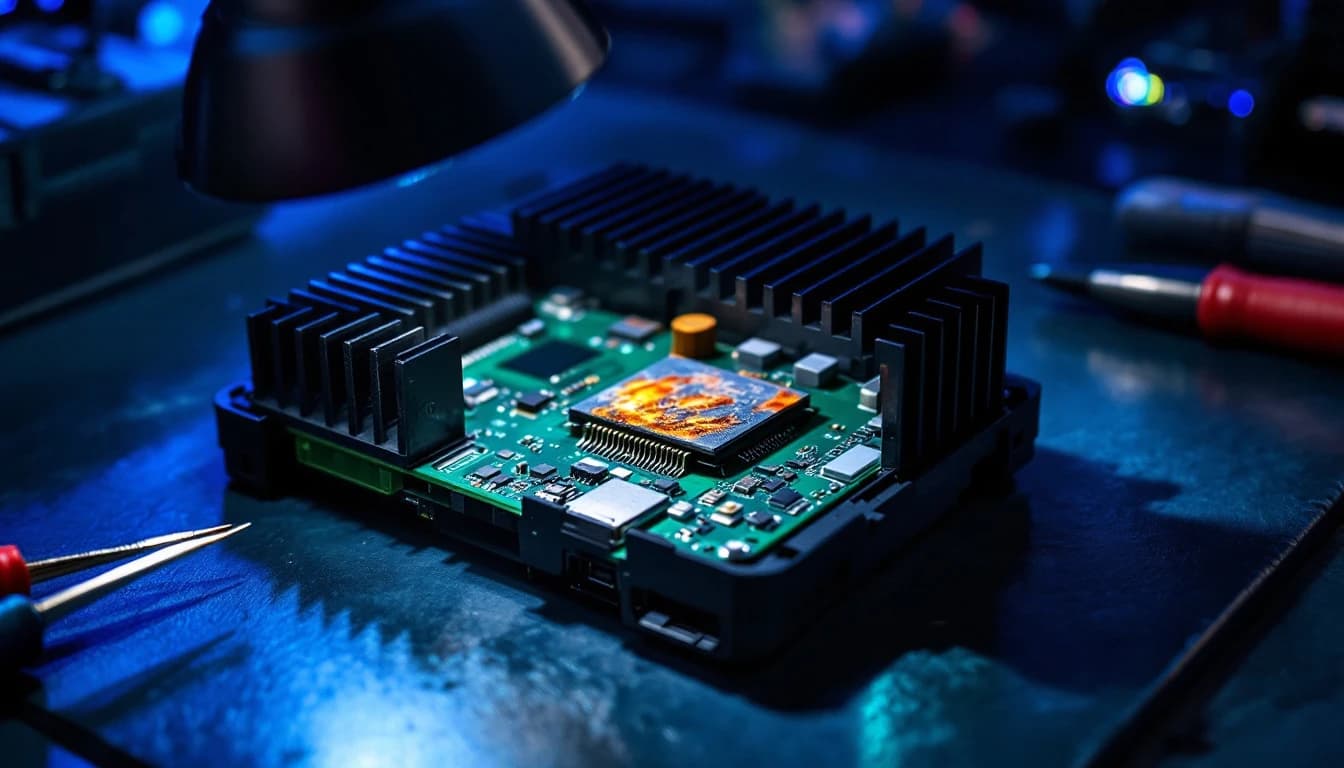
Ford PCM Failure Symptoms and Replacement: Limp Mode, No-Start, Clone or Reflash
Who this guide is for
You are reading this because your Ford is doing something alarming and a scan tool or a shop has pointed at the PCM. Maybe the engine drops into limp mode on the highway, maybe it cranks but will not start, maybe the check-engine light is on with a fistful of implausible codes, or maybe the scanner cannot talk to the powertrain module at all. You have heard "you need a PCM" and you want to understand what that actually means, what it costs, and whether a used module from a salvage yard will just bolt in and work.
The short version: the diagnosis is only half the job. Confirming the PCM has failed is step one. Getting a replacement to run your specific vehicle — with your VIN, your immobilizer data, and the right calibration — is the step that trips up most people. This guide walks through the failure symptoms, why a used Ford PCM is never plug-and-play, and the two bench programming paths that make a replacement work: cloning your original module's data onto a donor, or reprogramming a stock module with the correct OEM calibration. Both are flat-rate mail-in bench jobs. A technician confirms your part numbers and fitment before you ship.
What the Ford PCM actually does
The Powertrain Control Module is the computer that runs your engine and, on most Fords, the transmission too. It reads the crank and cam sensors, the mass-airflow and oxygen sensors, throttle position, coolant temperature, and dozens of other inputs, then commands fuel injectors, ignition timing, idle, the throttle body, and shift points hundreds of times a second. It also holds the security handshake for Ford's PATS (Passive Anti-Theft System) immobilizer, so it decides whether the key in the ignition is allowed to start the engine at all.
Because it sits at the center of everything the drivetrain does, a PCM problem rarely looks like one clean symptom. It looks like the car "acting possessed" — several unrelated systems misbehaving at once. That is the fingerprint of a control-module fault rather than a single failed sensor. Modern vehicles lean on these modules more every year: the average new car now ships with well over a hundred million lines of software running across dozens of controllers, a scale documented by engineering bodies such as SAE International. When the module that coordinates the powertrain starts to fail, the fault fans out.
Symptoms of a failing Ford PCM
No single symptom proves a PCM is bad, but the following patterns, especially in combination, point toward the module rather than a peripheral part.
Limp mode. The engine suddenly limits power, holds a low RPM ceiling, locks the transmission in a single gear, or refuses to rev past a set point. Limp mode is a protective strategy, and a failing PCM can trigger it falsely or get stuck in it because it is reading garbage from its own internal circuits.
Intermittent stalling. The engine dies at idle or while driving and then restarts as if nothing happened. Heat-related solder-joint cracks inside the module are a classic cause — cold it works, hot it drops out.
No-start with good cranking. The starter spins the engine normally but it never catches. If fuel, spark, and compression are present, a PCM that is not commanding injectors, or a PATS fault inside the module, can leave you cranking forever.
No communication. The scan tool cannot establish a connection with the powertrain module. A dead or badly corrupted PCM will not answer on the diagnostic bus at all. This is one of the stronger indicators that the module itself, rather than a sensor, is the problem.
Multiple implausible or conflicting codes. You pull codes and get a scattershot of sensor faults that could not all be true at once — several circuits reading out of range simultaneously. That pattern often reflects a module misreading its own inputs rather than a dozen sensors failing together.
Rough running, misfires, and poor economy. Erratic fuel or timing control from a struggling PCM shows up as a rough idle, hesitation, surging, and worse fuel mileage.
Before condemning a PCM, a good technician rules out the cheap stuff first: corroded grounds, a failing battery or alternator (low voltage makes modules behave erratically), water intrusion at connectors, and chewed wiring. Electronic gremlins in vehicles are common enough that automotive quality studies consistently rank infotainment and electronics among the most-reported problem categories in the industry, as tracked by researchers like J.D. Power. Many "bad PCM" complaints turn out to be a bad ground or a low battery. The module is often the last suspect, not the first.
"The number of PCMs that get replaced when the real fault was a corroded ground or a dying battery would surprise people. But when I see no-comms on the powertrain module, a hot-stall that clears when it cools, and three sensor codes that can't all be real, that's a module. At that point the question isn't diagnosis anymore — it's how do we get a replacement to run this specific car." — Independent driveability technician, 17+ years on domestic and import electronics (anonymized)
Why a used Ford PCM is not plug-and-play
Here is the part that catches people off guard. You find a matching PCM at a salvage yard, it is the same part number, you bolt it in — and the car still will not start, or it starts and runs badly, or it throws immobilizer and VIN-mismatch faults. That is expected. A Ford PCM is married to the vehicle it came from in three important ways.
VIN. The module stores the vehicle identification number. Other modules on the network expect the PCM to report the correct VIN, and a mismatch can set faults and block functions. A donor module reports the donor car's VIN until it is corrected.
PATS immobilizer data. Ford's PATS anti-theft system requires the PCM and the immobilizer control to agree on the security keys programmed to the vehicle. A donor PCM carries the donor vehicle's key data, so your keys are strangers to it — the engine will crank and refuse to start. Vehicle theft is a real design pressure here: hundreds of thousands of vehicles are reported stolen in the United States every year, a figure tracked by the National Insurance Crime Bureau, which is exactly why manufacturers lock the immobilizer to the module and the keys.
Strategy and calibration. Ford PCMs run a "strategy" — the operating software and calibration tables — that is specific to the engine, transmission, model year, and market. A donor from a slightly different configuration can have the wrong strategy for your vehicle, producing driveability problems even after the VIN and PATS are sorted. The correct calibration matters as much as the correct hardware.
This is why "just buy a used one" so often ends in frustration. The hardware can be identical and the module still will not run your car until the data inside it is matched to your vehicle. That matching is a programming job, and it is where a bench service earns its keep.
The two clean paths: clone your original, or reflash a replacement
There are two reliable ways to end up with a PCM that runs your specific Ford. Which one fits depends on the condition of your original module.
Path 1 — Clone your original PCM onto a donor
If your original PCM can still be read — even if it is failing intermittently, as long as its data is intact and recoverable — the cleanest fix is to clone it. Cloning reads all the data out of your original module (VIN, PATS immobilizer data, strategy, calibration, learned adaptives) and writes it onto a matching donor module. The result is a module the car sees as its own: same VIN, same keys, same tune. In most cases you do not have to reprogram keys, and other modules on the network never notice the swap.
This is the Ford PCM clone / VIN transfer service, a flat $250 on the bench. It is the preferred route when your original hardware has failed mechanically or electrically but its memory can still be read, because it sidesteps PATS key relearns and VIN programming entirely — the donor inherits everything.
Path 2 — Reprogram a stock replacement with the correct calibration
If your original module is too far gone to read, or you already have a stock replacement module that needs the right software, the answer is a stock OEM reprogramming. This loads or updates the correct factory calibration for your engine, transmission, model year, and market onto the replacement module, so it runs your vehicle the way Ford intended. Depending on the module and the situation, VIN and PATS steps are handled as part of matching it to your car.
This is the stock OEM reprogramming service, also $250. It is the route when cloning is not possible because the original data cannot be recovered, or when you are starting from a fresh or blank replacement module that needs its calibration written.
The decision between the two is not something you have to figure out alone. Send your part numbers and describe the module's condition, and a technician tells you which path your situation calls for before anything ships.
Clone vs reflash — the side-by-side
| Clone original PCM (VIN transfer) | Stock OEM reprogramming | |
|---|---|---|
| When to use it | Original module readable; hardware failing but data intact | Original unreadable, or starting from a stock/blank replacement |
| What is copied or written | Your VIN, PATS keys, strategy, calibration, adaptives | Correct factory calibration for your engine and model year |
| Key relearn usually needed | No — donor inherits your key data | Sometimes, depending on module and PATS state |
| VIN handling | Carried over from your original | Set to match your vehicle |
| Best outcome | Car sees the module as its own — true drop-in after install | Correct running calibration on a fresh module |
| Price | $250 flat | $250 flat |
| What you ship | Your original module plus the donor | The replacement module to be programmed |
Both are bench jobs done with a regulated power supply, which is safer than flashing a module in the vehicle where a voltage sag from a marginal battery can corrupt the write. If you want a deeper walkthrough of the cloning route specifically, our Ford PCM clone and VIN transfer guide covers it start to finish.
PATS immobilizer considerations
Because the PCM holds part of the PATS security handshake, any PCM work has to account for the immobilizer, and a no-start is frequently a PATS symptom rather than a fuel or spark problem. If the security light flashes, the engine cranks but will not start, and it dies within a second or two of a start attempt, PATS is a prime suspect. Sorting out whether your no-start is an immobilizer issue or a genuine module or sensor fault is worth doing before you spend money on parts — our guide on diagnosing a no-start as an immobilizer versus module problem breaks down how to tell them apart.
Two practical points on PATS and PCM work:
- Cloning avoids most PATS headaches. Because the donor inherits your original module's key data, your existing keys keep working and there is usually no relearn.
- Any key, immobilizer, or security work requires proof of ownership. This is standard and non-negotiable — legitimate programming shops verify that the vehicle is yours before performing security-related work. Have your documentation ready.
The mail-in workflow
The advantage of a bench service is that you never bring a vehicle anywhere — you ship a part. The sequence is straightforward:
- Confirm fitment first. Text us your VIN, the PCM part numbers off the module label (and the donor's numbers if you have one), and a clear photo of the label. A technician confirms whether cloning or reprogramming fits your situation. Nothing ships until fitment is confirmed.
- Remove the module. Unplug and remove the PCM from the vehicle. On many Fords it lives in the engine bay near the firewall or fender; on others it is behind a kick panel. Pack it in an anti-static bag inside a padded box.
- Ship to the workshop. Send it to PO Box 120241, Arlington TX 76012 if you ship USPS — or 1168 W Pioneer Parkway, Arlington TX 76013 if you ship UPS or FedEx (UPS and FedEx cannot deliver to a PO Box), along with the donor module if you are cloning.
- Bench read and program. On arrival the module is powered on a regulated bench supply, read and archived, then cloned or reprogrammed for your vehicle.
- Communication test. The programmed module is verified to communicate before it leaves the shop.
- Return with tracking. The module ships back to you via the return shipping tier you choose at checkout, from $14.95. You reinstall it.
Carrier reliability matters when a module is in transit, which is why tracked shipping through established carriers like USPS or UPS is used both directions. Return shipping is paid by the customer and chosen at checkout.
What programming can and cannot do
Be clear-eyed about scope. Programming solves data and calibration problems. It does not repair mechanical or electrical faults elsewhere in the vehicle.
What the bench service does: reads and archives your original data before any change; clones your VIN, PATS keys, and calibration onto a donor, or writes the correct factory calibration onto a replacement; tests communication before return; and ships back with tracking.
What it does not do: it does not repair wiring, connectors, grounds, or the harness; it does not fix a failing battery or alternator; it does not repair mechanical engine or transmission damage; and it does not diagnose your vehicle for you. If the real fault was a corroded ground and the PCM was never bad, programming a module will not fix the car. That is why the diagnosis has to be sound before you order — confirm the module is actually the failure, not a symptom of something upstream.
Ford's own service information and the broader factory-repair ecosystem, accessible through resources like Ford, define which calibrations apply to which vehicles. A bench service works within those factory definitions rather than inventing anything — the goal is a module that runs your car the way it was built to, verified for your exact configuration first.
Cost, turnaround, and the alternative
Both the clone and the reprogramming are $250 flat, plus return shipping from $14.95 chosen at checkout. Compare that with the alternatives:
- Dealer replacement. A dealer replaces the PCM with a new module and programs it, typically the most expensive route once parts, programming, and labor are totaled, and you are paying dealer labor rates for a bench task.
- Buy a used module and hope. The cheapest up front and the most likely to leave you stranded, because the donor still carries the wrong VIN, wrong keys, and possibly the wrong strategy. Without programming it is a paperweight.
- Mail-in bench programming. One fixed price, fitment verified before you ship, done on a clean regulated bench, returned with tracking.
New-vehicle prices keep climbing — average transaction prices have pushed well past the high-$40,000 range in recent reporting from outlets such as Car and Driver — which makes keeping an older Ford on the road with a correctly programmed module an easy financial decision compared with replacing the vehicle. A $250 bench job that gets a reliable truck or car running again is cheap insurance against a much larger bill.
Frequently asked questions
What are the most common symptoms of a failing Ford PCM? The most common signs are limp mode, intermittent stalling that clears when the module cools, a crank-but-no-start, no communication with a scan tool, and multiple implausible trouble codes at once. Any of these alone can be something else, but together they point strongly at the powertrain module rather than a single sensor.
Can I just install a used Ford PCM from a salvage yard? No, not without programming. A used Ford PCM carries the donor vehicle's VIN, PATS immobilizer key data, and often a different strategy, so it will typically crank without starting or run poorly until it is cloned or reprogrammed to match your specific vehicle. Identical part numbers do not make it plug-and-play.
Should I clone my original PCM or reprogram a replacement? Clone your original if its data can still be read, because the donor inherits your VIN and keys and usually needs no key relearn. Reprogram a replacement when the original is unreadable or you are starting from a fresh module. A technician confirms which path fits after seeing your part numbers and the module's condition.
Will a PCM clone keep my existing keys working? Yes, in most cases. Because cloning copies your original module's PATS immobilizer data onto the donor, your existing keys remain programmed and no relearn is usually required. That is the main reason cloning is preferred whenever the original module is still readable.
Does PCM work require proof of ownership? Yes. Any key, immobilizer, or security-related programming requires proof that you own the vehicle. This is a standard, non-negotiable safeguard, and legitimate shops verify ownership before performing PATS or key work. Have your documentation ready before you ship.
Can programming fix a no-start that is actually a wiring or battery problem? No. Programming corrects data and calibration inside the module; it cannot repair grounds, wiring, connectors, a weak battery, or a failing alternator. If the real fault is electrical or mechanical, the module was never the problem and a program will not fix the car, so confirm the diagnosis first.
The bottom line
A failing Ford PCM shows itself through limp mode, stalling, a no-start, no communication, and clusters of codes that cannot all be true — but the module should be the last suspect, after grounds, battery, and wiring are ruled out. Once you have confirmed the PCM is genuinely the failure, the real work is getting a replacement to run your specific vehicle, because a used Ford module is never plug-and-play: it carries the wrong VIN, the wrong PATS keys, and sometimes the wrong strategy.
Two bench paths solve that cleanly. Cloning copies your original module's data onto a donor so the car sees its own PCM, at a flat $250 through the Ford PCM clone / VIN transfer service. Reprogramming loads the correct factory calibration onto a replacement, also $250, through stock OEM reprogramming. Both are mail-in bench jobs done on a regulated supply, returned with tracking, with return shipping from $14.95 chosen at checkout. Proof of ownership is required for the security side of the work, and programming cannot repair wiring or mechanical faults. Text us your VIN and PCM part numbers and a technician confirms the right path and your exact fitment before anything ships.
Ship your module today
Flat-rate pricing, 24-hour bench turnaround, return speed your choice at checkout. Most jobs back on your bench within a week.
More from the Lab
Ford Won't Start With the Theft Light Flashing? PATS, PCM, and What to Do
12 min · July 13, 2026

Ford EEC-V PCM Cloning: Exactly Which Models and Years Are Covered (1996–2004), and What "Where Supported" Really Means
12 min · July 16, 2026
Chrysler, Dodge & Jeep PCM Replacement: Why a Used PCM Won't Start (SKIM / Sentry Key)
11 min · July 13, 2026
P0606 PCM Processor Fault: Diagnosis, Repair vs Replacement, and the Cheapest Real Fix
12 min · July 26, 2026