
Ford Won't Start With the Theft Light Flashing? PATS, PCM, and What to Do
What the flashing theft light is telling you
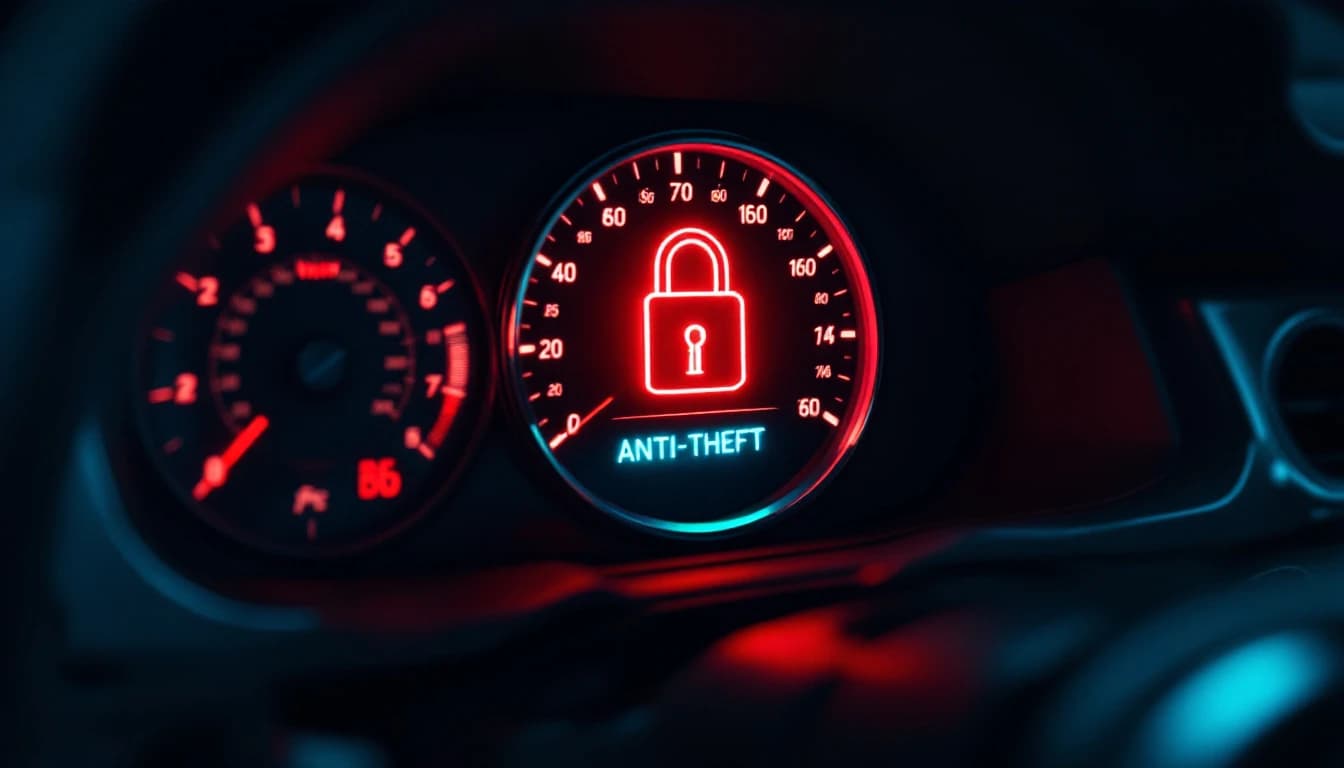
A Ford, Lincoln, or Mercury that cranks over strongly but will not fire — while the theft or security light on the dash blinks rapidly instead of following its normal brief bulb-check — is showing you the single most recognizable immobilizer symptom on the platform. The engine is mechanically fine. Fuel and spark are being withheld on purpose because the Passive Anti-Theft System (PATS) did not authenticate a valid key before you turned it.
PATS is Ford's transponder immobilizer, fitted across Ford, Lincoln, and Mercury vehicles since the late 1990s. The idea is simple and effective: a small chip in the key head answers a coded radio challenge from an antenna ring around the ignition. If the answer matches what the vehicle's immobilizer expects, the engine control module is allowed to run. If it does not — wrong key, dead transponder, failed antenna, or corrupted immobilizer data — the module blocks the start and the theft light flashes to tell you why.
That design is not decoration. The National Highway Traffic Safety Administration has long identified electronic engine immobilizers as one of the most effective anti-theft technologies ever deployed, and research summarized by the Insurance Institute for Highway Safety has associated immobilizers with theft-rate reductions on the order of 40 percent for the vehicles that carry them. The National Insurance Crime Bureau reports that well over one million vehicles are still stolen in the United States in a typical year — a reminder of why manufacturers keep hardening these systems rather than relaxing them. The scale of the platform matters too: Ford's F-Series has ranked among the best-selling vehicle lines in America for decades, moving well over half a million units in a strong year per Car and Driver sales reporting, so even an uncommon immobilizer fault shows up on a very large number of vehicles.
The catch is that the same system protecting your Ford is also what strands it when a component in the authentication chain fails. Understanding which part of PATS is involved tells you whether you need a key, a repair, or bench module work.
The PATS generations — a short history
PATS has evolved through several architectures, and the generation you have determines where the immobilizer data lives and how a no-start gets fixed.
Early PATS (transceiver in or near the cluster). The first widespread designs used a standalone transceiver module, often integrated with or mounted near the instrument cluster, holding the key codes. The cluster or a dedicated PATS module talked to the powertrain control module (PCM) over a data line and released the start when a key matched. On these cars a failed transceiver ring or a dead cluster can trigger a flashing-light no-start even with the correct key in hand.
PCM-centric PATS. Through the 2000s, Ford consolidated immobilizer functions so the PCM itself stored PATS parameters and made the enable decision. This is the generation where a replacement PCM causes the most trouble: swap in a used module that never learned your vehicle, and it will crank-no-start because its stored immobilizer data belongs to a different VIN.
IPC and BCM-based PATS on HS-CAN vehicles. Newer Fords moved key authentication onto the high-speed CAN network, with the instrument panel cluster (IPC) or body control module (BCM) coordinating PATS and passing an enable signal to the PCM. These systems are more capable — they support smart keys and push-button start on many models — but they also mean a no-start can originate in more than one module, so accurate diagnosis matters before any part is replaced.
Across every generation the principle is identical: no valid key authentication, no engine. What changes is which module holds the secret and which module has to agree before the PCM lets the engine run.
What actually fails
When a customer describes a flashing theft light and a crank-no-start, the root cause almost always falls into one of a few buckets.
The transceiver ring or antenna. The coil that reads the transponder sits around the ignition lock. If it cracks, corrodes, or loses connection, the vehicle cannot read a perfectly good key. This is common on higher-mileage vehicles and is usually a component replacement rather than a programming job.
A dead or damaged transponder key. Transponder chips are durable but not immortal. A cracked key head, water damage, or a demagnetized chip can leave a key that turns the ignition but no longer answers the PATS challenge. If a second key still starts the car, the first key is the suspect.
Corrupted PCM immobilizer data. A voltage event, a botched in-vehicle flash, or an aging module can scramble the PATS parameters stored in the PCM. The module is physically fine but its immobilizer table is unreadable, so it refuses to enable. This is where bench work becomes the clean fix.
A replacement PCM that never learned the car. This is the big one. Buy a used PCM from a salvage yard or online, bolt it in, and it will crank-no-start because it carries the donor vehicle's VIN and PATS data — not yours. Marrying that module to your car is exactly what a bench service does.
All keys lost. If every working key is gone — a common situation on inherited, auction, or theft-recovery vehicles — the system has nothing valid to authenticate. Depending on the platform this is resolved by adding keys through the correct security procedure or by bench-programming the module. Because all-keys-lost work grants the ability to start a vehicle, proof of ownership is required before any such job. If you want the deeper decision tree on losing every key, our immobilizer versus module no-start diagnosis guide walks it end to end.
Why a used or replacement PCM will not just run
This trips up more do-it-yourselfers and even shops than any other PATS issue, so it is worth being precise.
A Ford PCM is not a generic box. On PATS-integrated generations it stores the immobilizer keys, the VIN, and a security relationship tied to the vehicle it came from. When you install a donor PCM, three things are wrong at once: the VIN does not match, the stored key data belongs to another car, and the security handshake with the cluster or BCM will not complete. The result is a crank-no-start with the theft light flashing, even though the module is a genuine Ford part in perfect working order.
There are two legitimate paths back to a running engine, and choosing between them is the heart of this article.
The first is PCM cloning, also called a VIN transfer. If your original PCM is physically damaged — water intrusion, a blown driver, a cracked board — but you can still read its data, we copy that data, including the VIN and PATS parameters, onto a matching donor PCM. The donor then behaves exactly like your original: same VIN, same keys, plug-and-play with no dealer visit. This is the cleanest outcome because your existing keys keep working. Full detail lives on the Ford PCM clone and VIN transfer service page and in our dedicated PCM cloning walkthrough.
The second is a stock OEM reflash when a module needs its factory calibration and immobilizer data rebuilt to run correctly on the vehicle. If a PCM has corrupted software or needs to be restored to a known-good factory state before it can relearn keys, restoring the correct OEM calibration is the fix — see stock OEM reprogramming.
PATS delete — the legitimate cases
Some situations call for removing PATS from the equation entirely rather than restoring it. A Ford PATS delete turns off the immobilizer requirement in the module so the engine will run without transponder authentication.
This is a real repair tool, not a shortcut around theft protection, and it is offered only for legitimate uses: repair and restoration work, off-road and racing vehicles, engine-swap and standalone builds, and orphaned-platform cases where the original immobilizer infrastructure no longer exists — all where legally permitted. Typical scenarios include a race car that needs a bulletproof no-crank-lockout path, an engine-swapped project where the donor immobilizer is gone, or a repair where a discontinued PATS component cannot be sourced and the vehicle is used off-road.
Two rules govern this work and never bend. First, proof of ownership is required before any PATS delete or all-keys-lost job — we do not remove anti-theft protection for anyone who cannot show the vehicle is theirs. Second, the customer is responsible for legal compliance in their jurisdiction and for their vehicle's use. A PATS delete is appropriate for the cases above; it is not a way to defeat theft protection on a normally registered road vehicle where that would not be permitted. The Ford PATS delete service page spells out the accepted use cases.
One more honest limit: software does not repair mechanical damage. If your Ford cranks-no-start for a reason that is not the immobilizer — a failed crank sensor, a fuel-pump problem, a timing issue — no PATS work will fix it. Bench programming solves security and data faults, not broken parts.
"The number of good used PCMs I see get thrown away because someone bolted one in and it wouldn't start is staggering. The module was fine — it just carried the wrong VIN and PATS data. Nine times out of ten the right move is cloning the customer's original data onto that donor so their existing keys still work. People reach for a delete when they don't actually need one." — Independent automotive locksmith and module programmer, 16+ years on Ford PATS platforms (anonymized)
PATS delete vs PCM clone vs OEM reflash — how to choose
The three bench services solve three different problems. Match your situation to the column.
| Ford PATS delete | Ford PCM clone / VIN transfer | Stock OEM reprogramming | |
|---|---|---|---|
| Core problem it solves | Immobilizer removed for legitimate off-road, race, repair, or orphaned-platform use | A donor PCM carries the wrong VIN and key data | A module needs its factory calibration and immobilizer data restored |
| Do your existing keys still work | Not required — no transponder authentication | Yes — your original keys carry over | Yes, after relearn where applicable |
| Best when | Original immobilizer gone, race/off-road build, or discontinued part | Original PCM is damaged but readable and you have a matching donor | Software corrupted or module needs a known-good factory state |
| Keeps factory theft protection | No (by design) | Yes | Yes |
| Proof of ownership required | Yes | Yes | Yes |
| Price | $199 | $250 | $250 |
| Where it happens | Bench, mail-in | Bench, mail-in | Bench, mail-in |
Read the table this way. If your Ford's original PCM is dead but you can still get data off it and you want your keys to keep working, clone it — that is the $250 VIN transfer. If a module's software is corrupted and needs the factory calibration rebuilt, the stock OEM reflash is $250. If you have a legitimate off-road, race, repair, or orphaned-platform reason to run without the immobilizer and you can prove ownership, the PATS delete is $199. When you are not sure which one fits, text us the VIN, the symptom, and a photo of the module label and we will tell you before you ship anything.
Why bench programming beats guessing in the driveway
Doing this work on the bench, mailed in, has real advantages over an in-vehicle attempt.
A regulated bench power supply holds a rock-steady voltage during a read or write. In-vehicle flashing with a marginal battery is one of the classic ways a PCM gets bricked mid-write — a voltage sag at the wrong moment can corrupt the very immobilizer data you were trying to fix. On the bench that risk is removed.
The bench is also where a damaged module's data can be recovered before it degrades further. When a customer ships a water-damaged or partly failed PCM, reading and archiving its calibration and PATS data first — before any modification — preserves the information needed to clone it to a healthy donor. That original data is the whole reason a VIN transfer keeps your keys working.
And bench work sidesteps the parts-cannon problem. Rather than replacing a cluster, then a transceiver, then a PCM hoping one of them was the fault, the right module gets the right operation once. The J.D. Power dependability studies consistently rank electronics and infotainment among the top three most-reported problem categories on modern vehicles, and MotorTrend has documented how expensive control-module replacement has become — which is exactly why cloning or reflashing your existing module, rather than buying and marrying a new one at a dealer, so often wins on cost.
The mail-in workflow
You never bring a vehicle anywhere — you ship a part. The sequence is short.
- Verify first. Text or email your VIN, the PCM part or service number off the module label, a photo of that label, and a clear description of the symptom (theft light flashing, cranks-no-start, replaced PCM, all keys lost). We confirm the PATS generation and the correct service before anything ships.
- Show ownership for immobilizer work. For a PATS delete or any all-keys-lost job, be ready to provide proof of ownership. This is non-negotiable.
- Remove and ship the module. Once we have confirmed the fix, pull the PCM and ship it to PO Box 120241, Arlington TX 76012 if you ship USPS — or 1168 W Pioneer Parkway, Arlington TX 76013 if you ship UPS or FedEx (UPS and FedEx cannot deliver to a PO Box). Pack it well — anti-static bag, padded box.
- Bench read and archive. On arrival we power the module on a regulated bench supply and read and archive its existing data before any change.
- Perform the service. Clone the data to your donor, restore the OEM calibration, or apply the PATS delete — whichever your situation called for.
- Communication test. The module is tested on the bench before it leaves the shop.
- Return with tracking. The module ships back to you via the flat-rate return option you chose at checkout (from $14.95, up through faster tiers). Return shipping is paid by the customer. You reinstall it.
Because fitment and the correct service are confirmed before you ship, and because your original data is archived before any change, the mail-in path is both safer and more predictable than chasing the fault with replacement parts in the driveway.
Frequently asked questions
Why is my Ford theft light flashing and the engine cranks but will not start? That flashing theft light with a crank-no-start is the classic PATS immobilizer signature: the system did not authenticate a valid key, so it is withholding fuel and spark on purpose. The engine is usually mechanically fine — the fault is in the key, the transceiver, or the module's immobilizer data.
Can I just install a used PCM from a salvage yard and drive away? No. A used Ford PCM carries the donor vehicle's VIN and PATS immobilizer data, so it will crank-no-start with the theft light flashing on your car. It has to be cloned to your original data or otherwise married to your vehicle before it will run and accept your keys.
What is the difference between a PATS delete and a PCM clone? A PCM clone copies your original module's VIN and key data onto a donor so your existing keys keep working and factory theft protection stays intact. A PATS delete removes the immobilizer requirement entirely for legitimate off-road, race, repair, or orphaned-platform use where legally permitted — the two solve very different problems.
Do you need proof that the vehicle is mine? Yes. Proof of ownership is required for any PATS delete or all-keys-lost job because that work grants the ability to start the vehicle. We do not remove or bypass anti-theft protection for anyone who cannot show the vehicle is theirs.
Will bench programming fix a crank-no-start that is not the immobilizer? No. If the theft light is behaving normally and the no-start comes from a mechanical or sensor fault — crank sensor, fuel pump, timing — bench PATS work will not fix it. Programming solves security and data faults, not broken parts, and software does not repair mechanical damage.
Is a PATS delete legal? A PATS delete is offered only for legitimate repair, off-road, racing, engine-swap, and orphaned-platform uses where local law permits it, and the customer is solely responsible for compliance in their jurisdiction. It is not a way to defeat theft protection on a normally registered road vehicle where that would not be allowed.
How much does it cost and how long does it take? A Ford PATS delete is $199, and a Ford PCM clone or VIN transfer and a stock OEM reprogramming are each $250, plus customer-paid return shipping from $14.95. Turnaround is fast once your module arrives and fitment has been confirmed from your VIN and label.
The bottom line
A flashing theft light and a Ford that cranks but will not start is a PATS immobilizer problem, and it is one of the most solvable no-starts on the platform once you know which part of the authentication chain failed. A bad transceiver or a dead transponder is a component fix. Corrupted immobilizer data or a replacement PCM that carries the wrong VIN is bench work — and here the choice is clear: clone your original module's data so your keys keep working (Ford PCM clone and VIN transfer, $250), restore a corrupted module to its factory state (stock OEM reprogramming, $250), or, for legitimate off-road, race, repair, and orphaned-platform cases where legally permitted and with proof of ownership, remove the immobilizer requirement (Ford PATS delete, $199).
Software does not repair mechanical damage, proof of ownership is required for all immobilizer work, and the customer is responsible for legal compliance. With those understood, the mail-in bench path is the safe, fixed-price way through it — text us your VIN, the symptom, and a photo of the module label and we will confirm the right service before anything ships.
Ship your module today
Flat-rate pricing, 24-hour bench turnaround, return speed your choice at checkout. Most jobs back on your bench within a week.
More from the Lab

Ford EEC-V PCM Cloning: Exactly Which Models and Years Are Covered (1996–2004), and What "Where Supported" Really Means
12 min · July 16, 2026
Ford PCM Failure Symptoms and Replacement: Limp Mode, No-Start, Clone or Reflash
12 min · July 13, 2026
Ford PATS Delete 1996+ Passive Anti-Theft: Mail-In 2026
12 min · June 18, 2026
Toyota & Lexus ECU Immobilizer Reset: Adding New Keys to Older Turn-Key Models Without a Dealer ECM
13 min · July 13, 2026