

GM VATS Delete: Memcal Chip Service 1986-1993 (2026)
Who this is for
You are reading this because one of these is true:
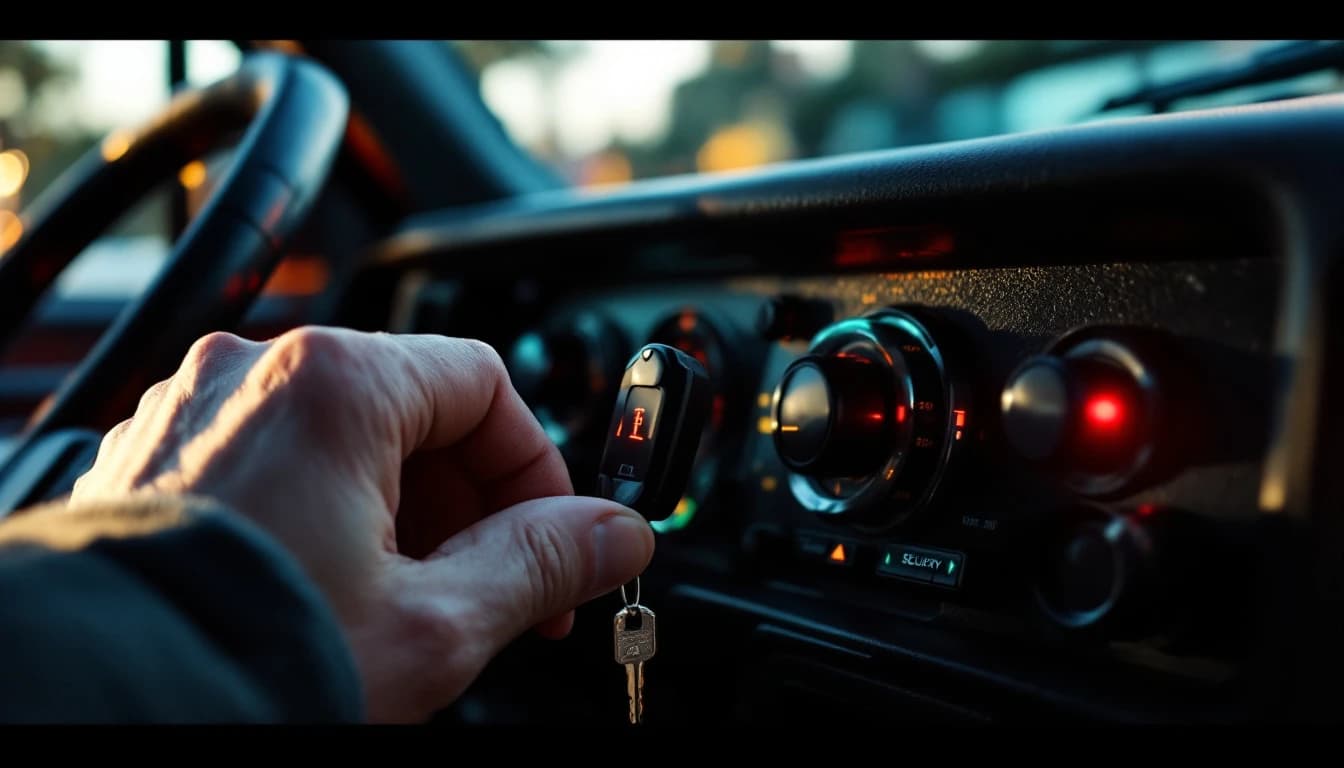
- Your 1986-1993 Camaro, Firebird, Trans Am, or Corvette cranks strong but will not start, and the SECURITY light is on.
- The car starts sometimes. Wiggle the key, wait ten minutes, try again — classic worn VATS pellet contacts.
- You replaced the ignition lock cylinder and now the car immobilizes.
- You installed a used ECM from a donor car and it will not run.
- Someone quoted you $400+ for a new ignition cylinder, two coded keys, and a theft module on a 33-year-old car.
- You already tried a resistor bypass in the steering column and it either did not work or stopped working.
If the engine cranks normally, has fuel and spark hardware intact, and the only fault is VATS-related, a chip-level VATS delete is the correct permanent fix. It removes the anti-theft logic from the car's brain rather than tricking it.
This is a genuinely uncommon service. Most shops send these cars away, and most online "VATS delete chips" are generic parts that ignore your car's actual calibration. We explain the difference below, and why it matters.
What VATS actually is
VATS — Vehicle Anti-Theft System, also sold as PASS-Key I and PASS-Key II — was General Motors' first mass-market passive immobilizer, introduced on the 1986 Corvette and spread across the F-body and Y-body lines through 1993.
The mechanism is deliberately simple, because it predates cheap automotive microcontrollers. A resistor pellet is embedded in the key blade. There are 15 possible resistance values. When you insert the key, two tiny contacts in the ignition lock cylinder read the pellet. The theft-deterrent module compares that resistance to the value it expects. On a match, it sends a signal to the ECM, and only then does the ECM enable the fuel injectors.
Per the NHTSA Federal Motor Vehicle Theft Prevention Standard (49 CFR Part 541), theft-prevention requirements pushed manufacturers toward exactly this kind of passive system during the late 1980s, and the National Insurance Crime Bureau hot-vehicles reports from that era show GM performance cars near the top of theft rankings — which is precisely why the Corvette and F-body got it first.
The design worked. It also aged badly.
Why VATS fails on a 33-year-old car
Nothing about VATS is electronically sophisticated. That is the problem. Every failure mode is mechanical wear on parts that no longer exist in the supply chain.
Worn pellet contacts. The two contacts inside the lock cylinder are thin, spring-loaded, and ride against the key every single time you start the car. After three decades of use, they oxidize, flatten, and lose contact intermittently. This is the single most common cause. The car starts fine one morning and refuses the next.
Broken pellet wires. The wiring from the cylinder runs through the steering column, flexing every time the wheel turns and every time the tilt column moves. These wires break internally — often with no visible damage.
Worn key pellets. The resistor itself abrades. A pellet reading out of tolerance is read as the wrong key.
Failed theft-deterrent module. The module lives under the dash in a hot, vibrating environment. Capacitors fail, solder joints crack, and replacements are long discontinued.
Donor ECM installs. Swap in a used ECM and its calibration expects the donor car's VATS configuration. The engine will not run.
The result is the same in all five cases: the starter cranks, the engine turns over, no fuel is injected, and the SECURITY lamp illuminates. Fuel pump primes, spark may be present, compression is fine. The car is mechanically healthy and electronically locked.
The three ways people try to fix it
1. Replace the ignition, cylinder, and keys (the dealer route)
Correct in principle, expensive in practice, and increasingly impossible. New old stock lock cylinders for a 1991 Camaro are scarce, coded keys must be cut and matched, and the labor is real. Quotes of $400-800 are common on cars worth $4,000-15,000. And you have restored a failure-prone 1980s system that will wear out again.
2. The resistor bypass (the forum route)
The popular DIY fix: find the two VATS wires in the steering column — often described as the orange loom — measure the pellet resistance in your working key, and solder a matching fixed resistor across them permanently. The theft module then always sees a valid key.
This works, and thousands of cars run this way. But be clear about what it is: the anti-theft system is still active and still gating your fuel injectors. You have simply given it a permanent yes. If the theft module itself fails, you are stranded again. If the solder joint vibrates loose in a hot column, you are stranded. You have added a failure point to a car you were trying to make more reliable, and left the original failure points in place.
3. Delete VATS from the calibration (the chip route)
This is what we do, and it is categorically different. Instead of feeding the anti-theft system a fake pass, you remove the anti-theft check from the ECM's program. The ECM stops asking about VATS at all.
No key pellet needed. No resistor needed. No theft module needed. The lock cylinder can be replaced with any cylinder. Any cut key starts the car. There is nothing left to fail, because the logic is gone.
How VATS delete actually works, at the byte level
Here is the part most articles skip, and the part that separates a real service from a parts-bin chip.
Every 1986-1993 GM ECM of this era uses a memcal — a small plug-in cartridge holding two things:
- A 27C256 EPROM (32 KB) containing the engine calibration and program code
- Laser-etched resistor packs for limp-home and cold-start behavior, which cannot be duplicated
The processor is a Motorola 68HC11 — the same 8-bit controller family documented in NXP's HC11 reference manual — with the 32 KB PROM mapped into CPU space at $8000-$FFFF. Inside that 32 KB, the VATS behavior is controlled by one enable bit.
For the $8D mask family — 1227727 and 1227730 ECMs, covering 1986-1993 TPI Camaro, Firebird, and 1990-1991 Corvette — that bit lives at offset 0x16, bit 4. For the $DA3 mask — ECM 16159278, the 1992-1993 LT1 F-body — it sits at 0x18, bit 4. TunerPro's definition files label it plainly: "VATS Select (X = Enabled)".
Set means VATS is on. Clear it and VATS is off.
But you cannot simply flip that bit and burn a chip, and this is where most DIY attempts fail. Every one of these calibrations carries a checksum: the sum of bytes 0x08 through 0x7FFF, stored as a 16-bit big-endian value at 0x06. Change any byte in the calibration and that stored value is now wrong. Depending on the mask, the ECM may refuse the calibration outright, throw codes, or run in a degraded limp mode.
So a correct VATS delete is a two-step edit:
- Clear the VATS enable bit
- Recompute and rewrite the checksum
Then verify: exactly two bytes should differ from the original — the VATS byte and the checksum. Anything else means something went wrong.
That is the entire fix. It is small, surgical, permanent, and completely reversible — your original chip is untouched.
Why generic "VATS delete chips" are a gamble
Search any auction site and you will find $25-40 chips advertised as VATS delete for these cars. Understand what you are buying: a calibration from somebody else's car, with the VATS bit cleared.
Your 1991 Firebird's PROM contains far more than anti-theft settings. It contains the spark advance tables, the volumetric efficiency tables, the injector constants, the axle ratio, the transmission configuration, the fan and idle strategy — all specific to your engine, transmission, and rear gear.
Install a generic chip and you have deleted VATS and simultaneously replaced your entire engine calibration with a stranger's. The car may run. It may also ping under load, idle poorly, shift wrong, or run lean at cruise. A tuning discussion on this exact risk from the Third Generation F-Body message boards — one of the longest-running GM tuning communities on the internet — notes that Corvette spark maps dropped into an iron-head Camaro carry a real detonation risk, because the Corvette used aluminum heads and a different ignition module.
The correct approach is to start from your own calibration and change only the anti-theft bit. That is what we do. Your broadcast code, your tables, your car — with two bytes different.
What Auto Module Lab supports
We work at the mask level, because that is what determines the byte layout.
| Mask | ECM | Vehicles | Status |
|---|---|---|---|
| $8D | 1227727 / 1227730 | 1986-1993 TPI 5.0 and 5.7 — Camaro, Firebird, Trans Am, plus 1990-1991 Corvette | Live |
| $DA3 | 16159278 | 1992-1993 LT1 F-body — Camaro Z28, Firebird, Trans Am | Live |
| $DA2 | 16159278 | 1992-1993 LT1 Corvette (Y-body) | Verify by request |
Broadcast codes we handle within those families include AUJP, ARFP, ANHT, ANHU, ANHW, ANJA, ANJF, AXCN, AXXB, AXXC, AXXD, AXXF, AWFU, BDZL, and BDZP. Your code is the four-letter stamp on the chip label — for example DELCO BDZL 9600.
One honest exclusion. Not every 1227730 runs ECM-level VATS. We examined a 1991 3.1L MPFI calibration ($A1 mask, code AUXW) where the VATS enable bit ships already clear and the VATS frequency constants are zeroed. That calibration never consults VATS. If your car is one of these, a chip is not your fix — the problem is PASS-Key or the body control side, and we will tell you that rather than sell you a file. Our verifier checks for this automatically and refuses to charge.
That distinction matters, and it is why we check your actual file instead of matching a part number.
Two ways to buy it
Online calculator — $150
For anyone with a chip programmer, the GM VATS-OFF online calculator does the whole job in seconds. The flow is upload, verify, pay, download:
- Read your memcal chip and upload the 32 KB file
- We byte-verify it for free — mask identified, VATS state confirmed, read quality checked
- If it verifies, you pay and download your finished VATS-off file instantly
- Burn it to a blank 27C256 and install
You are not charged if we cannot match your file. If the upload is the wrong size, a corrupted read, an unsupported mask, or a calibration with no VATS to remove, you get a plain-English explanation and no charge. Same policy as every calculator on our Online Calculators hub.
Mail-in module service — $250
For anyone without a programmer, or with a chip that will not read. Ship us the ECM or the memcal and we handle everything: read it, identify the mask, patch VATS out, correct the checksum, burn a new 27C256, install it on an adapter that preserves your factory resistor packs, and ship it back ready to plug in. See How It Works for the shipping flow and turnaround.
Mail-in is the right call when your chip is physically damaged. We recently worked a 1993 Trans Am whose memcal chip had corroded pins — it produced different garbage data on every read attempt, with entire address lines dead. The customer could never have read it at home. Because the calibration is identical across every car with the same broadcast code, we sourced a verified stock BDZL calibration, applied the VATS patch, corrected the checksum, and produced a working chip without ever recovering the damaged original.
Reading your own memcal (for the online option)
The chip is soldered to the memcal board. Two approaches:
Use a memcal header. A Moates HDR1 plugs into the memcal and breaks the chip out to a standard 28-pin footprint so you can read it in a programmer without desoldering. Cleanest option.
Desolder the chip. Wick the 28 pins clean, lift the chip, read it as a 27C256 in any programmer.
Two things go wrong constantly, so check both:
Wrong chip type selected. These are 27C256 (32 KB) parts. If your programmer is set to 27C512 you will get a 65,536-byte file. Wrong size, wrong data — set it to 27C256.
Dirty or bent pins. Chips pulled from memcals often carry solder residue or bent legs, and a pin that does not seat produces garbage that can look plausible. Read the chip three times and compare the file hashes. If all three match, your read is good. If they differ, clean the pins, reseat fully, and try again. Our verifier detects this pattern — repeating data blocks and dead address lines — and rejects the upload rather than patching corrupt data.
If Windows will not talk to your programmer, note that many TL866-class drivers are SHA-1 signed from 2012 and modern Windows will not load them. Running the software in a Windows 10 virtual machine solves it.
Installing the finished chip
Burn the file to a blank 27C256. Two chip types work:
- AT27C256R — one-time programmable, about $3. One burn per chip, so buy several.
- W27C257 — electrically erasable, reusable in your programmer. Better if you expect to iterate.
For installation, a Moates G1 adapter is the clean path on 1986-1993 TPI and LT1 memcals. It plugs into the ECM's memcal socket, your memcal plugs onto it, and your programmed chip substitutes for the original PROM — while still using the memcal's laser-etched resistor and knock packs, which cannot be duplicated. Your original chip stays soldered in place, bypassed and untouched.
That last detail is worth emphasizing: the modification is fully reversible. Pull the adapter, and the car is exactly as it left the factory. For a numbers-matching Corvette or a restored Trans Am, that matters.
What changes after the delete
The car starts with any cut key. The lock cylinder becomes a plain mechanical lock. The theft-deterrent module can be removed or left disconnected. The SECURITY lamp stops commanding a no-start.
Everything else is unchanged. Fuel tables, spark tables, idle, transmission behavior, emissions function — all identical, because only two bytes moved.
One consideration before you order: the car no longer has factory anti-theft. For a daily-driven car in a high-theft area, that is a real tradeoff, and an aftermarket alarm or a hidden kill switch is worth considering. Per Insurance Institute for Highway Safety research on immobilizer effectiveness, factory immobilizers measurably reduce theft rates — so removing one is a decision, not a default. For a garaged weekend car, a show car, or a project that is currently undriveable because of a failed 33-year-old resistor contact, most owners find the tradeoff obvious.
Why almost nobody offers this
VATS delete as a real service requires a specific and unusual stack: mask-level knowledge of GM OBD1 calibrations, verified byte offsets per family, correct checksum handling, a working EPROM programmer with the right adapters, and enough judgment to tell a customer when their calibration has no VATS at all.
Most shops have moved on to CAN-bus era work, where the tooling is turnkey. The classic GM community is served mostly by generic chips and forum resistor tricks. As one long-time GM calibration specialist put it — a technician with over two decades in OBD1 work, speaking on background — "The information has been in the community for twenty years. What's missing is anyone willing to do it properly on a per-car basis for a reasonable price."
That is the gap this service fills. We are not inventing anything. We are doing it correctly, per car, with the checksum handled and the customer's own calibration preserved.
Proof of ownership is required
Anti-theft removal is legitimate repair work, and we treat it that way. Before any VATS delete — online file or mail-in — we require documentation that the vehicle is yours: title, registration, or a signed repair authorization if you are a shop working on a customer's car. Shops working under NASTF Vehicle Security Professional credentials can supply that instead.
This is not a formality we can waive. It is the line between a restoration service and helping someone defeat security on a car they do not own, and it is standard practice across every reputable module shop.
Frequently asked questions
Will a VATS delete pass emissions or affect how the car runs?
No, and no. The VATS enable bit governs only whether the ECM consults the anti-theft system before enabling fuel injectors. Emissions strategy, closed-loop fueling, spark advance, EGR, and the diagnostic monitors are untouched — only two bytes in the entire 32 KB calibration change, and neither is emissions-related. The car runs precisely as it did before, minus the anti-theft lockout.
Can I just buy a VATS delete chip on eBay for $30 instead?
You can, and it may run, but understand the tradeoff. Those chips carry somebody else's complete calibration — their spark tables, fuel tables, axle ratio, and transmission configuration — not just a cleared VATS bit. If their car had aluminum heads and different gearing than yours, you may get detonation, poor idle, or wrong shift behavior. Starting from your own calibration and changing only the anti-theft bit avoids that entirely.
Is this reversible if I ever want the car back to stock?
Completely. Your original chip stays soldered to the memcal board, untouched, and the new chip installs on an adapter that bypasses it. Pull the adapter and the car is exactly as it left the factory. For a numbers-matching Corvette or a documented restoration this matters, and it is why we recommend the adapter route rather than desoldering and replacing the original PROM permanently.
What if my chip is damaged and will not read?
Mail-in handles it. Because every memcal with the same four-letter broadcast code contains an identical calibration, we do not need to recover your specific damaged chip — we can source a verified stock calibration for your code, apply the patch, and burn a working chip. We have done exactly this on a chip with corroded pins that produced different corrupt data on every read attempt.
How do I know whether my car has VATS or Passlock?
Roughly, 1986-1993 GM performance cars use VATS with a resistor pellet visibly molded into the key blade, and 1995-2014 vehicles use Passlock with a Hall-effect sensor and a plain key. If you can see a small black pellet in your key blade, you have VATS and this service applies. If your key is plain metal and the dash reads THEFT or WAIT TO START, see our GM Passlock guide instead — that is a body-control-side fix, not a chip fix.
Does every 1986-1993 GM ECM actually have VATS in the chip?
No, and this is why we verify before charging. Some calibrations on the same ECM part number ship with the VATS enable bit already clear and the anti-theft frequency window zeroed, meaning that ECM never consults VATS at all. We examined a 1991 3.1L calibration exactly like this. On those cars a no-start is a PASS-Key or body-control problem, and a chip will not fix it. Our verifier detects this automatically and declines the order.
Getting started
Have a programmer? Read your chip and use the GM VATS-OFF online calculator — verification is free, and you only pay if we can produce your file.
No programmer, or a chip that will not read? Our GM VATS Delete service covers mail-in, and we return the module ready to install.
Want the broader picture on VATS across GM's whole lineup? Our VATS delete on older and classic GM cars guide covers the 1986-2005 range including later non-memcal ECMs. This article is the deep technical treatment of the 1986-1993 memcal era specifically. For how online file services compare to mail-in work generally, see online ECU immo-off vs mail-in.
Send us the four-letter broadcast code from your chip label and the ECM part number, and we will tell you before you spend anything whether your car is one we can do.
Ship your module today
Flat-rate pricing, 24-hour bench turnaround, return speed your choice at checkout. Most jobs back on your bench within a week.
More from the Lab

GM VATS Delete 1986-2005 Passkey Resistor: Mail-In 2026
12 min · June 18, 2026

GM VATS Delete on Older & Classic Cars: Resistor-Pellet Keys, Which Models, and the Bench Fix
11 min · July 13, 2026
GM Won't Start With the Security Light On? Passlock, VATS, and Global A by System
12 min · July 13, 2026

GM Passlock Fix: Cluster Swap, BCM, Key (2026 Guide)
12 min · May 30, 2026