
Honda & Acura Won't Start, Green Key Light Blinking? Immobilizer and ECU Options
The symptom: green key light blinking, cranks but no start
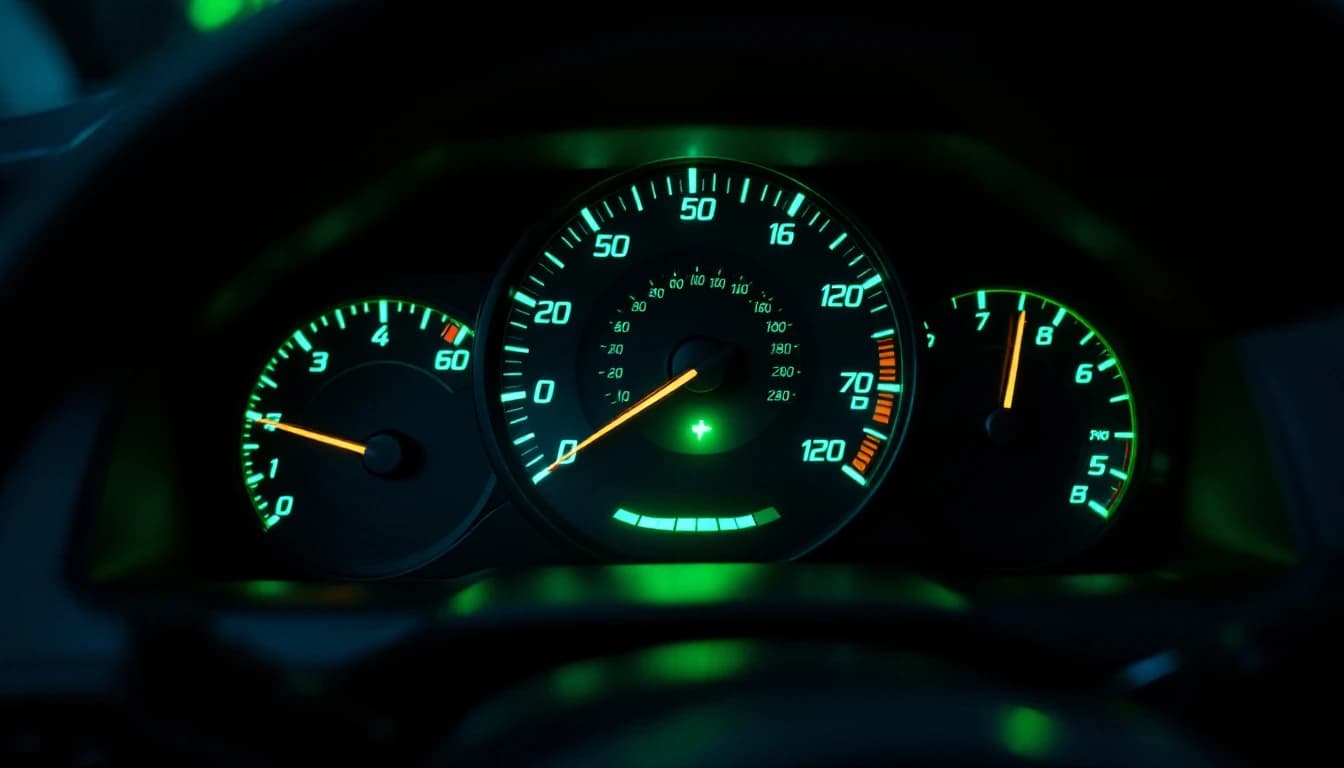
If you turn the ignition on a Honda or Acura and see a small green key-shaped icon blinking on the dash — and the engine cranks over but never catches — you are looking at the classic immobilizer no-start. It is one of the most common calls we get, and once you understand what the light is telling you, the fix becomes a lot less mysterious.
That green icon is the immobilizer indicator. When everything is healthy it flashes briefly as you approach or insert the key, then goes solid or off once the system confirms the key is authorized. When it keeps blinking after you try to start, the immobilizer control unit has failed to recognize a valid key transponder, and it has told the engine control module to withhold fuel injection and ignition. The starter still spins because the immobilizer does not cut the starter circuit on most of these cars — it cuts the ability to actually run. So you get a healthy crank and nothing more.
This is worth stating plainly up front because it changes what you should do next: a blinking green key light is an electronic authorization problem, not a mechanical one. Before anyone sells you a fuel pump, a crank sensor, or a tune-up, the immobilizer status should be the first thing checked. If the security light is the cause, no amount of mechanical parts will fix it.
What the Honda immobilizer actually does
Honda introduced its immobilizer system on North American models around the late 1990s and expanded it across the lineup through the 2000s, branding it around the transponder key. The concept is the anti-theft standard the whole industry adopted: a small chip in the head of the key holds a coded transponder value. When you insert the key (or, on newer cars, bring the smart fob into the cabin), an antenna ring reads that value and compares it against the list of keys the car has been taught to accept. Only if it matches does the system authorize the engine to run.
Immobilizers exist because they work. The insurance-industry research body IIHS has long documented that electronic engine immobilizers meaningfully reduce the rate at which equipped vehicles are stolen, with theft-rate reductions on equipped models widely estimated in the double-digit percentages. The theft-data nonprofit NICB has repeatedly noted that models lacking modern electronic immobilization are stolen at disproportionately high rates — and vehicle theft remains a large-scale problem, with more than 1 million vehicles reported stolen in the United States in a typical recent year per federal and insurance-industry reporting from bodies like the FBI and NICB. Federal crash-and-safety regulator NHTSA treats anti-theft immobilization as a core vehicle-security feature, and the engineering standards behind transponder authentication are documented through bodies like SAE International. In other words, the very thing that is now stranding you in a parking lot is the same thing that has kept your car from being hot-wired for the last two decades.
The trade-off is that when the authorization chain breaks — a failed key chip, a dead or swapped control module, a lost-key situation, or a replacement ECU that has never been married to your car — the car is deliberately, correctly, immobilized. The system is doing its job. It just does not know that you are the owner.
Why the immobilizer data lives in the ECU — and why a used ECU won't start your car
Here is the single most important thing to understand about Honda and Acura no-starts, because it explains almost everything customers get stuck on.
On a large share of Hondas and Acuras, the immobilizer identity is stored inside the engine control module (the PCM/ECM) itself, not in a separate standalone immobilizer box. The engine computer and the security data are effectively fused. That architecture is efficient and secure, but it has a hard consequence: you cannot simply unbolt a working ECU from another car — or buy a "plug and play" replacement online — and expect your car to start. The used ECU carries its donor car's immobilizer identity, which your key and your car's other modules will reject. The green light blinks, and you are right back where you started, now with a second computer that does not match.
This is the number-one reason people end up frustrated. They correctly diagnose a failed ECU, they source a matching part number from a salvage yard, they install it — and the car still will not start. Nothing is wrong with the used unit. The problem is that its stored immobilizer data does not match your vehicle. To make a replacement ECU usable, its immobilizer data has to be reconciled with your car. That is a bench job, and it is exactly what we do. Our full breakdown of that process lives in the Honda / Acura ECU clone guide.
The Honda/Acura immobilizer eras
Not every Honda immobilizer behaves the same way. Broadly, there are three eras, and knowing which one your car falls into helps set expectations.
Early transponder immobilizer (late 1990s to mid 2000s). These use a bladed key with a transponder chip and an immobilizer control unit that talks to the ECU. Some early Hondas famously use a red master key plus black valet/sub keys — the red key is the one that can teach new keys to the system, and losing it complicates an all-keys-lost situation because the ordinary black keys cannot always initiate programming on their own. Immobilizer data on many of these is bound to the ECU.
ECU-integrated transponder (mid 2000s to early 2010s). As the platform matured, the immobilizer function became more tightly integrated with the engine control module. This is the deep middle of the fleet — huge numbers of Accords, Civics, CR-Vs, Pilots, Odysseys, TSXs, TLs, and MDXs — where the stored immobilizer identity in the ECU is central, and where a replacement ECU absolutely must be cloned or have the immo handled to run.
Push-button smart entry (roughly 2013 onward). Newer Hondas and Acuras use keyless smart entry with a push-button start. The transponder function moves into the smart fob and a smart-entry control unit, but the fundamental principle is unchanged: the engine will not run unless the security network authorizes it. These systems are more complex, and feasibility for a given repair depends on the exact platform and year — which is why we verify before you ship anything.
Across all three eras, the diagnostic logic is the same. A blinking green key light means the immobilizer did not authorize the key. What differs is where the identity lives and how it gets reconciled — and that is a fitment question we confirm from your VIN and module label first.
All-keys-lost: when there is no working key at all
A special and common case is all-keys-lost — you have no functioning key that the car will accept. Maybe both original keys were lost, maybe you bought a salvage or auction car with no keys, maybe the only key was damaged. Because the immobilizer will not authorize an unrecognized key, and because programming a new key normally requires an already-accepted key (or the red master key on the older system), all-keys-lost is genuinely harder than a routine spare-key add.
On Honda and Acura platforms where the immobilizer identity is in the ECU, the practical path is often to read the security data from the ECU on the bench and either program keys to it or handle the immobilizer directly, rather than fighting the on-car programming lockout. This is precisely the kind of situation where a mail-in bench service beats a dealer tow: you ship the module, we work with the stored data on the bench, and you get back a unit that will accept the key.
Because all-keys-lost and any key or immobilizer work touches vehicle security, we require proof of ownership before we do it — a photo of your title or registration matching the VIN, plus your ID. That is not bureaucracy for its own sake; it is the line that separates legitimate locksmith work from helping a thief. Any reputable module shop will ask for the same.
Your two bench options: clone vs immo-off
When a Honda or Acura is dead on the immobilizer, there are two clean ways to solve it on the bench, and choosing between them comes down to what hardware you have and what you are trying to accomplish.
Option 1 — Clone your original immobilizer data onto a used/replacement ECU ($250). This is the right answer when your original ECU has failed and you have (or will source) a matching replacement unit. We read the immobilizer and calibration data from your original ECU and write it onto the donor unit so it carries your car's identity. The result is an ECU that plugs into your car and starts with your existing keys — no dealer visit, no on-car marriage dance. Cloning keeps your factory security intact; it just moves your identity onto working hardware. This is the most common Honda/Acura fix we do, and it is fully covered on the Honda / Acura ECU clone service page.
Option 2 — Immo-off, removing the immobilizer check from the calibration ($199). An immo-off modifies the ECU calibration so the engine control module no longer performs the immobilizer authorization check before running. It is the right tool for legitimate repair, off-road, orphaned-platform, or already-immobilizer-defeated situations where legally permitted — for example, an ECU whose immobilizer section is corrupt and cannot be cloned, a swap into an off-road or track vehicle, or a platform where the original security components no longer exist. An immo-off means the car will start without the immobilizer handshake. Because that also removes an anti-theft layer, we only perform it with proof of ownership, and you are responsible for the legality of an immo-off for your vehicle and how it is used. The full walkthrough is in the Honda / Acura ECU immo-off guide, and you can start from the Honda / Acura ECU immo-off service page.
Most owners with a good original ECU and a working key want the clone: it preserves security and is the closest thing to "factory." Immo-off is the answer when cloning is not possible or when the security handshake genuinely cannot be satisfied for a legitimate reason.
Clone vs immo-off — the direct comparison
| ECU clone ($250) | Immo-off ($199) | |
|---|---|---|
| What it does | Copies your original immobilizer identity onto a replacement ECU | Removes the immobilizer authorization check from the calibration |
| Best when | Original ECU failed; you have a matching used/replacement unit | Immo data is corrupt/uncloneable, or a legitimate off-road / orphaned-platform case |
| Keeps factory anti-theft | Yes — security intact, uses your keys | No — immobilizer layer is removed |
| Needs your original ECU | Yes, to read the identity from it | Not necessarily; works on the target unit |
| Uses your existing keys | Yes | Keys no longer gate starting |
| Proof of ownership required | Yes | Yes |
| Legality note | Restores factory function | Customer responsible for legal use |
Neither option repairs a physically damaged engine or a mechanical no-start cause. If the module is water-logged, has cracked solder joints, or a burned trace, we will tell you what is realistic before doing calibration work — software cannot fix a dead board or a mechanical fault.
As one longtime module technician told us:
"Ninety percent of the Honda no-starts that land on my bench with a blinking green key are people who already bought a used ECU and can't figure out why it won't start. It won't start because the security data belongs to another car. Clone their original onto it and it fires right up. The other slice is genuinely lost keys or a fried immo section, and that's where a clean immo-off earns its keep — but only with a title in hand." — Independent locksmith and ECU programmer, 20+ years on Honda and Acura platforms (anonymized)
Ruling out mechanical no-start causes first
Before you ship anything, confirm the immobilizer really is your problem. The tell is the green key light. If it blinks and the engine cranks-but-won't-start, immobilizer authorization is the prime suspect. If the light is not blinking and behaves normally, your no-start is more likely fuel, ignition, or a sensor — a different diagnostic path entirely.
A few quick sanity checks that cost nothing:
- Try your spare key. If the spare starts the car and the primary does not, you have a failed transponder chip in the primary key, not an ECU problem.
- Watch the light sequence. A brief flash that then clears on start is normal. Continuous blinking through a failed start attempt points at the immobilizer.
- Check for obvious water/damage history. A car that sat in a flood, or an ECU pulled from a wet footwell, may have board-level damage that no software can fix.
- Note recent work. If the no-start started right after an ECU swap, an attempted key add, or a battery/electrical event, that is a strong immobilizer clue.
We walk through this decision tree in more depth in our guide on telling an immobilizer no-start from a module failure. The point is simple: match the symptom to the cause before spending money. Honda and Acura reliability is generally strong — both brands routinely place well in long-term dependability studies published by outlets and researchers like J.D. Power, and Honda's combined U.S. sales regularly exceed 1 million vehicles a year according to sales reporting from Car and Driver, which means there is an enormous installed base of these immobilizer-equipped cars on the road. So when one of these vehicles suddenly refuses to start, an electronic authorization fault is very often the real story rather than a worn-out engine.
The mail-in workflow
The advantage of a bench service is that you never bring a vehicle anywhere — you ship a part. The sequence is short:
- Verify fitment first. Text us your VIN, the ECU/PCM part number off the module label, and a clear photo of that label. We confirm the platform, era, and whether a clone or immo-off is the right path before anything ships. Manufacturer resources at honda.com and acura.com can help you confirm the model details, but we verify the actual module from your photo.
- Send proof of ownership. A photo of your title or registration matching the VIN, plus your ID. Required for any immobilizer, key, or immo-off work.
- Ship the module. Once verified, remove the ECU and ship it to PO Box 120241, Arlington TX 76012 if you ship USPS — or 1168 W Pioneer Parkway, Arlington TX 76013 if you ship UPS or FedEx (UPS and FedEx cannot deliver to a PO Box). Pack it in an anti-static bag inside a padded box. Inbound shipping is customer-paid on your own carrier.
- Bench read + work. On arrival we power the unit on a regulated bench supply, read and archive the existing data, then either clone your identity onto the replacement or perform the immo-off.
- Return with tracking. The module ships back via the flat-rate return tier you chose at checkout — Standard from $14.95 (3–5 day USPS Ground Advantage), UPS 2nd Day Air $29.95, or UPS Next Day Air $74.95. You reinstall it and it starts.
Doing the flash on a clean, regulated bench supply is also safer than an in-car attempt, where a marginal battery and a voltage sag mid-write are a classic way to brick a controller.
Cost, and what these prices do not cover
The pricing is flat and published: ECU clone is $250, immo-off is $199, plus the flat-rate return shipping tier you pick at checkout (from $14.95). There is no per-hour surprise on these standard jobs.
What those prices do not include:
- Any mechanical repair. If your no-start turns out to be fuel, ignition, or a mechanical fault, that is diagnosed and repaired on the car — software does not touch it.
- Board-level repair of a physically damaged module. A water-logged or burned ECU may not be a clone candidate at all; we will tell you before you ship if the photos suggest damage.
- The cost of a used/replacement ECU itself, for a clone. You source the matching donor unit; we move your identity onto it.
- Cutting or supplying physical keys. We handle the electronic/immobilizer side.
Compared with a dealer tow plus an immobilizer or ECU procedure, a verified mail-in clone or immo-off is usually the faster and cheaper path — and you are dealing with a specialist who does this specific work every week rather than a general-service department.
Frequently asked questions
What does a blinking green key light on a Honda or Acura mean? A blinking green key or immobilizer light means the immobilizer system did not recognize a valid key, so the engine control module is withholding fuel and spark to prevent the car from running. The starter still cranks because the immobilizer cuts running ability, not the starter, so a healthy crank with no start plus a blinking key light points squarely at an immobilizer authorization fault rather than a mechanical failure.
Why won't a used ECU start my Honda even though it's the correct part number? Because on most Hondas and Acuras the immobilizer identity is stored inside the ECU itself, a used unit carries its donor car's security data, which your key and car will reject. The correct part number is not enough — the replacement unit has to be cloned with your original car's immobilizer data before it will start, which is a bench job rather than a plug-and-play swap.
Should I choose a clone or an immo-off? Choose a clone if your original ECU failed and you have a matching replacement unit, because cloning copies your factory identity onto it, keeps your anti-theft intact, and lets you start with your existing keys. Choose an immo-off only for legitimate repair, off-road, or orphaned-platform cases where the immobilizer data cannot be cloned or the original security components no longer exist, and where it is legal for your use.
Do you require proof of ownership? Yes, always, for any immobilizer, key, or immo-off work on a Honda or Acura. We require a photo of your title or registration matching the VIN plus your ID before we touch a security module, because that requirement is what separates legitimate locksmith and repair work from enabling theft, and any reputable module shop asks for the same.
Can you handle an all-keys-lost situation? Yes, on many Honda and Acura platforms we can read the security data from the ECU on the bench and reconcile keys or the immobilizer without an already-accepted key. All-keys-lost is harder than adding a spare because normal on-car programming expects a working key, so the bench approach of working directly with the stored data is often the cleanest path, always with proof of ownership.
Will an immo-off or clone fix my no-start if the key light isn't blinking? No. If the immobilizer light is behaving normally and not blinking through a failed start, your no-start is probably a fuel, ignition, or sensor problem rather than a security fault, and calibration work will not address it. Confirm the green key light is the symptom first, because software cannot repair a mechanical no-start cause.
Is bench programming safer than doing it in the car? Yes, for this kind of work a regulated bench power supply removes the voltage-sag risk that can brick a controller mid-write when a car has a marginal battery. On the bench we also read and archive your original data before any change, so there is a known-good baseline to fall back on if anything is unexpected.
The bottom line
A blinking green key light on a Honda or Acura that cranks but will not start is the immobilizer telling you it did not authorize the key — an electronic problem, not a mechanical one. Because the immobilizer identity lives inside the ECU on most of these cars, a used or replacement computer will not start your vehicle on its own; its stored data belongs to another car.
Two bench paths solve it. If you have a good original ECU and a matching replacement, an ECU clone at $250 copies your identity onto the new unit so it starts with your keys and keeps your factory anti-theft intact. For legitimate repair, off-road, or orphaned-platform cases where legally permitted, an immo-off at $199 removes the immobilizer check entirely — with proof of ownership required and legality your responsibility. Both are mail-in bench jobs verified for fitment before you ship, done on a regulated bench supply, and returned with tracking via the flat-rate shipping tier you choose at checkout.
Start by texting us your VIN and a photo of the ECU label, and see the Honda / Acura ECU clone and Honda / Acura ECU immo-off service pages to confirm your fitment. Software does not repair mechanical damage — but when the green key light is the culprit, one clean bench job usually has you starting again.
Ship your module today
Flat-rate pricing, 24-hour bench turnaround, return speed your choice at checkout. Most jobs back on your bench within a week.
More from the Lab
VW & Audi Immobilizer and No-Start by Platform: Immo 2 Through UDS/MQB
12 min · July 13, 2026
Honda Acura ECU Clone: Used PGM-FI Immobilizer Fix (2026)
12 min · June 18, 2026

Honda Acura ECU IMMO Off for Swaps: Run Without Keys (2026)
12 min · June 18, 2026
Toyota & Lexus ECU Immobilizer Reset: Adding New Keys to Older Turn-Key Models Without a Dealer ECM
13 min · July 13, 2026