
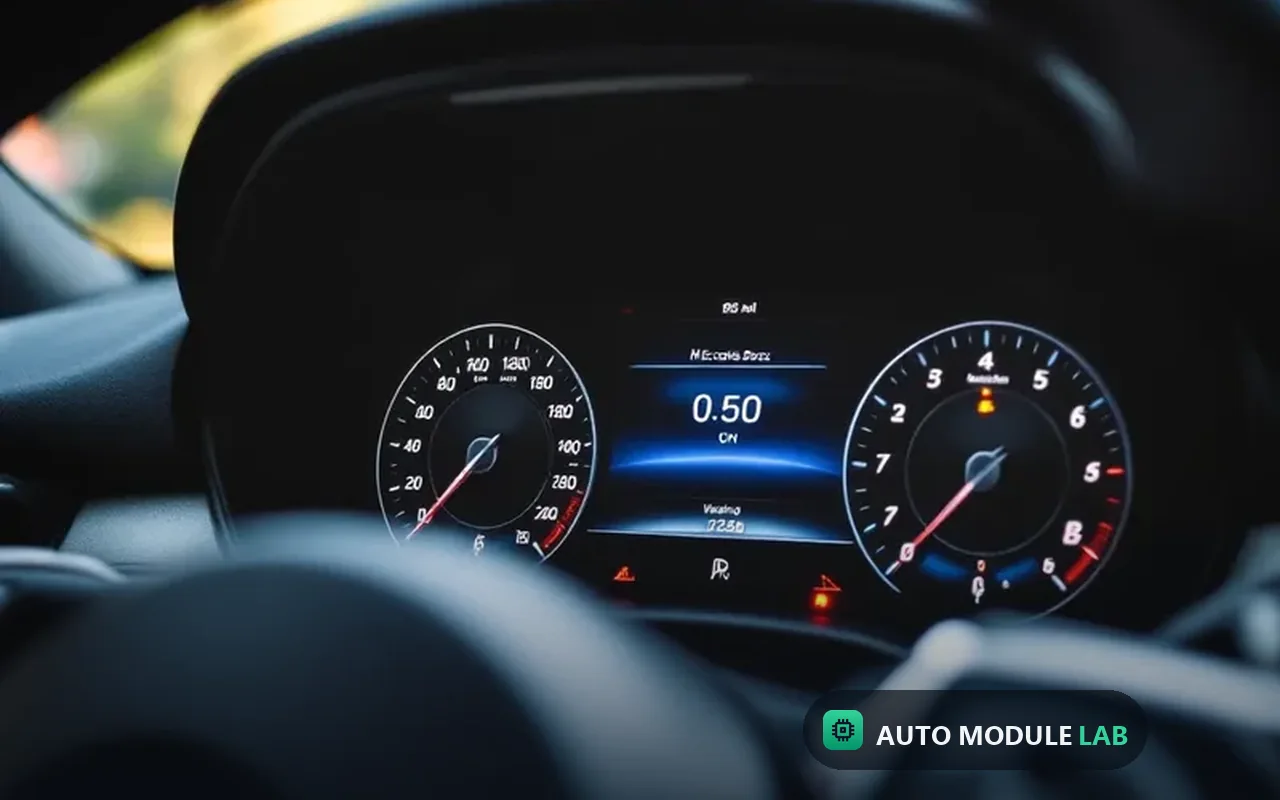
Mercedes EIS Cloning vs Key Programming: Which Service Do You Need?
The 30-second decision
You're shipping an EIS to Auto Module Lab. Two services exist:
| Service | Price | What you ship in | What you get back | Use when |
|---|---|---|---|---|
| EIS Cloning | $250 | Original EIS + donor EIS | Donor EIS with original's data written to it | Original works, you replace it for any reason, you want existing keys to keep working |
| EIS Key Replacement | $150 | EIS (original or replacement, your choice) | EIS + a fresh programmed key | All keys lost, OR you have a virgin replacement EIS and want a new key on it |
If you got that and you know which one you need, jump straight to Mercedes EIS Cloning or Mercedes Key Replacement via EIS. If you're not sure, keep reading.
Background: what the EIS actually is
The EIS (also called EZS in older Mercedes literature — Elektronisches Zünd-Schloss, Electronic Ignition Switch) is the central immobilizer module on pre-2014 Mercedes-Benz vehicles. It lives in the dashboard behind the steering column and serves three roles:
- Authenticates the key — reads the key's transponder via inductive coil
- Authorizes the start — sends release commands to the ECU and ELV (steering lock) on each successful authentication
- Stores rolling-code data — keeps a synchronized counter with each paired key
The EIS contains an EEPROM that holds:
- The vehicle VIN
- Up to 8 paired key records (each with its own transponder data + rolling code)
- The ECU pairing token
- Other secure-element data
When the EIS fails or is replaced, all three roles break. The car won't start. What you do next depends on what data you have access to.
The Mercedes chassis cheat sheet
EIS-equipped chassis covered by our bench service:
| Chassis | Model years | Notes |
|---|---|---|
| W204 | 2008-2014 C-Class | Most common — EIS failures are frequent |
| W207 | 2010-2016 E-Class Coupe | Same EIS family as W204 |
| W212 | 2010-2016 E-Class sedan | Same EIS family as W204/W207 |
| W221 | 2007-2013 S-Class | Slightly different EIS firmware |
| W164 | 2006-2011 ML | Pre-Renesas EIS |
| W166 | 2012-2015 ML/GLE (early) | Renesas EIS — bridge generation |
| W251 | 2006-2013 R-Class | Same family as W164 |
| W639 | 2003-2014 Vito/Viano | Sprinter-platform EIS |
| W463 | 2007-2018 G-Wagen | Same family as W221 |
Not covered by this service: 2015+ Mercedes (W205 C-Class, post-facelift W212, current S-Class W222, etc.) use the newer FBS4 system which requires online dealer-coding. We handle FBS4 case-by-case for confirmed bench-recoverable scenarios only.
When to clone (the $250 service)
Clone when: your original EIS is dying (intermittent no-start, gets worse over time, eventually won't authorize) BUT it still occasionally works and can be electronically read. You source a donor EIS from a salvage yard with the same part number. We clone your original's data onto the donor. Your existing keys keep working in the new EIS — no key reprogramming required.
According to a 2024 J.D. Power Vehicle Dependability Study covering 3-year-old vehicles, electronic ignition / starting systems were among the top-10 most-reported issues on European luxury sedans in the 2010-2014 production window — EIS specifically driving the bulk of W204 complaints. The failure mode is almost always degradation, not instant death, which means most owners catch it while the original is still readable.
The donor sourcing rule: the donor EIS must be the SAME part number as your original. Mercedes uses different EIS variants based on engine, market, and option packages. A W204 C300 sedan and a W204 C63 AMG can use different EIS part numbers despite looking identical externally. Always confirm part number before sourcing — text us a photo of your original's label and we'll verify the donor before you buy.
When to replace the key (the $150 service)
Replace the key when: one of these is true:
- All keys are lost — no working key, no way to authenticate. Need a fresh key paired directly to whatever EIS is in the car (or to a donor EIS you're installing).
- Donor EIS without your original — you already replaced the EIS, you have a virgin donor in the car, you need a key programmed for it
- Specific scenario: failed dealer programming — happens occasionally where a Mercedes dealer attempted key programming, hit an EIS firmware glitch, and now the EIS won't recognize any keys including the dealer-cut ones
Per NASTF / National Automotive Service Task Force standards for all-keys-lost pre-2014 Mercedes, the bench-level key programming route is the established path when no dealer-level access is available. The dealer's online process (XENTRY-based) requires SCN coding through Mercedes' servers and can take 2-5 business days with a paid Mercedes account. Bench programming is 24 hours.
Common scenarios where customers ship the wrong combination
Scenario 1: "I lost my keys, sending the EIS for cloning" Wrong service. Cloning requires SOURCE data. With no keys you have no rolling-code state to clone. You need EIS Key Replacement ($150), which programs a fresh key directly without needing the original's key data.
Scenario 2: "My EIS is dead, sending a donor for cloning" Wrong service. Cloning needs both your original (the source) AND the donor (the target). With only a donor, there's nothing to clone FROM. You need EIS Key Replacement on the donor.
Scenario 3: "My EIS works fine but I want to keep my existing keys on a replacement EIS" Right service. Cloning ($250). Ship original + donor.
Scenario 4: "Replacement EIS installed, original is dead, just need to make a key work" Right service. Key replacement ($150). Ship the replacement EIS.
Scenario 5: "All keys lost AND my EIS is dying" Mixed scenario. Best path: ship the dying EIS plus a sourced donor + request the COMBO service (cloning + key program). Total: ~$350 + return ship. Often saves a second round of shipping vs. doing them as two separate jobs.
A real-world example
Customer: Body shop in Sacramento, CA, working on a 2010 W212 E350 that had front-end collision damage. Insurance-totaled but customer bought it back. EIS was damaged in the collision; cluster was untouched. Customer wanted to keep his original key set rather than re-cut/reprogram.
Before: Damaged W212 EIS, intermittent start (works 1 in 5 attempts), customer concerned about being stranded. Original W212-specific part number 2129005509.
Migration: Body shop owner sourced a salvage W212 EIS (same part number) from a junkyard for $180. Shipped both modules — original + donor — to Arlington from Sacramento via USPS Priority Mail, ~$13 shipping.
Results: Clone completed within 4 hours of receipt (Wednesday afternoon). Both modules shipped back Thursday morning. Customer installed the donor EIS in the dash (10-minute job — dashboard trim + 3 screws), turned his original key, car started normally. Existing 2 keys both functional. Total customer cost: $180 donor + $250 clone service + $13 shipping = $443. Dealer quote for the same fix was $1,800 + 5 days.
Net: Body shop became a recurring Auto Module Lab customer — 2-3 clone jobs per quarter on Mercedes collision-recovery cars.
What experts say
"The single biggest mistake we see from shops attempting Mercedes EIS work is not understanding the difference between cloning and key programming. They're not interchangeable. Cloning preserves the keys; key programming generates new keys. Picking the wrong one wastes a shipping cycle and frustrates the customer." — Independent Mercedes specialist, 18 years European service (anonymized)
Per Mercedes-Benz technical documentation on EIS replacement (Workshop Manual reference WIS section 80-65), dealer-level replacement always includes "key data transfer" as a paid coding step. Cloning at the bench is the same operation, performed offline, without the dealer SCN charge.
The bench process for cloning
When both modules arrive at Arlington, here's the workflow:
- Visual inspection + part number verification — confirm both EIS units are the same part number, no shipping damage, both have readable EEPROMs
- Power-up bench test — confirm both modules respond to bench harness
- EEPROM read on original — dump all stored data (VIN, key records, rolling codes, ECU pairing token)
- EEPROM write to donor — program donor with all of the original's stored data
- Verification read — re-read donor, compare byte-for-byte against original's dump
- Bench-test handshake — connect a simulated ECU/coil and verify the donor performs key-handshake correctly
- Photo + ship — back to customer same business day (after receipt before noon Central) or next business day
Bench time: 45-90 minutes including verification. Total turnaround commitment: 24 hours from receipt.
The bench process for key programming
Simpler workflow because we're not transferring data between modules:
- Visual inspection — confirm the EIS, note part number, check for damage
- Power-up bench test
- Cut a fresh key blank — HU64 or chrome blade as appropriate for your VIN
- Pair the key directly to the EIS — write a new transponder record into an empty key slot in EEPROM, generate a fresh rolling-code seed
- Verification — connect simulated ECU load, key-on test, confirm authentication releases the start command
- Photo + ship — same business day or next, with the new key included in the return shipment
Bench time: 30-60 minutes.
Frequently asked questions
Can you do both at once if I'm replacing an EIS AND all keys are lost? Yes — that's the combo scenario above. Ship the original (dying/damaged) + a sourced donor + tell us you need both clone-then-key. Total $350 (clone $250 + key program $150 minus a $50 combo discount = $350 net). Save a shipping cycle.
What if my original EIS is completely dead and unreadable? Then cloning isn't possible — there's no source to clone from. Drop to the $150 key replacement service. The donor (or replacement) EIS will get a virgin pairing + a fresh key. Your old keys won't work in the new EIS, but you'll have one working key to start.
Do you need the original keys for cloning? No. Cloning is module-to-module. As long as the original EIS can be electronically read, the key data in EEPROM transfers with everything else. You can keep the keys at home.
What about the ELV (steering lock)? Doesn't that also need pairing? The ELV is paired to the EIS at the factory but does NOT need re-pairing after EIS clone — the ELV pairing data is part of the EEPROM you cloned. If the ELV itself has failed (common on W204/W207/W212/W166), that's a separate issue — see our Mercedes ELV Emulator service for the permanent fix.
What if my chassis is 2015+ (W205, W222)? Different system (FBS4). Most cases require online dealer-coding through Mercedes' XENTRY. We can sometimes help on a case-by-case basis — text us first with the VIN.
Why is the dealer so much more expensive? Dealer pricing for EIS replacement (parts + labor + SCN coding) runs $1,500-$2,500 depending on chassis and metro. Most of that is labor + dealer-program margin, not parts. Bench cloning is the same technical work without the dealer overhead.
The bottom line
If your original EIS still works (even intermittently) and you want to swap to a fresh unit while keeping your existing keys: clone, $250.
If your keys are lost OR you only have a virgin donor EIS to work with: key program, $150.
If both — keys lost AND EIS dying: combo, $350, ship both + a sourced donor.
For the right service, head to Mercedes EIS Cloning or Mercedes Key Replacement via EIS. For unsure cases, text (817) 678-3252 with your chassis, EIS part number, and a one-sentence description of what's broken — we'll confirm the right service before you ship anything.
Ship your module today
Flat-rate pricing, 24-hour bench turnaround, return speed your choice at checkout. Most jobs back on your bench within a week.
More from the Lab
Mercedes EZS / EIS Cloning: Exactly What Data Transfers — and the Six Reasons Clones Fail
13 min · August 4, 2026
Mercedes Immobilizer & Key Systems by Generation: EIS/EZS, ELV, ESL, FBS3 vs FBS4
11 min · July 10, 2026
Mercedes EIS: Pre-2014 vs Post-2014 FBS4 (2026 Guide)
12 min · May 30, 2026
Mercedes All-Keys-Lost: EIS/EZS Cost, Options, and Turnaround by Chassis
12 min · July 13, 2026