
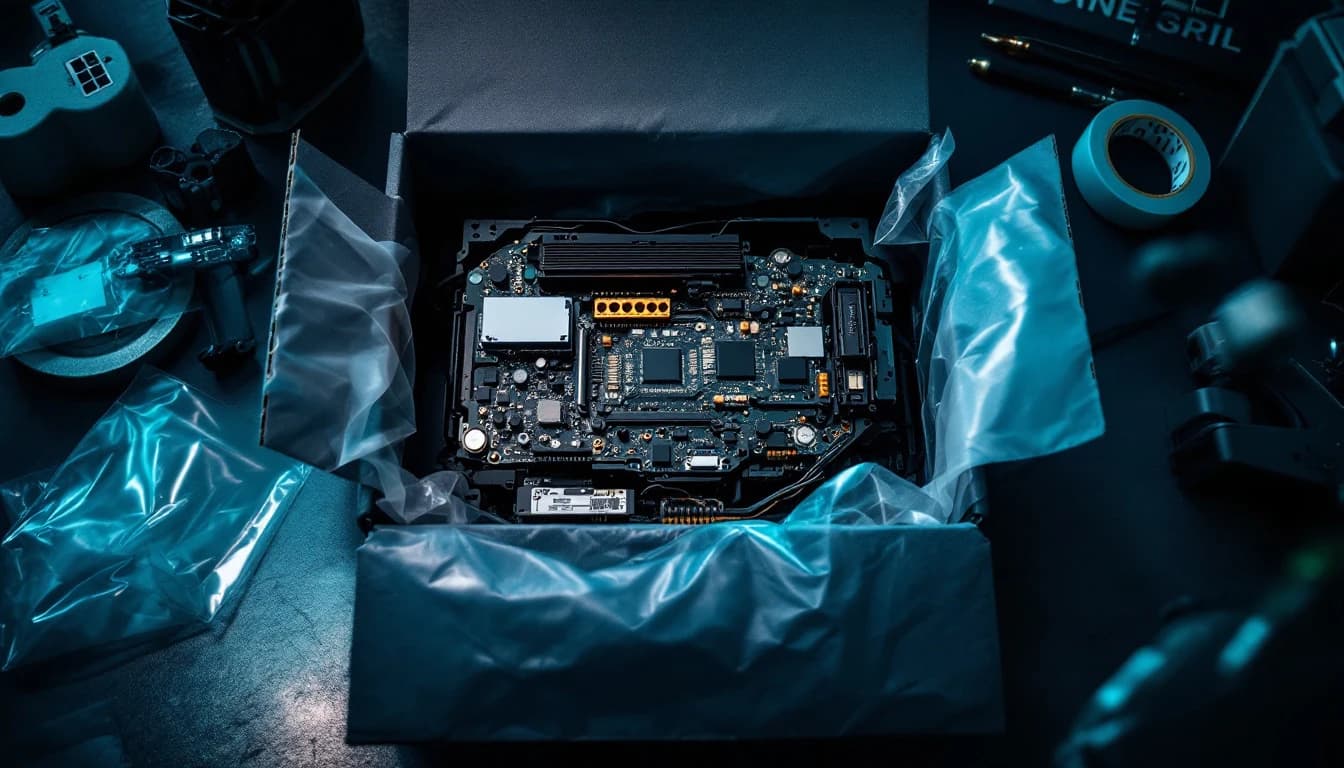
Mercedes ME9.7 & MED17 ECU Clone: Mail-In Cloning Guide 2026
Who this is for
This guide is for you if any of these are true:
- Your Mercedes ME9.7 or MED17 ECU failed and you bought a used replacement that cranks but will not start
- A water leak, an internal short, or the classic ME9.7 heat failure killed your original engine computer
- You are an independent shop holding a Mercedes that needs an ECU and you do not want to send the customer to the dealer for a tow-and-program job
- You have a used ECU in hand and a dead original ECU and you need the two married together so the car runs
- You want to understand why "just swap the ECU" does not work on a modern Mercedes before you spend money
If the core problem is that a replacement ECU will not start the car, you are in the right place. The fix is a clone: we move your car's identity onto the new unit.
How the Mercedes ECU lock actually works
On a modern Mercedes, the engine computer is not a generic box you can swap. It is a member of a security group. Bosch ME9.7 and MED17 ECUs store, internally:
- The VIN of the car they belong to
- FBS3 immobilizer data (Fahrberechtigungssystem, the drive-authorization system)
- Injector coding and other engine-specific calibration values
- Learned adaptations built up over the life of the car
The ECU is cryptographically paired to the EIS (Elektronisches Zündschloss, the electronic ignition switch) and through it to the keys. Every start, the EIS and the ECU run a challenge-response. The ECU only releases fuel and spark if the handshake with the correct EIS and key data succeeds.
That is why a donor ECU from another car cranks but never starts. It is healthy hardware, but it carries the donor car's VIN and FBS3 data, so it does not trust your EIS and your keys. The handshake fails and the engine stays dead.
Per the National Insurance Crime Bureau, immobilizer pairing of this kind is precisely what cut electronic theft rates after it became standard. The FBI's Uniform Crime Reporting program documents how the nationwide motor-vehicle-theft rate moved over 2019-2023, and the long-run drop in theft of immobilizer-equipped cars is exactly why manufacturers cryptographically bind the ECU to the car. The security working as designed is also the thing standing between you and a running car after an ECU swap.
The clone solves the pairing problem
Instead of trying to reprogram the donor to your EIS on the vehicle, we go the other direction: we read the complete data image out of your original ECU and write it onto a part-number-matched donor. The donor becomes a byte-for-byte twin of your original from the car's point of view, including VIN, FBS3, injector coding, and adaptations. It drops in plug-and-play with no on-vehicle relearn because, to the car, it is the same ECU it always had.
ME9.7 vs MED17, which one is in your car
| Family | Typical engines | Rough years | Notes |
|---|---|---|---|
| Bosch ME9.7 | M272 V6, M273 V8 | ~2005-2011 | Naturally aspirated; classic heat-failure unit |
| Bosch MED17 | Turbo M276 V6, M278 V8, M157 AMG V8 | Later platform | Direct-injection turbo; verify read access by part number |
ME9.7 is the unit on the M272 V6 and M273 V8 naturally aspirated engines from roughly 2005 to 2011. It is a workhorse, but it has a well-known failure mode discussed below.
MED17 is the newer Bosch platform on the turbocharged direct-injection engines: M276, M278, and the AMG M157. MED17 is a large family, and a subset of later MED17 units running FBS4 security may be read-protected. We verify clone feasibility by exact part number before you commit, so message us your ECU part number if you are on a turbo engine.
ME9.7 failure modes, why these die
The ME9.7 has a deserved reputation, and the cause is environmental. The unit is often mounted where it absorbs engine-bay heat and vibration over years of cycling. According to the NHTSA complaint and recall database, Mercedes owners across the M272/M273 era report engine-management and no-start faults consistent with ECU-level failure, and the common thread is heat-stressed solder joints and component aging inside the unit.
Typical real-world symptoms:
- Intermittent stalling or no-start that worsens as the unit ages
- Crank-no-start after the ECU finally fails outright
- Random misfire or sensor faults stored across multiple unrelated circuits, pointing at the ECU rather than one sensor
- Limp mode that will not clear despite replacing the obvious sensors
- A dead ECU after a water leak into the engine bay or under-hood electronics
When the original ECU is dead and you fit a used one, you hit the wall described above: it cranks but will not start, because it carries the wrong identity. That is the moment a clone becomes the cheapest correct fix.
The clone process, what we actually do
When your original ECU and your donor ECU arrive at the Arlington bench, the work is methodical:
- Verify part numbers match. The donor must be the same Bosch part number / service number as your original, because the data image is specific to that hardware. We confirm this first.
- Read your original ECU. We pull the full data image: VIN, FBS3 immobilizer data, injector coding, and learned adaptations. We archive that read so there is a recovery point.
- Write the image to the donor. The donor receives your car's complete identity, becoming a functional twin of your original.
- Verify the write. We read the donor back and compare against the source so the clone is exact, not approximate.
- Bench-confirm and document. We confirm the cloned unit reports the correct VIN and immobilizer status, document the job, and photograph the result.
- Return ship, flat-rate. The cloned, ready-to-install ECU goes back with tracking, via the return-shipping tier you pick at checkout (from $24.95, overnight $94.95).
Because the clone carries your VIN, FBS3 data, injector coding, and adaptations, the install is genuinely plug-and-play: bolt it in, connect it, and start the car. No SCN coding to your EIS, no key relearn, no dealer trip.
Working on immobilizer-protected modules legitimately is governed by an industry framework. Per the National Automotive Service Task Force (NASTF) Vehicle Security Professional registry, access to security-sensitive functions such as key and immobilizer programming is gated through its Secure Data Release Model, which verifies the legitimacy of the work before security data is released. A clone of your own car's identity, requested by the owner or their shop, sits squarely inside that legitimate-repair lane, the same lane the security system was designed to permit.
The mail-in process, step by step
Order and pay. Choose the clone on the Mercedes ME9.7 / MED17 ECU clone service page and pay the flat $250.
Ship both units. Send your original ECU and your part-number-matched donor ECU to:
Auto Module Lab, PO Box 120241, Arlington TX 76012 if you ship USPS — or 1009 Oakwood Ln # 120241, Arlington TX 76012 if you ship UPS or FedEx (UPS and FedEx cannot deliver to a PO Box).
Include your printed order, a note with your VIN, and a contact number.
24-hour bench turnaround. Once both units arrive, we clone and verify, then ship back within one business day.
Flat-rate return shipping, chosen at checkout. Standard (3-5 business days) is $24.95, UPS 2nd Day Air is $54.95, and UPS Next Day Air is $94.95. Tracking provided either way.
Install and drive. Fit the cloned ECU and start the car. No on-vehicle relearn.
What to ship
- Your original ECU — the source of the identity we are cloning. If your original is so damaged that it cannot be read, message us first; some failures are recoverable and some are not.
- A part-number-matched donor ECU — must match your original's Bosch part number / service number. We can advise on sourcing if you do not have one yet.
- Your VIN, written on the note.
- A contact number, in case we see something unexpected on the bench.
What this service does NOT do
We are deliberately clear about scope so you do not pay for the wrong thing:
- This is not a tune. We do not raise boost, change fueling, or modify performance maps. The clone is an identity copy.
- This is NOT an emissions defeat. We do not delete, disable, or tamper with catalytic-converter monitors, EGR, DPF, or any emissions control. Per the U.S. EPA's prohibition on defeat devices, tampering with emissions controls is illegal, and we do not do it. The cloned ECU runs the same emissions calibration your car already had.
- It cannot revive dead hardware. If the donor itself is faulty, the clone will not fix it. The donor must be healthy.
- It will not read a fully destroyed original. If your original ECU's memory is physically gone, there may be no identity to copy; message us about your specific failure.
- It does not address mechanical engine problems. Compression loss, timing issues, and injector hardware failures are separate from ECU identity.
- Read-protected later MED17/FBS4 units may not be clonable. This is why we verify by part number before you ship. If your unit is locked, we will tell you up front.
Price vs the dealer
A dealer ECU job on a modern Mercedes is expensive for predictable reasons. The dealer typically supplies a new factory ECU, performs SCN online coding to pair it to your car, programs keys as needed, and often requires a tow because an immobilizer-locked car cannot drive in. Owner reports and independent estimates routinely put a dealer ECU replacement on these platforms well into four figures.
The cost gap traces back to labor and parts pricing. Per the U.S. Bureau of Labor Statistics, service technician labor is a significant and rising expense, and franchise luxury dealers price hours at a premium. A clone removes the new-part purchase, the online coding labor, and the tow, replacing all of it with a bench operation and a used donor you source.
| Line item | Mercedes dealer | Auto Module Lab clone |
|---|---|---|
| ECU part | New factory unit | Used part-number-matched donor (you source) |
| Immobilizer pairing | SCN online coding labor | Included in clone |
| Tow (locked car) | Often required | Not needed |
| Turnaround | Appointment-dependent | 24-hour bench |
| Return shipping | n/a | Flat-rate from $24.95, chosen at checkout |
| Programming total | Four figures, typical | $250 |
A real-world example
A general repair shop in Georgia took in a 2008 Mercedes with an M273 V8 and a dead ME9.7 after a long history of heat-related driveability faults. They sourced a used ME9.7 from a salvage car with a matching part number, installed it, and got exactly what the platform always gives: crank, no start. The replacement carried the salvage car's VIN and FBS3 data and would not trust the customer's EIS.
The shop shipped both the dead original and the donor to Arlington with the VIN on a note. We read the original, cloned its full identity onto the donor, verified the write, and shipped it back, most of the elapsed time being transit. The shop bolted in the cloned unit and it started on the first try with no dealer coding and no key relearn. They billed the customer far below the dealer's ECU-plus-coding-plus-tow quote and kept the job in house.
What I tell customers
The thing people get wrong about a Mercedes ECU is that they think the box is the part. It is not. The box is interchangeable hardware; the part that matters is the identity inside it, the VIN and the FBS3 data that ties it to your EIS and your keys. A clone moves that identity, not a tune, not a delete, just the same legitimate data your car was born with, onto good hardware. That is why it starts plug-and-play. — Adrian Torres, Founder, Auto Module Lab
That maps to what bench technicians see across the trade:
"I have had customers spend a grand on a salvage ECU before they call me, convinced the part was bad because it cranked and never caught. The part was fine. It just had the wrong VIN and FBS3 data baked in. The minute you understand the box is generic and the identity is the asset, the clone is obvious. Nine times out of ten the original reads clean and the donor takes the image on the first write." — Master automotive locksmith, 15+ years on the bench (anonymized)
I have built and run programming benches and locksmith shops across Dallas, Houston, Austin, San Antonio, and Miami since 2012, and the clone-by-mail model is the cleanest way to do this work correctly for a customer anywhere in the country.
Frequently asked questions
Why will a used ECU not just start my car? Because ME9.7 and MED17 store the VIN and FBS3 immobilizer data internally and pair to your EIS and keys. The used unit carries another car's identity, so the handshake fails and it cranks but never starts.
Do you need both my old ECU and the donor? Yes. We read the identity out of your original and write it onto the part-number-matched donor. Both must come to the bench.
What if my original ECU is completely dead? Some failures are recoverable for reading and some are not. Message us with your specific symptoms before shipping and we will tell you honestly whether a clone is feasible.
Will I need SCN coding or a key relearn after install? No. The clone carries your VIN, FBS3 data, injector coding, and adaptations, so it is plug-and-play with no on-vehicle relearn.
Is this a tune or a delete? Neither. It is an identity clone. We do not change performance maps, and we do not touch emissions controls. This is not an emissions defeat.
Can you clone any MED17 unit? Most, but a subset of later MED17 units on FBS4 security may be read-protected. We verify by exact part number before you ship, so send us your part number first if you are on a turbo engine.
Does the donor part number really have to match? Yes. The data image is specific to the hardware. A mismatched part number is the most common reason a DIY attempt fails.
The bottom line
A Mercedes ME9.7 or MED17 ECU is locked to your car by VIN and FBS3 immobilizer data, which is why a used unit cranks but will not start. We clone your original identity onto a part-number-matched donor so the unit drops in plug-and-play with no relearn. ME9.7 covers the M272 V6 and M273 V8; MED17 covers the turbo M276/M278/M157 engines, with read access verified by part number. This is an identity clone only, not a tune and not an emissions defeat.
Start on the Mercedes ME9.7 / MED17 ECU clone page, see the full mail-in process, or read about the shop on the Adrian Torres founder page. If you are on a turbo MED17 engine, message us your ECU part number first so we can confirm the clone before you ship.
Ship your module today
Flat-rate pricing, 24-hour bench turnaround, return speed your choice at checkout. Most jobs back on your bench within a week.
More from the Lab
Mercedes ME9.7 ECU: Unlock, VIN Write, SCN Code or Clone — Which One Your M272 or M273 Actually Needs
12 min · July 31, 2026
Mercedes Module Cloning: What Can and Cannot Be Cloned
12 min · August 17, 2026
Electronic Steering Lock Failure by Brand: ESL and ELV
14 min · August 17, 2026
Key Codes, Blade Cutting, and Why We Need Your Lock
14 min · August 17, 2026