
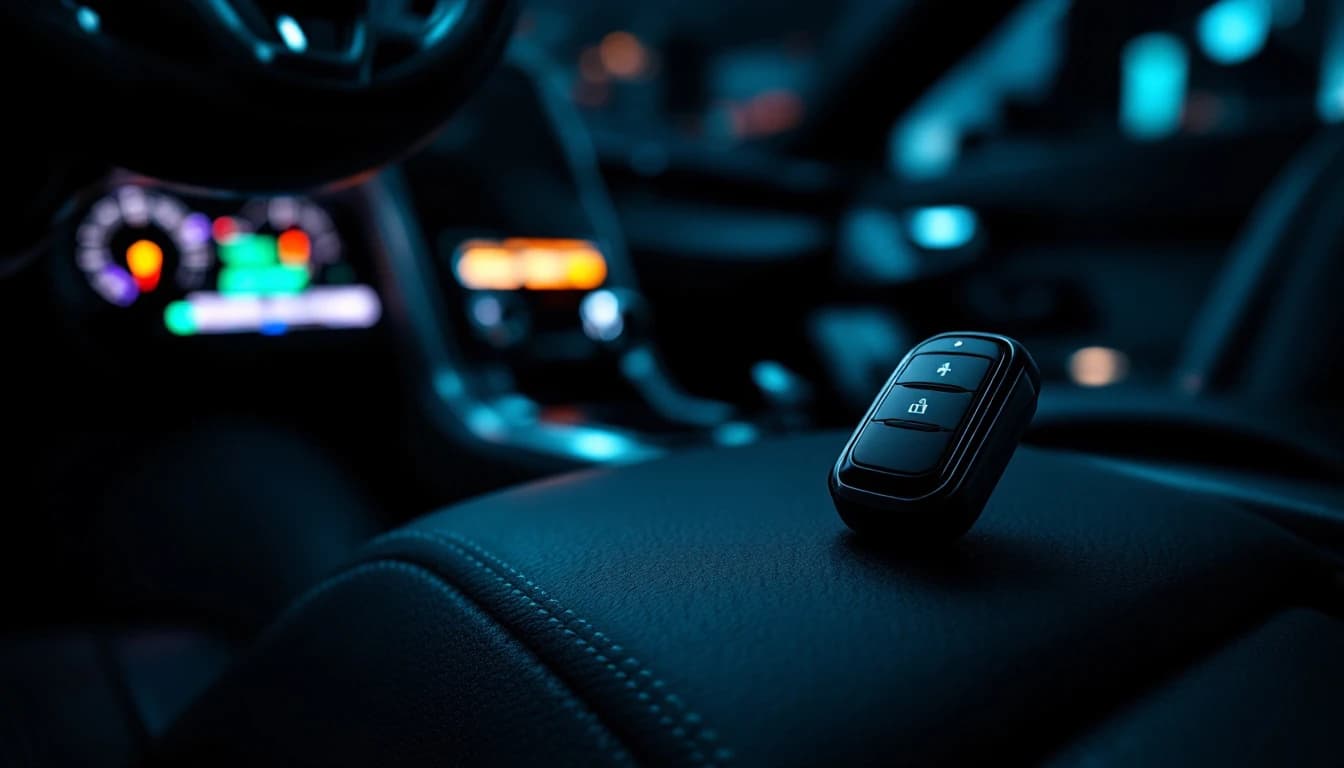
Porsche Won't Start? Kessy Immobilizer, No-Start, and Key Programming Options
When a Porsche cranks but won't start
There is a specific, maddening failure that brings Porsche owners to a bench programmer: the engine turns over, everything electrical looks alive, but the car simply will not fire. Or it starts once and dies. Or the dash throws an immobilizer symbol and a "key not recognized" message and refuses to do anything at all. If you have already swapped the fob battery, tried the spare key, and jumped the 12-volt battery with no change, you are almost certainly not chasing a fuel or spark problem. You are chasing a security handshake that is failing between the key, the Kessy unit, and the body control module.
This article is written for the owner or independent shop staring at exactly that situation on a Porsche that uses Kessy — the Keyless Entry and Start System — which covers a wide swath of Cayenne, Panamera, and Macan models, plus the 911, Cayman, and Boxster of the same generation. We will not promise your specific year is supported, because platforms and security versions vary; a technician confirms your exact model and setup before you ship anything. What we will do is explain what is actually happening, where the immobilizer data lives, why the obvious fixes so often fail, and what the mail-in repair path looks like.
The symptoms of a Kessy or immobilizer no-start
Immobilizer faults have a recognizable signature. The more of these you can check off, the more likely your no-start is a security handshake problem and not a mechanical one:
- Cranks but never fires. The starter spins the engine normally, but there is no sustained ignition — the engine management is being told, correctly, to withhold fuel and spark because it did not get a valid authorization from the immobilizer.
- Immobilizer warning light or symbol on the instrument cluster, sometimes a car-with-a-key or a padlock icon, sometimes an explicit text message.
- "Key not recognized," "No key detected," or "Please insert key" even with a known-good key in the car or in the ignition slot.
- Intermittent starting that gets worse — starts on the third try, then the fifth, then not at all — which frequently points to a failing Kessy unit or a corrupted data block rather than a dead key.
- Central locking and comfort-access glitches alongside the no-start, because the same Kessy and body control hardware handles keyless entry.
- A recently replaced battery or jump-start that seemed to trigger it, since a deep voltage drop can corrupt the data a control unit is holding.
None of these, on their own, is a diagnosis. A no-crank condition, for instance, is usually a different animal — a battery, starter, or ignition-switch issue. The National Highway Traffic Safety Administration treats electronic immobilizers as a core anti-theft technology precisely because they are designed to stop the engine from running without a verified key, so when the security layer is unhappy, a no-fire is exactly the behavior it is supposed to produce. If you want to work through the crank-but-no-start versus immobilizer distinction methodically, our companion guide on immobilizer versus module no-start diagnosis walks the decision tree in detail.
What Kessy actually is
Kessy is Porsche's branding for the keyless-entry-and-start system, and it is easy to under-estimate. People hear "keyless start" and picture a push-button and a proximity fob. In reality Kessy is a networked security system with a dedicated control unit that authenticates the key, talks to the body control module, coordinates with the engine control unit, and manages access, ignition, and the immobilizer function together.
Electronic immobilization became near-universal for a reason. Modern anti-theft electronics are widely credited with a large share of the long-run decline in vehicle theft rates over the last few decades; the Insurance Institute for Highway Safety has long tracked how anti-theft technology reshaped theft patterns, and the immobilizer — a cryptographic key-to-car handshake — is the backbone of that. Standards bodies like SAE International have published the technical groundwork for how keys, transponders, and control units authenticate one another. The upshot for a Porsche owner is simple: the car is engineered to refuse to run for a key it cannot verify, and Kessy is the gatekeeper doing the verifying.
Because the system is a genuine security layer, it does not fail gracefully in the way a worn-out mechanical part does. When the key data or the immobilizer data inside Kessy becomes corrupted, mismatched, or lost, the car does the safe thing and stays immobilized.
Where the key and immobilizer data actually live
Here is the single most important concept in this whole article, and the one that explains why the easy fixes so often do nothing.
The immobilizer and key security data does not live in the key. It lives in the car — distributed across the Kessy control unit and the body control module (BCM), which hold the immobilizer secrets, the list of authorized keys, and the component-protection data that binds these modules to each other and to the engine controller. The physical fob is a transponder that participates in a challenge-and-response; it is not the vault. The vault is inside the car's electronics.
That is why:
- A fresh key battery fixes nothing if the problem is corrupted data inside Kessy. The fob was never the issue.
- A spare key does not help when the fault is in the module that authenticates all keys, not in any single fob.
- A dealer or locksmith cannot always just "cut a key" when the module holding the key list has failed, because there is no healthy list to add a key to.
When the data in these modules is intact, adding or replacing a key is a programming exercise. When the data itself is corrupted or a module has failed, the job becomes recovery: reading what can be read, repairing or rebuilding the immobilizer data, and re-synchronizing the modules so they trust one another and the engine again. That distinction — programming versus recovery — is the difference between a quick key add and a full data-recovery job.
Why a used BCM or Kessy isn't plug-and-play
Owners understandably try the cheapest path first: find a used BCM or Kessy unit from a breaker or online, plug it in, and hope the car starts. It almost never works, and it is worth understanding exactly why, because the reason is baked into the security design.
A module pulled from a donor car carries that donor car's immobilizer secrets, key list, and component-protection data. Drop it into your Porsche and you now have a module that does not recognize your keys, does not match your engine controller's stored security data, and does not share the component-protection binding the rest of your car expects. The result is a different flavor of the same no-start, often with new fault codes layered on top.
| New/used module, unprogrammed | Bench-programmed to your car (what we do) | |
|---|---|---|
| Recognizes your existing keys | No — carries the donor car's key list | Yes — your keys are written into the data |
| Matches your engine controller's security | No — mismatched immobilizer secrets | Yes — data synchronized to your car |
| Component protection / module binding | Wrong — bound to the donor vehicle | Corrected to your VIN and modules |
| Fixes the no-start | Rarely — usually adds new faults | Yes — that is the goal |
| Requires proof of ownership | Should | Yes — always, before any work |
| Turnaround | Guesswork, trial and error | Defined bench process, tested before return |
The clean path is not to gamble on a donor module. It is to take your own Kessy or BCM — the module that already belongs to your car and already holds as much of your data as survived — and repair or reprogram its immobilizer and key data on the bench so it trusts your keys and your engine again. When a used replacement genuinely is required (a physically dead unit), it still has to be programmed to your vehicle's data to work, which is the same bench operation.
As one specialist who does this work daily put it:
"Ninety percent of the 'my Porsche won't start and the dealer wants to replace three modules' calls I get are really a data problem inside Kessy, not three bad modules. When the key list or the immobilizer block is corrupted, throwing used parts at it just changes which fault code you're staring at. You fix the data, you re-sync the modules, the car starts." — Independent immobilizer and key-programming specialist, 16+ years on European platforms (anonymized)
All keys lost — what changes
"All keys lost" is its own scenario and deserves a clear explanation, because it is one of the most common reasons a Porsche ends up on a flatbed. All keys lost means exactly what it sounds like: there is no working key at all — not a spare in a drawer, not a valet key, nothing that the car will authenticate.
Vehicle theft and key-related lockouts remain a large, expensive problem; the National Insurance Crime Bureau reports that vehicle thefts in the United States have run into the neighborhood of a million vehicles a year in recent reporting periods, and the flip side of the strong anti-theft electronics that drive that number down is that a legitimate owner who loses every key cannot simply pop in a blank. The same security that stops a thief stops you.
When all keys are lost, the job is a recovery: reading the immobilizer and key data out of the Kessy and BCM, extracting or reconstructing the security information needed to author a new key, and writing a fresh authorized key into the module so the car has a working credential again. Because this literally creates a key that will start the car, proof of ownership is mandatory and non-negotiable before any all-keys-lost work begins. Our broader all-keys-lost mail-in programming guide covers the general workflow across platforms; the Porsche-specific version runs through Kessy and the BCM.
The mail-in fix: Kessy key programming and data recovery
The bench approach solves the problem the way the security system is actually built. Instead of guessing at parts in a driveway, you send the module to a controlled bench where its data can be read, verified, repaired, and written back with a stable power supply and proper tooling. The service is Porsche BCM / Kessy key programming and data recovery for a flat $250 on a confirmed-supported model, and it covers the range of Kessy no-start situations:
- Key programming — adding or replacing an authorized key when the module's data is intact.
- Immobilizer data recovery — repairing or rebuilding corrupted immobilizer and key data inside Kessy or the BCM.
- All-keys-lost key generation — authoring a working key when none exists, after proof of ownership.
- Module re-synchronization — correcting the component-protection and security binding so Kessy, the BCM, and the engine controller trust one another again.
Here is the typical sequence:
- Confirm the model and setup first. Text us your VIN, the module part number off the label, and a description of the symptom and whether you have any working key. A technician confirms your exact Porsche and Kessy setup before you ship anything — we do not promise a specific year blind.
- Prove ownership. Because this is immobilizer and key work, we require proof that the vehicle is yours before any security data is touched. This protects you as much as it protects everyone else.
- Remove and ship the module. Once confirmed, you pull the Kessy and/or BCM as directed and ship it to our workshop at PO Box 120241, Arlington TX 76012 if you ship USPS — or 1009 Oakwood Ln # 120241, Arlington TX 76012 if you ship UPS or FedEx (UPS and FedEx cannot deliver to a PO Box). Pack it protected — anti-static bag, padded box.
- Bench read and archive. On arrival the module is powered on a regulated bench supply and its existing data is read and archived before any change, so there is always a known-good starting point.
- Recover, program, and verify. The immobilizer and key data is repaired or the new key is authored, the modules are re-synchronized, and the result is tested on the bench before anything ships back.
- Return with tracking. The module ships back via the flat-rate return option you chose at checkout, from $24.95 for standard service up to overnight if you need it fast, and you reinstall it.
Doing the flash and data work on a bench, rather than in the car with a marginal battery, also removes one of the classic ways these jobs go wrong: a voltage sag mid-write that corrupts the very module you are trying to fix.
Software fixes data, not broken hardware
One honest boundary: bench programming repairs and rewrites the security data and authors keys. It does not repair a physically damaged circuit board, a water-corroded connector, or a mechanically failed ignition assembly. If a module is genuinely dead at the hardware level, it must be replaced — and the replacement then has to be programmed to your car's data, which is the same bench operation described above. When you send in the module, part of the bench process is determining whether you are looking at a data problem that can be recovered or a hardware failure that needs a programmed replacement. Either way, the path forward runs through getting your car's immobilizer data written into a module that belongs to your car.
Porsche's own owner materials and roadside guidance, available through Porsche, will always steer a no-start toward the dealer network, and for a car under warranty that is the right call. For an out-of-warranty Cayenne, Panamera, Macan, or sports car where the dealer quote is a stack of new modules and a four-figure labor estimate, the bench-programming path is the specialist alternative — the same data work, done as a mail-in service, at a fixed price. Enthusiast outlets such as Car and Driver and Hagerty have both covered how the growing electronic complexity of modern Porsches has pushed more and more of this work toward module-level specialists rather than parts-swapping.
Cost and turnaround
The Porsche BCM / Kessy key programming and data recovery service is $250 flat on a confirmed-supported model, plus flat-rate return shipping you choose at checkout starting at $24.95. That single price covers key programming, immobilizer data recovery, all-keys-lost key generation, and module re-synchronization as the specific job requires. You pay separately only for a physical replacement module if your unit turns out to be dead at the hardware level, and for any mechanical work your car may also need — bench programming is the data-and-key half of the fix.
Compared with the alternatives, the value is in avoiding two expensive failure modes: the dealer path that replaces multiple modules to solve a single data problem, and the driveway path that burns money on used modules that were never going to authenticate to your car. For deeper background on the full Kessy programming process, see our detailed Porsche BCM / Kessy key programming guide.
Frequently asked questions
Why won't my Porsche start even though the dash lights up and it cranks? A crank-but-no-fire with an immobilizer warning almost always means the security handshake between your key, the Kessy unit, and the body control module is failing. The engine is being told to withhold fuel and spark because it did not get a valid key authorization, so power to the dash and a spinning starter are normal — the problem is the data layer, not the electrical basics.
Will a new key battery or my spare key fix a "key not recognized" message? Usually not, because the immobilizer and key data live inside the car's Kessy and body control modules, not in the fob itself. If the module data is corrupted, a fresh battery or a second key changes nothing, since both keys are being checked against the same failing module.
Can I just buy a used Kessy or BCM and plug it in? No — a used module carries the donor car's immobilizer secrets and key list, so it will not recognize your keys or match your engine controller, and it typically adds new fault codes. Any replacement has to be programmed to your vehicle's data on the bench before the car will start.
What does "all keys lost" mean and can you still make a key? All keys lost means no working key exists that the car will authenticate, which blocks the normal add-a-key path. We recover the immobilizer data from the Kessy and BCM and author a fresh authorized key so the car has a working credential again — always after you provide proof of ownership.
Do I really have to prove I own the car? Yes, always, before any immobilizer or key work. Because this process can create a key that starts the vehicle, proof of ownership is mandatory and non-negotiable — it protects you as the legitimate owner as much as it protects everyone else.
Does bench programming repair a physically broken module? No — bench programming repairs and rewrites security data and authors keys, but it cannot fix a dead circuit board, corroded connector, or mechanically failed assembly. If your module is hardware-dead, it must be replaced, and the replacement is then programmed to your car's data, which is the same bench operation.
The bottom line
A Porsche that cranks but won't fire, flashes an immobilizer warning, or refuses to recognize a key is rarely a fuel or spark problem — it is a security handshake failing between the key, the Kessy unit, and the body control module. Because the immobilizer and key data live inside the car's modules rather than in the fob, the usual quick fixes — a new key battery, the spare key, a used donor module — so often do nothing. The real repair is data-level work: reading, recovering, and rewriting the immobilizer and key information so your car trusts your keys and your engine again.
That is exactly what the mail-in Porsche BCM / Kessy key programming and data recovery service does, for a flat $250 on a confirmed-supported model, all keys lost included, with proof of ownership required. A technician confirms your exact model before you ship, the data is read and archived before any change, and the module is tested before it heads back with tracking. If your Cayenne, Panamera, Macan, or sports car is stuck with a no-start you have traced to Kessy, start on the Porsche BCM / Kessy key programming service page — text us your VIN and the module part number and we will confirm what your car needs before anything ships.
Ship your module today
Flat-rate pricing, 24-hour bench turnaround, return speed your choice at checkout. Most jobs back on your bench within a week.
More from the Lab

Porsche BCM & Kessy Key Programming Mail-In Guide 2026
12 min · June 18, 2026
Proof of Ownership for Immobilizer and Key Module Work: What Counts, and What to Send
14 min · August 10, 2026
Sprinter START ERROR: What the Message Actually Means, How to Diagnose It, and What Gets Fixed on the Bench
14 min · August 4, 2026
Why a Used Nissan or Infiniti ECM Cranks But Never Starts — and How Cloning Fixes It
11 min · August 3, 2026