
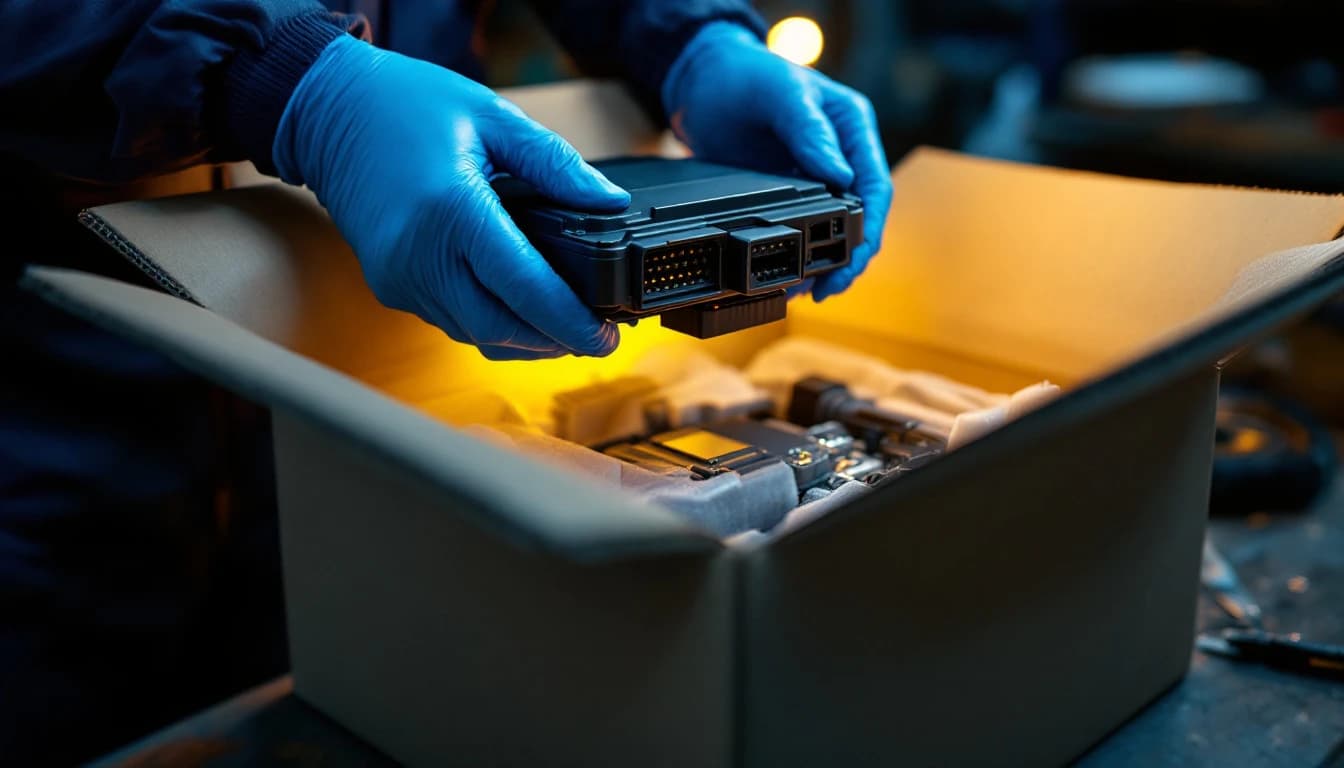
Subaru BIU Key Programming: All-Keys-Lost, Adding Keys, and Replacing the Body Integrated Unit
What the BIU actually is
The BIU, or Body Integrated Unit, is the module that carries the immobilizer function on modern Subarus. It is the box that stores the security registration linking approved keys to the vehicle, brokers the immobilizer handshake at start, and manages a long list of body electrical functions along the way. When you turn the key or press the start button, the BIU is a central part of the chain deciding whether the engine is authorized to run.
That is why the BIU turns up as a problem in three predictable situations: an all-keys-lost car with no working key, a car that needs an additional key added, and a car with a failed BIU that needs replacing. In every one of those, you are working with the security core of the vehicle, not a simple accessory module. Get the approach wrong and you have a Subaru that cranks but will not start, or that refuses to recognize the keys you just paid for.
Subaru builds it this way for the same reason the whole industry does. Immobilizers moved from a mechanical ignition lock into networked electronics because theft pressure demanded it, and the count of control units in a mainstream car kept climbing. The National Highway Traffic Safety Administration has documented for years that a modern vehicle commonly carries well over 50 networked electronic control units, and the security function is deliberately woven into that network rather than sitting in one easy-to-defeat lock. Subaru's own safety and technology positioning on the Subaru of America site reflects a brand that treats theft deterrence as a designed-in feature.
Which Subarus use the BIU, and the generations that matter
Modern Subarus across the mainstream range use the BIU as the immobilizer authority: the Outback, Forester, Legacy, Impreza, WRX, Crosstrek, and Ascent. Getting the generation and key type right is the first thing to establish, because it changes what has to happen and what has to ship.
Blade-key generations
Many Subarus of the last couple of decades use a conventional turn-key ignition with a transponder in the head of the blade key. The transponder is what the immobilizer checks. On these cars the BIU holds the registration of which transponders are authorized. Adding a key means teaching the BIU an additional transponder, and all-keys-lost means the BIU has to accept a freshly generated one when none of the originals survive.
Push-button start generations
Newer Subarus moved to push-button start with a proximity fob rather than a bladed transponder key. The security model is the same in spirit, the BIU is still central to the immobilizer, but the fob and the registration data are more involved, and the newer the car the tighter the security around that data tends to be. A push-button all-keys-lost is generally a heavier job than a blade-key one.
Where the honest boundary sits
The predictable, well-documented work sits within the generations where the BIU security registration is understood and reachable. The newest cars, and any model or market that falls outside that window, are quoted case by case after a bench evaluation at $150 rather than promised in advance. That is not a hedge. It is the honest way to price work whose feasibility depends on what the module actually contains and how locked-down that generation's data is. If you are not certain whether your no-start is even an immobilizer problem, our guide on telling an immobilizer fault from a module failure is the right first read.
All-keys-lost — the job the dealer often cannot finish
All-keys-lost is where the BIU's design bites hardest, and it is the reason most owners find this article.
When every working key to a Subaru is gone, generating a new one that the car will accept requires the security registration held in the BIU. On a lot of these cars, the data and procedures needed to do that with no existing key are not fully exposed through the diagnostic port. That is deliberate. An immobilizer that would hand out fresh keys to anyone with a scan tool and no original key would not be protecting anything.
The practical consequence is that a Subaru all-keys-lost is exactly the case where a dealer or a general locksmith gets stuck or quotes a number that makes your eyes water. The on-car tools most locksmiths carry are built around the high-volume brands that offer a documented on-car all-keys-lost path. Subaru frequently does not offer that path in the same accessible way, so the realistic route on many of these cars is to read the BIU on a bench, work with the security registration directly, generate a key the module will accept, and write everything back.
If you want the general framework for how these jobs run when no working key survives, our all-keys-lost mail-in module programming guide walks the whole sequence. The Subaru-specific point is simply that the BIU is usually the module that has to come out and be read, because that is where the registration lives and where the car will not surrender it through the port.
The theft pressure that shaped this design is real and persistent. The National Insurance Crime Bureau reports vehicle theft in the United States running into the hundreds of thousands of vehicles per year, and the Federal Bureau of Investigation tracks motor-vehicle theft as one of the more common property crimes in the country. The immobilizer was the industry's answer, and the data backs it: research published by the Insurance Institute for Highway Safety and its affiliated data organization has found that engine immobilizers cut theft-loss rates by well over a third on equipped vehicles. The networked-computer platform that makes the BIU possible arrived on a firm deadline, when the Environmental Protection Agency required standardized on-board diagnostics on light vehicles sold in the United States beginning with the 1996 model year, turning the car into a bus full of addressable control units. Immobilizers became genuinely hard to defeat because the alternative was cars that were trivial to steal.
Why the registration process matters as much as the module
People fixate on the BIU as a part, but on these jobs the registration process is half the battle. A BIU is not useful to your car until the security data inside it correctly reflects your vehicle and the keys you want it to accept. There are two distinct things happening in any key job:
- The module identity. For a replacement BIU, the unit has to carry your car's security identity rather than a donor's. Without that, it is a stranger to the network.
- The key registration. The specific transponders or fobs you want to use have to be written into the module's authorized list so the immobilizer recognizes them at start.
A used BIU dropped in with no work done fails on both counts: wrong identity, and none of your keys registered. Even a correctly identified BIU still needs the key registration completed before your keys will start the car. This is why "just swap the module" advice leads to no-starts, and why the registration step is not an optional extra. It is the part that actually makes the car go.
Adding a key versus replacing the BIU
Two different jobs get confused constantly, so let us separate them.
Adding a key assumes you have at least one working key and a healthy BIU that already belongs to your car. The identity is correct; you simply want another transponder or fob in the authorized list. On many of these platforms even adding a key benefits from a bench read because the security data is protected, but it is fundamentally additive. Your car's identity is fine.
Replacing the BIU means the module itself is changing, because it failed or because a used or virgin unit is going in. Now identity is the whole problem. A replacement is a stranger until your vehicle's security data is established in it and your keys are registered to it. Skip that and you have a car that will not start or that ignores every key.
The reason both jobs so often need a bench is the same reason all-keys-lost does. Subaru does not leave the full security dataset open on the diagnostic port, so reading and writing the protected regions frequently means working with the module directly rather than through the car.
Replacing a dead BIU — clone, virgin, and registration
When a BIU has genuinely failed, there are a few honest paths to a working replacement, and which one applies depends on what can be read.
- Clone the original. If your failed BIU can still be read, even when it is unreliable in the car, its security identity and registration can often be copied onto a replacement unit. The car then sees your original module and your existing keys keep working. This is the cleanest outcome when it is possible.
- Program a virgin unit and register keys. Where a genuinely virgin BIU is available and the platform allows it, the module is written with your vehicle's security data and your keys are registered to it.
- Adapt a replacement and re-register. Where cloning is not possible, a suitable replacement is aligned to your vehicle and the keys are registered fresh.
The trap owners fall into is the same one that catches people with engine controllers: assuming a matching part number means plug-and-play. It never does on a security module. A part number describes hardware and software compatibility, not identity. Two BIUs can be functionally identical and still refuse each other's cars. Cloning is what preserves your keys and your factory security, which is why a workshop that skips past it without asking whether your original still reads is not doing you a favor.
The honest comparison — the three BIU jobs
| Add a key | Replace a failed BIU | All-keys-lost | |
|---|---|---|---|
| Starting point | At least one working key, healthy BIU | Module failed, used or virgin unit going in | No working key survives |
| What the BIU needs | New transponder or fob registered | Your identity established, then keys registered | New key generated and accepted |
| Bench read likely | Often, data is protected | Yes, for cloning or writing identity | Yes, on most platforms |
| Your existing keys | Keep working | Kept if the original can be cloned | None survive; new one generated |
| Main risk | Minimal on supported cars | Original may not read for cloning | Newest push-button cars are tighter |
| Proof of ownership | Required | Required | Required |
The table makes the point that all three are real jobs with real security data behind them, and that the outcome you want, keeping your keys, depends on whether the original module can be read. That is decided when the unit is read, not before, which is why intake and, where needed, a bench evaluation come first.
Why a bench reaches what on-car tools cannot
On-car programming works well when the manufacturer exposes the necessary security functions through the diagnostic port with proper authorization. Many brands do, for many procedures. Subaru, on a lot of BIU work and especially on all-keys-lost, does not expose everything a general workshop needs.
When the data you need to read or write is not fully available on-car, the module has to come out. A bench read means the BIU is powered on a controlled, regulated supply and its memory is read and written outside the car. That does several things a driveway procedure cannot:
- It reaches protected registration data. The security registration can be read and archived directly rather than begged for through a locked-down port.
- It removes voltage risk. A marginal battery in the car can sag during a write and corrupt a module mid-operation. A regulated bench supply does not.
- It allows a true clone. Copying an original identity onto a replacement requires reading the original at a level the car will not grant, then writing it to the new unit.
- It archives before it changes anything. The original data is captured and saved before a single byte is modified, so there is always a known-good starting point.
None of this is exotic. It is the standard way security modules are handled once the on-car path runs out, and on Subaru the on-car path runs out sooner than on the mass-market brands with fully documented dealer procedures.
"The Subarus I see are almost always all-keys-lost cars that a locksmith already tried and had to hand back. It is not a skill gap. The car simply will not let you make a key with nothing to start from through the port, so you read the BIU and do it properly on the bench. When the customer still has the failed module and it reads, we clone it, register the keys, and they drive off on the keys they already owned. The ones who threw the old unit away are the ones who pay the most." — Independent import-marque locksmith, 17+ years (anonymized)
What has to be shipped in
Because the security registration lives in the BIU, the BIU is usually the part that travels. The exact list depends on the job:
- All-keys-lost. The BIU comes in to be read, and a key, key blank, or fob may be requested depending on the generation so a working transponder can be generated and registered.
- Adding a key. The BIU plus the new key or fob, and confirmation of how many working keys you already have.
- Failed BIU, cloning the original. Send both the failed original and the replacement when you have both, so your identity and keys can be preserved.
- Virgin replacement. The virgin module and the vehicle identity details so it can be written and your keys registered.
Establishing the full list up front is far cheaper than discovering it after a part has already made a wasted round trip. If you have never pulled a module before, our walkthrough on how to remove, package, and ship a car module safely covers anti-static handling and packing so nothing arrives damaged.
The honest limits
Here is where a workshop should tell you what it cannot do.
The newest cars are the hardest. Push-button, proximity-fob Subarus of the most recent generations tighten the security around key data, and some steps on the very newest cars are designed around online factory authorization. When a car falls in that group, the honest answer is to say so before you ship.
A read may not be possible. Cloning your original identity onto a replacement assumes the original still reads. A badly failed BIU may be too far gone, and then the options narrow to virgin programming or adaptation, which are not available on every generation.
Software cannot fix a physically dead module. If a BIU has water damage, a failed processor, or a dead internal supply, no security work makes it run. That becomes a repair or replace decision, and the honest path may be a donor plus a clone rather than saving the original.
Case-by-case means case-by-case. Anything outside the well-documented generations gets a bench evaluation and an honest answer, not a promise made to win the job.
Legal framing and proof of ownership
Proof of ownership is required for all key, immobilizer, and BIU security work, without exception. In practice that means documentation tying your name to the vehicle, such as a registration or title. Reputable shops verify ownership, and a shop that does not ask should worry you. The Federal Trade Commission publishes consumer guidance on vetting automotive services that is worth reading if you are choosing a provider for the first time.
Key and immobilizer work is offered for legitimate ownership situations: a failed module, a lost key, a car you own and cannot start. It is not framed or sold as a way around anti-theft protection on a vehicle you do not own. That principle protects honest customers as much as it deters the dishonest, and it is not negotiable.
The mail-in workflow
The whole point of a bench service is that you ship a part rather than move a vehicle. This is a nationwide mail-in workshop, so the sequence is the same wherever you are.
- Message the lab before you remove anything. Send the VIN, year, model, whether the car is blade-key or push-button, the BIU part number from the label, a photo of the label, whether this is all-keys-lost, add-a-key, or a failed-module job, and how many working keys you have.
- Provide proof of ownership. Nothing security-linked proceeds without it.
- Ship what we ask for. Usually the BIU, sometimes the BIU plus a key or a donor. Both the inbound and return shipping labels are purchased at checkout, so you get a prepaid, pre-addressed label by email and box the module in an anti-static bag inside a padded carton.
- Bench read and archive. The module is powered on a regulated supply, the existing data is read where it still reads, and it is archived before any change.
- Clone, program, or generate keys. The agreed path is carried out on the bench, where a voltage sag cannot corrupt a module mid-write the way it can in a car with a marginal battery.
- Bench verify. Communication and key acceptance are checked before anything leaves the shop.
- Return with tracking. Return shipping is a flat-rate tier you choose at checkout, from $24.95, with faster options available. You reinstall the part.
Frequently asked questions
Why can a dealer or locksmith not do my all-keys-lost Subaru? On many Subarus the security data needed to make a new key with no existing key is not fully accessible through the diagnostic port, which is deliberate anti-theft design. On-car tools built for high-volume brands hit that wall, so the realistic route is to read the BIU on a bench, generate a key the module accepts, and write it back.
What is the Subaru BIU and why does it stop my car starting? The BIU, or Body Integrated Unit, holds the immobilizer registration that ties approved keys to your car. If it does not recognize the key at start, or if a replacement unit carries the wrong identity, the immobilizer blocks the engine. The module is central to whether the car is authorized to run, not just a body electrical box.
Can I just install a used BIU from another Subaru? No. A used BIU carries the other car's security identity and none of your keys registered, so it will not start your car as-is. It has to be cloned from your original, programmed as a virgin unit, or adapted to your vehicle, and your keys must then be registered to it before the car will run.
Does adding a key need the module sent in? Often yes on these platforms, because the security registration is protected and not fully open on the diagnostic port. Sending the BIU with the new key or fob lets the transponder be registered reliably on a bench, which is also safer than an in-car write on a marginal battery.
Will my existing keys still work after a BIU replacement? They can, if your original module still reads and can be cloned onto the replacement, because cloning copies your identity and registration across. If the original is too far gone to read, keys may need to be regenerated and registered fresh, which is why intake starts with whether the failed unit can be read at all.
Is Subaru BIU key programming legal? Yes, when it is your vehicle and you can prove it. Proof of ownership such as a registration or title is required for all BIU, key, and immobilizer work without exception. The service exists for legitimate owners with a failed module, a lost key, or a car they cannot start, not as a way around anti-theft protection.
How much is Subaru BIU key programming? Subaru BIU key programming is a flat $350 bench job, with a $150 bench evaluation for the newest or non-standard cars that need to be read before a plan is promised, plus return shipping chosen at checkout from $24.95. The flat price covers the well-documented generations; anything outside that window is quoted after the evaluation.
The bottom line
The Subaru BIU is the immobilizer authority on modern Outback, Forester, Legacy, Impreza, WRX, Crosstrek, and Ascent models. It holds the security registration that ties keys to the car, which is why an all-keys-lost Subaru is the exact job a dealer or general locksmith so often cannot finish, why adding a key is more than a quick on-car learn, and why a dead BIU cannot simply be swapped in as a used part. In every one of those situations the registration process matters as much as the module itself, and on a lot of these cars the data lives behind a wall the diagnostic port will not open.
That is why a bench service reaches what on-car tools cannot. When your failed module still reads, cloning it onto a replacement keeps your existing keys working and your factory security intact, which is the outcome to want. When it does not, virgin programming or key generation are the fallbacks, and a bench evaluation tells you which path your car is on before you spend on the wrong one. Subaru BIU key programming is a flat $350 bench job at our Subaru BIU service, with a $150 bench evaluation for the newest and non-standard cars, and return shipping chosen at checkout from $24.95.
If you are staring at a Subaru with no working keys, or holding a used BIU that will not start the car, do not buy a second module and do not throw the failed one away. Message the lab with the VIN, whether it is blade-key or push-button, the part number, and a photo of the label, and we will tell you whether your car is a clean clone, a virgin program, or an all-keys-lost read. Proof of ownership is required, and it protects you as much as anyone.
Ship your module today
Flat-rate pricing, 24-hour bench turnaround, return speed your choice at checkout. Most jobs back on your bench within a week.
More from the Lab

Maserati BCM & Key Programming: Ghibli, Quattroporte, Levante, GranTurismo — the Honest Mail-In Guide
15 min · July 30, 2026

Fiat BCM & Key Programming: 500, 500L, 500X, Spider — When the Body Computer Runs the Immobilizer
15 min · July 30, 2026

Volvo CEM Key Programming and Cloning: Why a Used Central Electronic Module Will Not Start Your Car
15 min · July 29, 2026
VW / Audi ELV / ESL Electronic Steering Lock Failure: Why the Column Stays Locked and What a Bench Clone Actually Fixes
14 min · August 10, 2026