
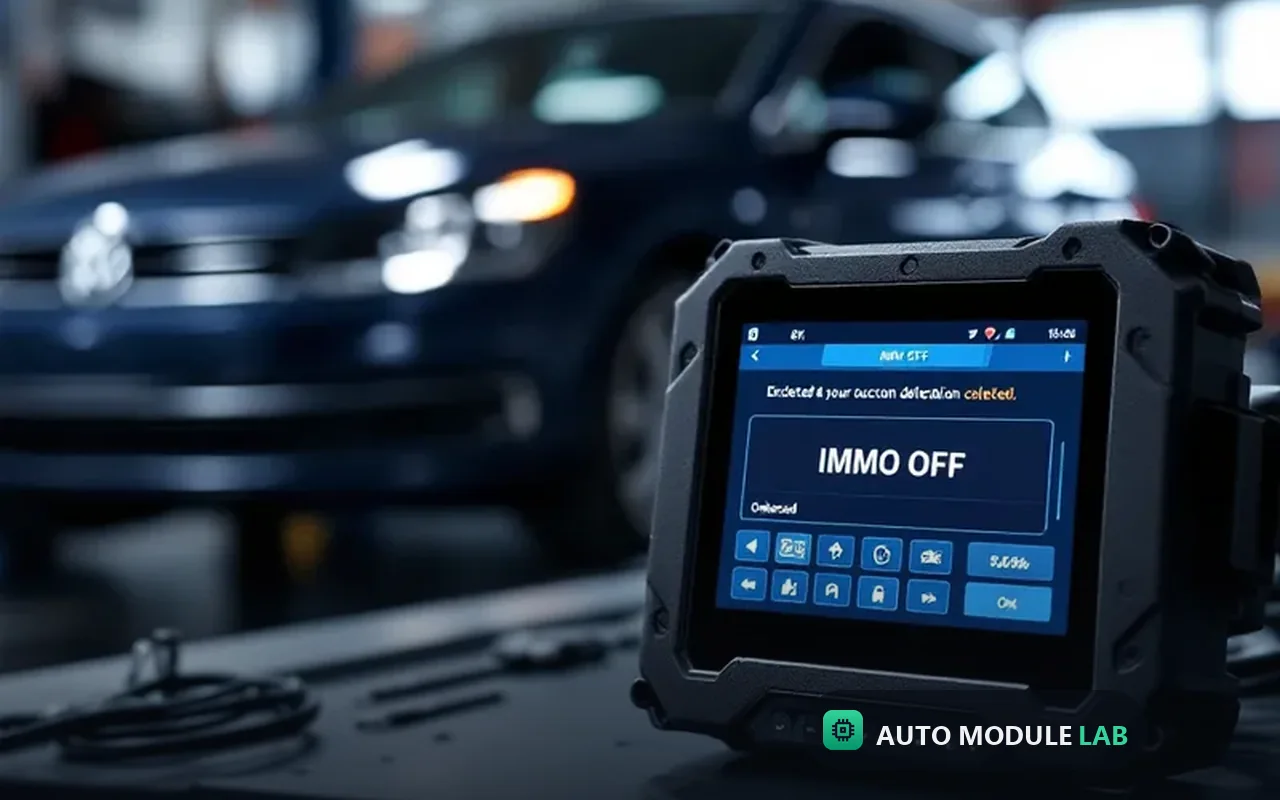
VW Audi Cluster Key Programming 2006-2017 (2026 Guide)
Who this is for
You are reading this because one of the following is true:
- You lost every key to a 2006-2017 Volkswagen or Audi and the car will crank but not start, or will not crank at all.
- You bought a used Jetta, Passat, Golf, Tiguan, CC, Beetle, or an Audi A3, A4, A5, or Q5 with only one key and want a spare before the last key fails.
- A locksmith or dealer told you the immobilizer data is locked in the instrument cluster and the cluster has to come out.
- You replaced a used cluster from a salvage car and now the dash shows an immobilizer warning and the engine will not run.
If any of those describe you, a bench-level cluster read plus key programming is almost always the correct fix. The VW and Audi cluster key programming service handles all of these by mail for a flat 250 dollars. Before you ship anything, read the honest "does not fix" section near the end, because a small number of no-start problems have nothing to do with the immobilizer and shipping the cluster will not help those.
How the VW and Audi immobilizer actually works
Volkswagen Group has shipped several generations of immobilizer. The 2006-2017 window this guide covers is dominated by the fourth generation, usually written as Immobilizer-IV or Immo4. The single most important fact about Immo4 is this: the immobilizer is not in the engine computer. On the vast majority of these cars the immobilizer control unit and the secret key data are stored inside the instrument cluster. On a handful of keyless-start cars the data lives in the Kessy keyless module instead, but the cluster remains the immobilizer brain on the bulk of the fleet.
Here is the chain of trust on a normal start:
- You turn the key or press start. The transponder chip inside the key wakes up and exchanges a rolling cryptographic challenge with the antenna ring around the ignition.
- The cluster confirms the key is one of the keys it knows, then releases the immobilizer.
- The cluster and the engine ECU run their own handshake using a shared secret called Component Security, abbreviated CS. The Ross-Tech VCDS immobilizer documentation explains how cluster and engine modules must agree on this value, and the underlying onboard-diagnostics communication that carries it is defined by the SAE J1979 standard.
- Only when the key is valid and the cluster-to-engine CS handshake passes does the ECU enable fuel and spark.
Because the cluster holds the key data and the CS, the cluster is the part a locksmith reads to add or replace keys. There is no way to teach a brand new key without access to that data.
Two cluster families inside the 2006-2017 window
Not every Immo4 cluster is built the same. The internal layout changed partway through the decade, and that changes which chips we read on the bench:
| Era | Cluster type | Processor | EEPROM | Data bus |
|---|---|---|---|---|
| ~2006-2010 | Early Immo4 | NEC microcontroller | 24C32 | CAN |
| ~2010-2017 | UDS cluster | NEC microcontroller | 24C64 | CAN (UDS protocol) |
On the earlier 2006-2010 clusters the immobilizer data and key information are read from a NEC processor paired with a 24C32 serial EEPROM over the CAN bus. On the later roughly 2010-2017 UDS clusters the layout moves to a NEC processor with a larger 24C64 EEPROM, and the Component Security is stored as a 12-byte value. The practical takeaway for you as the owner is that both families are routine bench work for a shop that reads the chips directly. The difference matters to the technician, not to your wallet.
What goes wrong: symptoms and failure modes
The symptoms that bring VW and Audi owners to a cluster key job fall into a few clean buckets.
Lost or damaged keys
The most common case. You had two keys, lost one years ago, and just lost the last one. The car will usually crank but refuse to start, and the dash may show an immobilizer or key symbol. This is an all-keys-lost job. There is no working key for the car to read, so the only path is to read the cluster on the bench, recover the immobilizer data and CS, and cut and program a brand new key from that data.
Add a spare before something fails
You have one working key and want a backup. This is an add-a-key job and it is the cheapest, lowest-risk version of the work because we already have a known-good key to confirm against. Industry data backs the urgency: AAA's Your Driving Costs research repeatedly flags electronics and security-system repairs as a meaningful share of ownership cost, and dealer smart-key replacements frequently run into the hundreds of dollars. Adding a spare while you still have one key is always cheaper than waiting for an all-keys-lost emergency.
Used cluster swap that locked the car
Someone replaced a failed cluster with a salvage unit, or sent a cluster out for a repair that wiped or changed the immobilizer data. Now the dash shows an immobilizer fault and the engine will not run because the cluster CS no longer matches the engine ECU. This is fixable on the bench, but the technician needs to know it is a swapped cluster up front so the data can be aligned correctly.
Failed dealer or DIY programming attempt
A surprising number of jobs arrive after a failed attempt with a cheap OBD tool. The car may now be in a half-programmed state. A direct cluster read sidesteps the OBD security gate entirely and reads the truth straight off the chip.
The mail-in process, step by step
The entire point of mailing the cluster is that the hard part, reading the immobilizer data and programming the key, happens on a bench under controlled conditions rather than in a parking lot. Here is the flow:
- Pay and start the order. Choose the VW and Audi cluster key programming service and complete the 250 dollar order. You will tell us the year, make, model, VIN, and whether this is an add-a-key or all-keys-lost job.
- Ship the cluster to the bench. Pack the instrument cluster and any parts noted below and send them to Auto Module Lab, PO Box 120241, Arlington TX 76012 if you ship USPS — or 1009 Oakwood Ln # 120241, Arlington TX 76012 if you ship UPS or FedEx (UPS and FedEx cannot deliver to a PO Box). The full submission checklist is documented on the how it works page.
- 24-hour bench turnaround. When your package arrives, the cluster is read, the immobilizer data and Component Security are extracted, and your key is cut and programmed. Most jobs are completed and back in the outbound mail within 24 hours of arrival.
- Flat-rate return shipping, chosen at checkout. Your cluster and programmed key ship back to you with tracking via the tier you picked (from 24.95 dollars). You reinstall the cluster, insert the key, and the car starts.
This nationwide mail-in model is the same approach used across the industry for module-level locksmith work, and it exists precisely because the bench tooling is too specialized to carry to every driveway. The whole reason these immobilizers are hard to bypass in the first place is that they work: the National Insurance Crime Bureau credits the spread of electronic immobilizers with helping drive a 23 percent year-over-year decline in U.S. vehicle thefts.
What to ship
- The instrument cluster. This is the non-negotiable core part because it holds the immobilizer data.
- For an all-keys-lost job where a blade key must be cut: include a door lock cylinder OR the original key code from a dealer. Cutting a mechanical blade for a car with no working key requires the lock code, and the door cylinder is the easiest place to read it from. Without one of these we can program the transponder but cannot cut a correctly bitted blade.
- Any existing working key, if you have one. For an add-a-key job, sending the working key lets us confirm the result before it ships back.
- Your contact details and the VIN, written inside the box.
Honest scope: what this does NOT fix
A guide that only lists wins is not helping you. Here is what the VW and Audi cluster key service does not solve:
- MQB and Immobilizer-V cars. The Golf 7, Audi A3 8V, and other platform-MQB vehicles from roughly 2013 onward use Immobilizer-V, a different and harder system where the data is distributed across modules. This guide and this 250 dollar service cover Immo4 only. If your car is MQB, ask first; it is a separate service with separate pricing.
- A no-start that is not immobilizer related. A dead battery, a failed fuel pump, a bad crank sensor, or a no-crank starter problem will not be fixed by programming a key. If the immobilizer light is off and the car simply will not run, diagnose the mechanical fault first.
- Cluster display or gauge faults. If your concern is dead pixels, stuck needles, or a black display, that is an instrument cluster repair, not a key job.
- Comfort or convenience module coding. Window, mirror, and central locking faults live in other modules.
When in doubt, send a photo and the VIN before you ship. It costs nothing to confirm coverage and it prevents a wasted shipment.
Price versus the dealer
The math is the main reason owners choose mail-in. A franchise dealer typically charges 350 to 500 dollars for an all-keys-lost VW or Audi key job once you add the key blank, the cut, the programming labor, and frequently a tow because the car cannot be driven in. Independent mobile locksmiths who can do these cars often price similarly once travel and the specialized tooling premium are added. The Auto Module Lab flat rate of 250 dollars includes the bench read, the key, and the programming; return shipping is a flat-rate tier added at checkout (from 24.95 dollars).
| Path | Typical cost | Tow needed | Includes key |
|---|---|---|---|
| Franchise dealer | 350 to 500 dollars | Often | Yes |
| Mobile specialist locksmith | 300 to 450 dollars | Sometimes | Yes |
| Auto Module Lab mail-in | 250 dollars flat | No | Yes |
The mail-in trade-off is honest: you are without the cluster for a few days of shipping each way. In exchange you get a controlled bench read, a lower flat price, and no tow bill. For an add-a-key job done before your last key fails, there is no downside at all.
"On an Immo4 VW or Audi, the cluster is the truth. Reading the NEC and the EEPROM directly on the bench skips the OBD security gate entirely, so an all-keys-lost car that a dealer wants to tow in becomes a flat-rate desk job. The only thing that slows it down is people not sending a lock cylinder for the blade cut."
— Master automotive locksmith, 14+ years on the bench programming European immobilizers
Frequently asked questions
Is the immobilizer data really inside the cluster and not the ECU on these cars?
Yes. On 2006-2017 Immobilizer-IV Volkswagen and Audi vehicles the immobilizer control unit and key data are stored in the instrument cluster on the large majority of the fleet, with a smaller set of keyless-start cars storing it in the Kessy module instead. The cluster-and-engine Component Security handshake is what the Ross-Tech immobilizer documentation describes, and it is why the cluster is the part we read.
Can you do an all-keys-lost job, or only add a spare?
Both. Add-a-key is easier and lower risk because we have a working key to verify against. All-keys-lost requires reading the cluster on the bench to recover the data, and if a mechanical blade must be cut you also need to send a door lock cylinder or the key code.
Why do you need a door lock cylinder for some jobs?
Only when a blade key has to be cut and there is no working key to copy. The mechanical bitting is encoded in the lock, so we read the cylinder or use a dealer key code to cut a blade that physically turns the ignition. The transponder side is programmed from the cluster data regardless.
My car is a Golf 7 or an Audi A3 from 2015. Is that covered?
Those are usually MQB platform cars running Immobilizer-V, which is not what this 250 dollar service covers. Send your VIN first so we can confirm the exact platform before you ship anything.
How long am I without my car?
You are not without the car the whole time, only without the cluster. The car sits in your driveway while the cluster is in transit and on the bench. Bench turnaround is 24 hours from arrival, plus shipping each way.
Will the dealer immobilizer light go away after this?
Yes. Once the cluster holds a valid key and the cluster-to-engine CS handshake passes, the immobilizer releases and the warning clears. If a warning persists, it points to a non-immobilizer fault that needs separate diagnosis.
Is this legal and safe for my car?
Yes. Reading a cluster to add or recover keys for the registered owner is standard automotive locksmith work. The underlying theft-prevention systems exist because of federal anti-theft standards under the Federal Motor Vehicle Theft Prevention Standard (49 CFR Part 541), and recovering access for the legitimate owner is exactly what locksmiths do.
Ready to ship
If you have a 2006-2017 Volkswagen or Audi that needs a spare key or an all-keys-lost recovery, the bench is the fastest, cleanest path. Start the VW and Audi cluster key programming order, pack the cluster, and ship it to Auto Module Lab, PO Box 120241, Arlington TX 76012 if you ship USPS — or 1009 Oakwood Ln # 120241, Arlington TX 76012 if you ship UPS or FedEx (UPS and FedEx cannot deliver to a PO Box). We read the cluster, program your key, and ship it back within a 24-hour bench turnaround via the flat-rate return tier you chose at checkout (from 24.95 dollars). Adrian Torres has been an automotive locksmith since 2012 and has run module and key programming benches across Texas and Florida; the about page covers that background. When you are unsure whether your car is Immo4 or MQB, send the VIN first and get a straight answer before anything goes in a box.
Ship your module today
Flat-rate pricing, 24-hour bench turnaround, return speed your choice at checkout. Most jobs back on your bench within a week.
More from the Lab
Proof of Ownership for Immobilizer and Key Module Work: What Counts, and What to Send
14 min · August 10, 2026

Maserati BCM & Key Programming: Ghibli, Quattroporte, Levante, GranTurismo — the Honest Mail-In Guide
15 min · July 30, 2026

Fiat BCM & Key Programming: 500, 500L, 500X, Spider — When the Body Computer Runs the Immobilizer
15 min · July 30, 2026

Volvo CEM Key Programming and Cloning: Why a Used Central Electronic Module Will Not Start Your Car
15 min · July 29, 2026