
Shipping a Control Module From Canada, Alaska, Hawaii, Puerto Rico, the Territories, or an APO Address
Why this needs its own guide
Bench programming is a mail-in service, so shipping is not a footnote — it is half the job. For customers in the lower 48 states the logistics are boring in the best way: box up the module, hand it to a carrier, get it back in a few days.
Outside the lower 48, the boring part stops. Canada adds a border, a customs declaration, and duties or taxes on the return leg. Alaska and Hawaii stay domestic but change what the air-service commitments actually mean. Puerto Rico is inside the US customs territory while Guam and the US Virgin Islands are not, even though the Postal Service treats all of them as domestic mail. And APO, FPO and DPO military addresses can only be served by one carrier in the world.
None of this makes mail-in programming impossible from those places. It makes it something you plan rather than improvise. This guide walks through each destination type, what to write on the customs form and why understating value is a bad idea, who pays duties, how long to actually expect, and how our paid return-shipping tiers behave when the parcel has to cross a border or an ocean.
Everything below is about getting a module to a bench and back. If you are still deciding whether to send the part at all, the module programming cost breakdown is the better place to start, because shipping only makes sense once the repair math does.
First: which address, and why there are two
There are two shipping addresses, and the correct one depends entirely on your carrier.
- USPS (including Canada Post handoffs, and all APO, FPO and DPO mail): PO Box 120241, Arlington, TX 76012
- UPS or FedEx: 1009 Oakwood Ln # 120241, Arlington, TX 76012
The reason is structural rather than a preference on our end. A USPS PO Box is a physical box inside a postal facility, and private carriers have no access to it. UPS and FedEx will either reject the label at intake or, worse, accept it and then fail the delivery days later after the parcel has already traveled. The United States Postal Service — which reaches well over 180 countries and is the only carrier that can place a parcel in a PO Box — is why both addresses have to be published side by side.
The work itself is performed at our workshop at 1168 W Pioneer Parkway, Arlington, TX 76013. That is a business location, not a ship-to address — do not send modules there.
One more detail that matters for international senders: whichever address you use, put a clear return address on the parcel. If a customs issue arises and the shipment has to go back, an incomplete return address turns a delay into a loss.
Canada
Canada is by far the most common non-lower-48 origin we see, and it is the one where the shipping decision has the biggest effect on the customer's total cost.
Which carriers reach us
All three practical options work in both directions. Canada Post hands off to USPS at the border, and the parcel finishes as domestic US mail — meaning the PO Box address is correct for that route. UPS and FedEx both operate their own cross-border networks and require the street address instead.
The brokerage question — the part nobody warns you about
Here is the single most useful thing in this section. On the return leg, when the module comes back into Canada, somebody has to clear it through customs. How that happens differs sharply by carrier:
- Postal route: Canada Post assesses any applicable duty and tax and charges a modest, flat handling fee at delivery. It is slower and less trackable, but the fees are predictable and small.
- Courier route (UPS or FedEx): the carrier acts as your customs broker and bills a brokerage fee on top of the duty and tax. On a low-value parcel that brokerage fee can rival or exceed the duty itself.
UPS, which serves well over 200 countries and territories worldwide, publishes its brokerage and disbursement fee structures, and they are worth reading before you choose an air tier — not because the service is bad, but because a customer who budgets only for the shipping tier and then meets a brokerage invoice at the door feels ambushed. Choosing the courier tier is a legitimate choice when you need the part back fast. Just make it with the full number in view.
Duties and taxes on the return
Canadian federal goods-and-services tax generally applies to imported goods, plus provincial tax depending on where you are. Duty depends on the tariff classification and on origin rules under the North American trade agreement — many automotive electronic components qualify for preferential treatment, but qualification depends on where the part was actually manufactured, not where it is shipping from.
There are also provisions in most customs regimes for goods returning after repair, where duty is assessed on the repair value rather than the full value of the article. Claiming that treatment requires documentation prepared correctly at the time of export, so if you intend to use it, say so before you ship and keep every document. We do not act as your customs broker and we cannot guarantee any particular tariff treatment — duties, taxes and brokerage on the return leg are the customer's responsibility.
Realistic transit
Plan on roughly a week each way for postal service in normal conditions, sometimes longer. Courier air service is faster in transit but adds a customs clearance step that is not counted in the service commitment. More on that below.
Alaska and Hawaii
Both are US states, so there is no customs form, no duty, and no import documentation. What changes is time and service coverage.
USPS, UPS and FedEx all serve both states, and USPS Priority and Ground Advantage service reaches essentially every address, since the Postal Service serves roughly 169 million delivery points across the country according to USPS. That universal-service obligation is the reason the postal route is often the only one that reaches a remote address at a sane price.
Two practical notes:
Ground is not ground. There is no road to Hawaii and no practical trucking lane to most of Alaska, so what carriers call ground service to those states moves by air or by sea on part of its journey. Expect longer commitments than the same service level within the contiguous states, and expect the difference to be larger for rural Alaska than for Anchorage.
Air-tier coverage is not universal. Next-day and second-day commitments in Alaska and Hawaii apply to specific coverage areas, not to every ZIP code. Remote and off-road-system communities may see extended commitments or may need a different service entirely. If you are in one of those places, tell us before checkout so we can sort the return option out rather than have you pay for a promise your address cannot receive.
Puerto Rico, the US Virgin Islands, Guam, American Samoa and the CNMI
This group is where people get caught, because postal treatment and customs treatment do not line up.
Puerto Rico is inside the US customs territory. Shipments between Puerto Rico and the mainland do not clear customs. USPS handles it as domestic mail, and UPS and FedEx serve it with their own networks. From a paperwork standpoint it behaves like a state.
The US Virgin Islands, Guam, American Samoa and the Northern Mariana Islands are US jurisdictions that sit outside the US customs territory. USPS still treats mail to and from them as domestic in terms of postage, but a customs declaration is required, and local territorial excise or use taxes may apply on arrival. That combination — domestic postage, international-style paperwork — is exactly the trap. People assume that because they are buying a domestic label, no declaration is needed, and the parcel stalls.
Private carriers serve most of these destinations, but coverage and service levels vary considerably by island, and some addresses are effectively postal-only. As with remote Alaska, tell us where you are before you pick a return tier.
APO, FPO and DPO military addresses
If you are stationed overseas or afloat, this section is the whole answer: only USPS can deliver to an APO, FPO or DPO address. UPS and FedEx cannot. This is not a service limitation that a premium tier overcomes — the military postal system is an extension of the US postal network, and private carriers hand off to it rather than deliver into it. Anyone who tells you they will overnight a part to an APO box is describing something that does not exist.
What that means in practice:
- Address the parcel exactly in the military format: rank and full name, unit and box number, then APO, FPO or DPO with AA, AE or AP and the ZIP. Do not write the host country's name anywhere on the label — it can cause the parcel to be routed into the foreign postal system and leave the military network entirely.
- A customs declaration is required. Military mail crosses borders even though the postage is domestic.
- Size and weight limits are tighter than ordinary domestic mail on some routes, and restricted-item lists vary by destination. A control module is not a restricted item, but a lithium battery packed alongside it might be — ship the module only.
- Transit is highly variable. A module going to an APO AE address may clear in ten days or take a month depending on the mission and the route. Build that into your expectations before you pull the part out of the vehicle.
For the return leg, this means the USPS-based standard tier is the only workable option for APO, FPO and DPO customers. That is not us economizing; it is the only carrier that can complete the delivery.
Destination comparison
| Destination | USPS reaches it | UPS / FedEx reach it | Customs declaration | Duties or taxes on return | Realistic added transit |
|---|---|---|---|---|---|
| Canada | Yes, via Canada Post handoff | Yes, own network | Yes | Yes — GST/provincial, duty by classification, plus courier brokerage | About a week each way postal; courier faster in transit plus clearance |
| Alaska | Yes, all addresses | Yes, coverage varies by area | No | No | A few days beyond lower-48 commitments; more for remote areas |
| Hawaii | Yes, all addresses | Yes | No | No | A few days beyond lower-48 commitments |
| Puerto Rico | Yes, domestic | Yes | No | No | Usually a few days |
| USVI, Guam, American Samoa, CNMI | Yes, domestic postage | Varies sharply by island | Yes | Possible territorial excise or use tax | Often one to three weeks |
| APO / FPO / DPO | Yes — only carrier that can | No, cannot deliver | Yes | Generally not applicable | Ten days to a month, mission dependent |
Filling out the customs declaration correctly
This is the part that decides whether your parcel moves or sits. A customs form is a legal declaration, not a formality, and the two failure modes are opposite: vague and dishonest.
Describe the goods specifically
Write what it actually is. "Used automotive electronic control module for repair and reprogramming, to be returned to sender" is a good description. "Car part", "electronics", "computer" and "gift" are not. A vague description invites an officer to open the parcel and hold it while somebody figures out what it is, and that inspection is where days disappear.
If the part is being returned to you after service, saying so on both the outbound and return declarations is genuinely useful — it is what makes any returned-after-repair treatment reviewable at all.
Declare the honest value
Understating value is the single most common bad advice in shipping forums, and it is bad advice for three separate reasons.
First, it is a false statement on a customs declaration. U.S. Customs and Border Protection enforces valuation rules seriously, and penalties for misdeclaration fall on the person who signed the form. On a typical day CBP processes well over a million travelers and tens of thousands of cargo containers, and the systems that flag suspicious declarations are automated — a used automotive module declared at five dollars is exactly the kind of anomaly they are built to catch.
Second, the declared value is your insurance ceiling. If a carrier loses a module you declared at ten dollars, the claim pays out at ten dollars. The savings on duty are trivial next to the loss.
Third, it can be worse than useless. Customs authorities can assess value themselves when a declaration looks implausible, and the assessed figure plus a penalty can beat the honest number handily.
The correct value is what the item is genuinely worth — the replacement or market value of the used module, or, for a return after service, the value of the goods with the repair value shown separately where the form allows it. The Federal Trade Commission publishes consumer guidance on shipping and online-purchase practices that is worth reading if you are new to cross-border parcels.
A technician who handles a lot of cross-border bench work put the practical version of this plainly:
"Every single parcel I have seen stuck at a border was stuck for one of two reasons — the description said car part, or the value said ten dollars. Nobody has ever had a module held up for being too specific or too honest. Write exactly what it is, write what it is really worth, say it is coming back after repair, and the parcel moves. The people trying to save eleven dollars in tax are the ones waiting three weeks." — Independent automotive electronics technician, 14+ years handling cross-border bench work (anonymized)
Tariff classification
Customs forms often ask for a harmonized tariff code. Do not guess one. Your carrier's online tools, a customs broker, or the classification resources published by CBP can identify the right heading for an automotive electronic control unit. A wrong code causes a reclassification hold; a blank field usually just prompts the carrier to classify it for you.
Packing for a long, rough trip
A parcel that spends three weeks in the military postal system or on a barge to Alaska gets handled far more than one that runs Dallas to Denver. Pack accordingly.
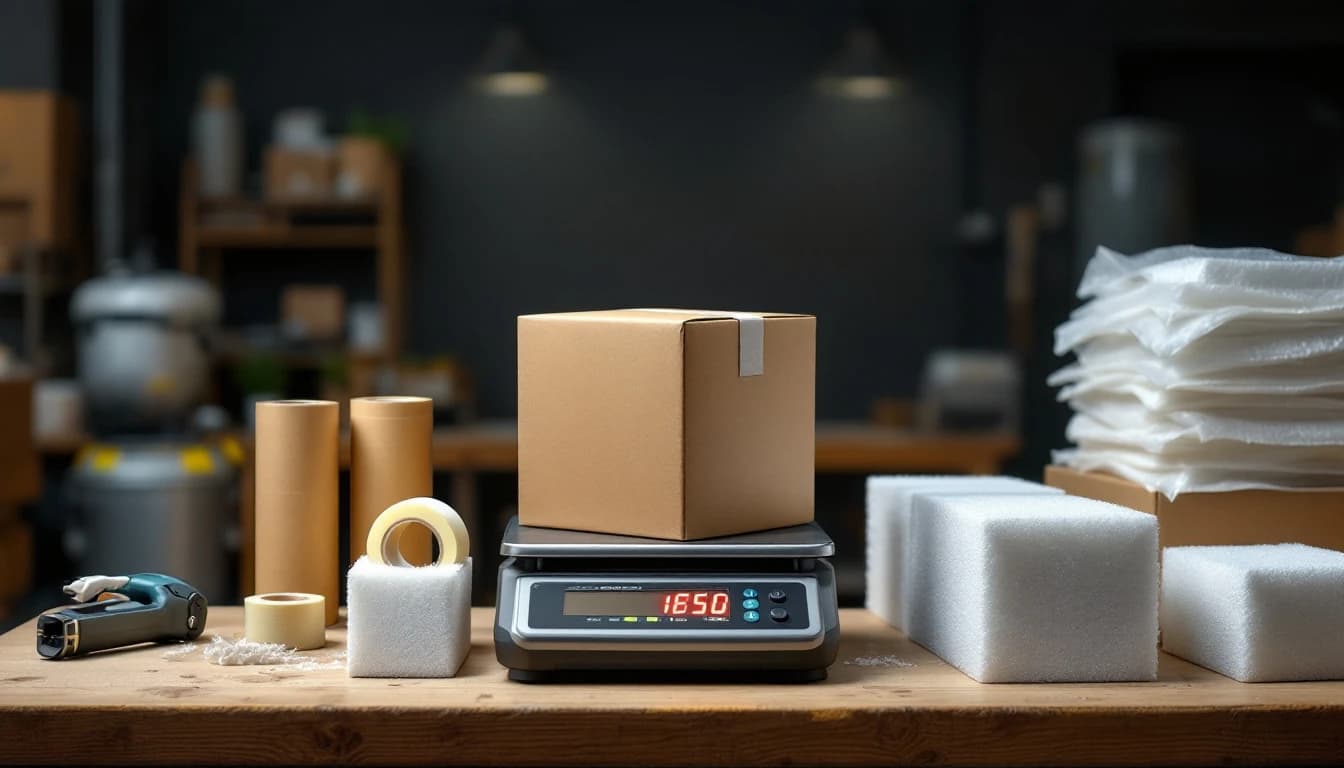
The full step-by-step is in the guide to how to remove, package and ship a car module, and the essentials do not change for international shipments — they just matter more:
- Anti-static bag first. Electrostatic discharge damage is real, cumulative, and invisible until the module misbehaves. Not a grocery bag, not bubble wrap against the board.
- Rigid inner protection. Connector pins are the most fragile thing on the unit. Protect the connector faces specifically.
- Two inches of cushioning on every side, in a box that does not flex when you squeeze it. Single-wall cartons fail on long routes.
- Nothing loose in the box. Anything that can slide will slide, for weeks.
- Documentation inside and outside. Put a slip inside with your name, the vehicle year, make, model, VIN, and what you need done. Attach the customs paperwork in a document pouch, not taped over with clear tape that smears.
- Photograph everything before you seal it. The module, the label, the packed box. It costs a minute and it settles disputes.
Ship only the module and any parts we have specifically asked for. Do not include keys, batteries, fluids, or the vehicle's paperwork unless requested. If the job involves keys, immobilizers or security access, proof of ownership is required, and it is easier to send that electronically than to put it in the box.
What our return-shipping tiers mean from these destinations
Return shipping is chosen and paid by the customer at checkout, in three flat tiers: Standard at $24.95 (3 to 5 business days), UPS 2nd Day Air at $54.95, and UPS Next Day Air at $94.95. Two honest caveats for everyone reading this article.
Air tiers are transit-time promises, not delivery-date guarantees across a border. A 2nd Day Air commitment counts the time the parcel is moving in the carrier's network. It does not count customs clearance, inspection, or the time a parcel spends waiting on duty payment. A Canadian customer who chooses the overnight tier will see the parcel leave Texas immediately and may still wait a day or two at the border. That is not the tier underperforming; it is a step the tier does not cover.
Some remote destinations need a quote. Off-road-system Alaska, the smaller territories, and certain island addresses are not always reachable at a flat national rate, and APO, FPO and DPO destinations are USPS-only, so the air tiers do not apply. Tell us where the module is going before you check out and we will sort out a workable return option rather than sell you a service your address cannot receive.
We do buy and email you a prepaid inbound label so you are not guessing at the outbound leg. The return tier is the one you choose and pay for at checkout.
A note on planning: because a module is a safety-relevant and driveability-critical component, the vehicle is usually down for the whole round trip. The National Highway Traffic Safety Administration treats electronic control systems as central to vehicle safety systems, and pulling one is not a repair you should stage halfway. Have the car somewhere it can sit, and account for the full round trip — not just the bench time — when you plan the job. A stranded vehicle is a common and expensive problem in its own right: AAA has reported responding to well over 30 million roadside assistance calls in a single year, and a car parked with its ECU in a mailbag is a tow waiting to happen if you leave it somewhere it cannot stay.
If you are buying the module before you ship it
Customers outside the lower 48 frequently buy a donor module rather than send their own, and the cross-border version of that purchase deserves a warning: you are now stacking two shipping risks and two sources of uncertainty. A donor bought at auction or from a salvage lot that turns out to be the wrong hardware revision costs you two international legs to discover.
The auction-car module cost guide covers the buying side in detail. The short version for international buyers: verify the part number and hardware revision from photographs before money moves, and if there is any doubt about what the unit actually is, a bench evaluation at $150 is far cheaper than shipping the wrong part twice. Independent repair-cost reporting from outlets like Consumer Reports consistently shows that diagnosis quality, not parts price, drives the total cost of an electronics repair — and that is doubly true when every wrong guess carries a customs form with it.
You can see the full list of what we do on the services page before you commit to shipping anything.
Frequently asked questions
Can I ship a module to you from Canada? Yes. Canadian customers ship to us regularly, using Canada Post to the PO Box address or UPS or FedEx to the street address. You will need a customs declaration on the way down, and duties, taxes and any courier brokerage fees on the return leg are your responsibility, so factor those in when you choose a return tier.
Why can't UPS or FedEx deliver to your PO Box? A USPS PO Box is a physical box inside a postal facility that only the Postal Service can access, so private carriers have no way to complete the delivery. That is why we publish two addresses: the PO Box for USPS and military mail, and a street address for UPS and FedEx shipments.
Do you accept shipments from APO, FPO and DPO addresses? Yes, and USPS is the only carrier that can serve them in either direction. Address the parcel in the standard military format without the host country name, include a customs declaration, and plan for transit that can range from about ten days to a month depending on the route.
How should I declare the value on the customs form? Declare the honest market or replacement value of the used module, and note that it is being sent for repair and returned. Understating value is a false statement on a legal declaration, it caps any loss claim at the amount you wrote, and customs authorities can reassess an implausible figure and add a penalty on top.
Will I pay duty when the module comes back to me? Usually some combination of duty, tax or handling applies on the return leg for shipments into Canada and for the territories outside the US customs territory, and those charges are the customer's responsibility. Postal returns typically carry a small flat handling fee while courier returns add a brokerage charge, which is why the carrier you choose changes your total.
Is the overnight return tier worth it from outside the lower 48? It is worth it when the transit time itself is your bottleneck, and it is not worth it when customs clearance is. UPS Next Day Air at $94.95 moves the parcel across the country in a day, but that commitment does not cover border clearance, so a Canadian or territorial customer may still wait at the border regardless of the tier purchased.
What if my address is too remote for the flat-rate tiers? Tell us before you check out and we will work out a return option that actually reaches you. Some off-road-system Alaskan addresses, smaller island destinations, and all APO, FPO and DPO addresses cannot receive the air tiers, so we handle those individually rather than selling a service the destination cannot accept.
The bottom line
Mail-in bench programming works from Canada, Alaska, Hawaii, Puerto Rico, the territories, and military addresses around the world. The differences are logistical, not technical, and every one of them is manageable if you plan it.
Use the address that matches your carrier — PO Box 120241, Arlington, TX 76012 for USPS and all military mail, or 1009 Oakwood Ln # 120241, Arlington, TX 76012 for UPS and FedEx. Remember that only USPS can serve an APO, FPO or DPO address, and that Guam, the USVI, American Samoa and the CNMI need a customs declaration even though the postage is domestic. Describe the goods specifically and declare the honest value, because the money saved by understating it is never worth the hold, the penalty, or the capped insurance claim. Budget for duties, taxes and brokerage on the return leg into Canada and the non-customs-territory destinations, and understand that an air tier buys transit time, not customs time.
Return shipping is chosen and paid at checkout from $24.95, and we will tell you honestly if your destination needs a different arrangement. Text us with your location, your vehicle, and what the module is doing before you pull it — a five-minute conversation up front prevents the two-week detour that a wrong address or a vague customs form creates.
Ship your module today
Flat-rate pricing, 24-hour bench turnaround, return speed your choice at checkout. Most jobs back on your bench within a week.
More from the Lab
What Still Has to Be Relearned After a Module Arrives
15 min · August 17, 2026

ESD: How Static Kills Car Modules, and How to Handle and Pack One Correctly
14 min · August 1, 2026

BCM Programming Cost in 2026: What a Body Control Module Really Costs to Program, and Whether You Can Mail It In
14 min · July 28, 2026
What to Ship With Your Module, by Job Type: The Companion Parts a Bench Job Actually Needs
14 min · July 28, 2026