

Transmission in Limp Mode or Shifting Harsh? TCM vs Mechatronic vs Mechanical — A Diagnosis Guide
The symptom is not the diagnosis
"Transmission in limp mode." "Harsh 2-3 shift." "Stuck in third gear." These are among the most-searched transmission complaints on the internet, and they share one frustrating property: the exact same symptom can be caused by a five-dollar connector, a failed sensor, a cracked solder joint inside the transmission control module (TCM), a worn valve body, or a gearbox that is mechanically finished. Guessing wrong is expensive in every direction — a replacement transmission is one of the largest single repair bills in car ownership, with pricing guides at Kelley Blue Book putting a full replacement at well over 4,000 dollars on many mainstream vehicles, while the module-level fix for a genuinely dead TCM can cost a tenth of that.
This matters more than it used to, because the fleet is old. There are well over 280 million registered vehicles in the United States according to the Bureau of Transportation Statistics, and the average vehicle on the road is now past the age where transmission electronics — modules designed in the 2000s and early 2010s — start failing from plain thermal fatigue. Meanwhile, AAA research has repeatedly found that roughly one in three American drivers could not absorb an unexpected repair bill of even 500 dollars without going into debt. Diagnosing in the right order is not pedantry. It is how you avoid paying transmission-shop money for a module-shop problem, or module money for a mechanical problem.
This guide walks the ladder the way a driveability technician walks it: codes first, then failure-signature matching, then — and only then — the decision about whether the TCM itself is the patient. At the end we cover exactly where mail-in bench work fits, including TCM cloning and replacement programming and VW/Audi DSG mechatronic cloning, and — just as important — where it does not.
What limp mode actually is
Limp mode (limp-home mode, failsafe mode) is a deliberate protection strategy, not a malfunction in itself. When the TCM detects a fault it cannot safely work around — implausible sensor data, a solenoid circuit that reads open or shorted, gear-ratio errors that suggest slipping clutches, loss of communication with the engine controller — it stops taking chances. It locks the transmission into a single safe gear (commonly third), fixes line pressure at maximum, disables torque-converter lockup and adaptive strategies, and turns on a warning light.
Maximum line pressure is why limp mode often feels violently harsh: every engagement happens at full clamping force with no shift-overlap finesse. That harshness is a symptom of the protection strategy, not necessarily of damage. A vehicle that shifts brutally in limp mode may have a perfectly healthy gearbox with an electrical fault; a vehicle that slips gently may be mechanically dying. Feel is a poor diagnostic instrument here — data is what counts, which is a principle the engineering literature at SAE International has emphasized since electronically controlled transmissions displaced hydraulic governors in the 1980s and 1990s.
The practical takeaway: never clear codes and hope. Limp mode exists because the TCM saw something. Your first job is to find out what.
Step one: read the codes and sort them into three families
Scan the vehicle with a tool that can talk to the transmission controller specifically — many cheap OBD dongles read only the engine module and will falsely report "no codes" while the TCM is full of them. Then sort what you find into three families, because each family points at a different layer of the system.
Family 1 — communication codes (U-codes). Codes in the U0100-series generically indicate that one module lost contact with another on the vehicle network; the classic pattern is other modules reporting lost communication with the TCM. This family points at wiring, power, ground, network faults — or a TCM that has genuinely died and gone silent. Crucially, a U-code against the TCM does not automatically mean a dead TCM. Blown fuses, corroded grounds, chafed harnesses, and failing network gateways produce identical codes. The confirmation test is below.
Family 2 — solenoid and pressure-control codes (P07xx range). Codes for shift-solenoid circuits, pressure-control solenoid performance, or torque-converter-clutch circuits point inside the transmission's electro-hydraulic layer: the solenoids themselves, the internal wiring harness, or the valve body they live in. A "circuit" code (open/short) is usually electrical and testable with a meter at the transmission connector. A "performance" or "stuck off" code means the electrical command went out but the hydraulic result did not follow — which drags the valve body, clutch sealing, and fluid condition into the suspect list.
Family 3 — speed-sensor codes. Input-speed and output-speed sensor codes are among the most common triggers of sudden limp mode, and they are also among the cheapest fixes. The TCM computes actual gear ratio by comparing input and output shaft speeds; if one signal drops out, the math becomes impossible and the TCM retreats to failsafe. A speed sensor is a wear item. It is not a reason to condemn a TCM or a transmission — but a genuine gear-ratio error code (correct sensor signals, wrong ratio) is the one code family that usually does mean internal mechanical slippage.
If the scan tool cannot communicate with the TCM at all — no codes, no data, no response — skip ahead to the dead-module section, because that changes everything.
Electrical, hydraulic, or mechanical: matching the failure signature
Codes narrow the neighborhood; behavior patterns identify the house. Transmission problems consistently rank among the most-cited problem areas in long-term dependability data — J.D. Power vehicle dependability studies have measured the industry averaging roughly 200 problems per 100 vehicles in recent years, with powertrain and transmission complaints a persistent contributor — and the reason diagnosis goes wrong so often is that people match on symptom instead of signature. Here is the signature table we wish every DIYer had before they bought parts:
| Symptom signature | Most likely layer | Sensible fix path |
|---|---|---|
| No scan-tool communication with TCM; multiple U-codes from other modules; no shift activity at all | TCM power/ground/network, or dead TCM | Verify fuses, power and ground at the TCM connector first; if feeds are good and it still will not answer, the module is condemned — clone or program a replacement |
| Works perfectly cold, goes to limp mode or shifts erratically once hot, recovers after cooling | Cracked solder joints inside the TCM (thermal fatigue) | Module-level: bench-test hot, then repair/clone the TCM — no transmission parts needed |
| Limp mode after water event, car wash, or flood; corrosion on connector pins; externally mounted TCM | Water intrusion into module or connector | Dry/repair harness side; module usually needs replacement + programming — corrosion keeps eating |
| Solenoid circuit codes (open/short); shift quality changed suddenly, not gradually | Electrical — solenoid, internal harness, connector | Meter-test resistance at the case connector; replace solenoid/harness; TCM rarely at fault |
| Solenoid performance / stuck-off codes; hunting, flaring, delayed engagement worsening over weeks | Hydraulic — valve body wear, clutch sealing, fluid | Fluid condition inspection, valve-body work; programming will not fix hydraulics |
| Gear-ratio error codes with valid speed signals; slipping under load; debris or glitter in fluid | Mechanical — clutches, planetary, hard parts | Transmission repair or replacement; no module or software fix exists |
| Harsh shifting immediately after battery change or module work, no codes, gradually improving | Lost adaptations (relearn state) | Drive-cycle relearn or scan-tool adaptation reset — often no repair needed at all |
Two entries in that table deserve their own sections, because they are the ones most often misdiagnosed in both directions.
Harsh shifting after a battery change: the adaptation story
One of the most common panic searches — "transmission shifting hard after battery replacement" — usually is not a failure at all. Modern TCMs continuously learn: clutch fill times, pressure trims, engagement points, all adjusted over thousands of shifts to keep quality consistent as the transmission wears. On many platforms, disconnecting the battery (or a very low battery) wipes or resets some of this adaptive memory. The TCM wakes up with baseline values calibrated for a new transmission, applies them to your worn one, and the result is firm, clunky, sometimes downright rude shifting.
In most cases the fix is patience or a procedure: either the TCM relearns over a few dozen drive cycles, or a scan tool commands a fast-learn/adaptation reset. No parts, no programming, no shipping anything anywhere. The reason this matters for the rest of this guide is the same principle in reverse: adaptations are vehicle-specific and transmission-specific, which is exactly why transplanting a used TCM from a donor car without programming goes badly — a point we will come back to.
The heat-soak signature: works cold, fails hot
Thermal-fatigue solder failure is the classic aging-TCM disease, and it has a signature you can spot from the driver's seat. The vehicle drives normally for the first ten to thirty minutes. Then — reliably, repeatably — shifting goes wrong: limp mode, lost gears, erratic behavior. Park it, let it cool, and it is "fixed" until the next heat cycle.
What is happening inside the module: years of thermal cycling (engine-bay or transmission-mounted modules routinely swing many tens of degrees Celsius every drive) work-harden the solder joints on heavy components — connector pins, power drivers, ball-grid arrays. A microscopic crack forms. Cold, the metal is contracted and the crack faces touch, so the circuit works. Hot, expansion opens the gap by a few microns and the circuit drops out. This failure mode is thoroughly documented in electronics-reliability literature, including standards work at SAE International on automotive electronic durability, and it is diabolical to diagnose in-vehicle because the module tests fine in a cool shop.
This is precisely the case where bench evaluation earns its keep: a module can be powered, heated, and exercised on the bench until the intermittent shows itself — something our hourly bench evaluation service exists to do when the diagnosis in the field has stalled. A confirmed thermal-fatigue TCM is a module problem with a module solution; nothing inside the transmission needs to come apart.
Water intrusion: the externally mounted module killer
Many vehicles mount the TCM outside the transmission — on the case, on an inner fender, under a seat, or in a cowl area near the windshield drains. Externally mounted modules live a hard life: pressure-washer spray, blocked drains, deep puddles, and flood events all find their way into connectors and, eventually, past the module's seal. The National Highway Traffic Safety Administration and the National Insurance Crime Bureau both warn buyers about flood-damaged vehicles re-entering the market after major storms precisely because water damage to electronics is progressive — corrosion continues long after the water dries.
The water signature: symptoms that begin after a specific wet event, green or white crust on connector pins, and faults that multiply over weeks rather than staying constant. A water-damaged TCM is generally not a repair candidate — even if it works today, corroded traces keep corroding. The correct path is a replacement or donor module programmed to the vehicle, plus honest repair of the harness side, or the new module inherits wet pins and dies the same death.
When the TCM is genuinely dead — and how to prove it
A truly dead TCM announces itself with a specific cluster of evidence: the scan tool cannot communicate with the transmission controller at all; other modules on the network set lost-communication U-codes against it; the transmission gives no shift activity (mechanical default gear only); and — the step most people skip — power, ground, and network wiring at the TCM connector all test good. That last step is not optional. In our experience a meaningful share of modules condemned as dead in the field are actually victims of a blown fuse, a corroded ground, or a damaged network circuit, and swapping modules onto a bad harness just kills the next one.
Prove the feeds with a meter and a wiring diagram: battery voltage on the power circuits with the key in the right state, near-zero resistance to chassis on the grounds, and network-bus activity present at the connector. If all of that is good and the module still will not wake up, you have a genuine TCM failure — and now, finally, you are shopping at the module layer.
"Half the dead TCMs that get shipped to a bench were killed by the car, not by age — a ground that dropped out, a charging system spiking, water in a connector. If you do not fix why it died, the replacement dies too. The other half are just tired electronics, and those are the easy ones: clone it, program it, bolt it in, done." — Master driveability technician and transmission electronics specialist, 20+ years in dealer and independent shops (anonymized)
Why a used TCM without programming fails
Here is the trap that catches people every week: they find the same part number on a salvage shelf for forty dollars, plug it in, and the vehicle is worse — no-start, no-crank, immobilizer warnings, wrong shift behavior, or a fresh set of codes. There are three separate reasons a bare used TCM swap fails on most modern platforms:
VIN and security binding. Many TCMs store the donor vehicle's VIN and participate in anti-theft handshakes with the engine controller and immobilizer. The receiving vehicle sees a stranger and refuses to play — on some platforms this blocks starting entirely.
Calibration mismatch. The same TCM hardware is used across dozens of engine, axle-ratio, and tire-size combinations, each with its own software calibration. A donor module carries the donor's calibration; even when it runs, shift points, pressures, and torque management can be wrong for your drivetrain.
Adaptation mismatch. The donor module carries thousands of miles of learned values for a different transmission's wear state. Applied to yours, the result ranges from harsh shifting to accelerated clutch wear.
The clean solutions are exactly what bench programming is for. Our TCM programming and cloning service is a flat 250 dollars: we either clone your original module's identity, calibration, and learned data onto a compatible donor (the best path when your original is dead but readable, and when dealer online programming is unavailable or overpriced), or program a replacement module for your vehicle. A technician verifies fitment by VIN and module label before you ship anything, so you are never mailing a module on a guess.
For VW and Audi DSG transmissions the module story has a twist: the "TCM" is a mechatronic unit — control module, valve body, and sensors integrated into one assembly inside the transmission. When the electronic half fails, the DSG mechatronic clone service transfers your unit's data to a replacement DQ200 or DQ250 mechatronic on the bench for a flat 350 dollars. Two honest caveats: it is a data clone, not a hydraulic repair — a mechatronic with worn valves or a failed accumulator needs hardware, not software — and because a mechatronic carries immobilizer-relevant data, proof of ownership is required before any work begins.
What bench programming cannot fix
We will say this as plainly as the AFM guide in our bench programming library says it about engines: software cannot fix metal. If the fluid smells burned or sparkles with debris, if valid speed sensors show real gear-ratio slip, if the transmission whines, grinds, or flares under load with good electronics — that is mechanical damage, and no TCM clone, no mechatronic clone, no calibration will change it. Reliability surveys at Consumer Reports consistently show transmissions among the costlier failure categories in aging vehicles precisely because the mechanical layer, once damaged, only has expensive answers.
Bench work fixes the module layer: dead controllers, thermal-fatigue failures, water-killed modules needing programmed replacements, donor units needing cloning, and replacements needing VIN-correct calibration. Walk the ladder first. If the ladder ends at the module, we are the right address. If it ends inside the case, an honest transmission shop is — and you will have saved yourself a programming bill on the way to finding that out.
The mail-in workflow
Everything above happens with the vehicle in your driveway or your shop's bay; only the module travels. The sequence: text us the year, make, model, VIN, and a clear photo of the module label, plus a description of the symptoms and codes. A technician confirms the module is supported and that your failure signature actually points at the module before you ship. You then remove the TCM (or mechatronic) and mail it to the workshop at PO Box 120241, Arlington TX 76012 if you ship USPS — or 1168 W Pioneer Parkway, Arlington TX 76013 if you ship UPS or FedEx (UPS and FedEx cannot deliver to a PO Box) — anti-static bag, padded box, tracking. On the bench we power it on a regulated supply, read and archive what is readable, perform the clone or programming, and verify communication before it leaves. Return shipping is paid by the customer and chosen at checkout, with flat-rate options from 14.95 dollars up to overnight. For immobilizer-relevant modules, proof of ownership is required — that protects you and every other owner of that platform.
Frequently asked questions
What causes a transmission to go into limp mode? Limp mode is triggered when the TCM detects a fault it cannot safely work around — most commonly a speed-sensor dropout, a solenoid circuit fault, a gear-ratio error suggesting slippage, implausible sensor data, or lost communication with another module. It is a protection strategy, not a specific failure: the codes stored in the TCM tell you which of those triggers actually fired, which is why reading transmission codes is always the first step.
Can a bad TCM cause harsh shifting? Yes — a failing TCM can command wrong pressures or drop into failsafe, and limp mode itself shifts harshly by design because line pressure defaults to maximum. But harsh shifting alone is weak evidence against the TCM: lost adaptations after a battery change, solenoid faults, valve-body wear, and low or degraded fluid all produce harsh shifts with a perfectly healthy module. Match the full signature — codes, temperature behavior, and history — before condemning the computer.
Why does my transmission shift hard after a battery change? Because many TCMs lose their learned adaptation values when power is cut, and wake up applying new-transmission baseline settings to your worn transmission. The result is firm, clunky shifting with no codes. On most platforms it resolves over a few dozen drive cycles as the TCM relearns, or immediately with a scan-tool adaptation reset. It is one of the few limp-adjacent complaints that usually needs no repair at all.
How do I know if my TCM is dead and not just a wiring problem? A genuinely dead TCM will not communicate with a capable scan tool, other modules will log lost-communication codes against it, and — the decisive test — power, ground, and network circuits at its connector will all measure good with a meter. If any feed is bad, fix the wiring first; modules condemned without that test are frequently innocent, and a replacement installed on a faulty harness often dies the same way.
Can I put a used TCM from a junkyard in my car without programming? On most modern vehicles, no — the donor module carries the donor's VIN, security binding, calibration, and learned data, and the result ranges from wrong shift behavior to a no-start with immobilizer warnings. The used module itself is often a fine donor; it just needs your vehicle's identity and data cloned onto it on the bench first, which is exactly what the flat-rate TCM programming service does after verifying fitment by VIN and module label.
Will TCM programming fix my slipping transmission? No. Programming fixes the control layer — dead modules, cloned replacements, VIN and calibration mismatches. Slipping under load with valid speed-sensor data, burned or glittery fluid, grinding, or gear-ratio error codes point at mechanical damage inside the transmission, and no software touches that. If your signature is mechanical, spend your money at a transmission shop, not on a module.
Is a DSG mechatronic clone a repair for my DSG problems? It is a data transfer, not a hydraulic repair: your original mechatronic's identity and data are cloned onto a replacement DQ200 or DQ250 unit so the vehicle accepts it without dealer online coding. If the replacement hardware is sound, the clone is the whole electronic side of the job. It does not fix worn clutch packs, failed accumulators, or hydraulic faults inside a unit, and proof of ownership is required because the mechatronic carries immobilizer-relevant data.
The bottom line
Limp mode and harsh shifting are messengers, not diagnoses. Read the codes and sort them: U-codes point at wiring, power, or a silent TCM; P07xx solenoid codes point at the electro-hydraulic layer; speed-sensor codes point at cheap sensors; true gear-ratio errors point inside the case. Match the signature — works-cold-fails-hot means thermal-fatigue solder cracks, post-wet-event faults mean water intrusion, post-battery-change harshness usually means lost adaptations and no repair at all.
When the ladder genuinely ends at the module, bench work is the fixed-price answer: TCM cloning and replacement programming at 250 dollars flat, VW/Audi DSG mechatronic cloning at 350 dollars flat, and hourly bench evaluation when an intermittent needs to be caught in the act. Fitment is verified by VIN and module label before you ship, proof of ownership is required for immobilizer-relevant work, and return shipping is customer-paid from 14.95 dollars at checkout. And when the ladder ends in the hardware instead — clutches, hard parts, hydraulics — believe it. Software cannot fix metal, and the cheapest repair is the one aimed at the layer that actually failed. Text us your VIN, module label photo, and symptoms, and we will tell you honestly which layer that is.
Ship your module today
Flat-rate pricing, 24-hour bench turnaround, return speed your choice at checkout. Most jobs back on your bench within a week.
More from the Lab
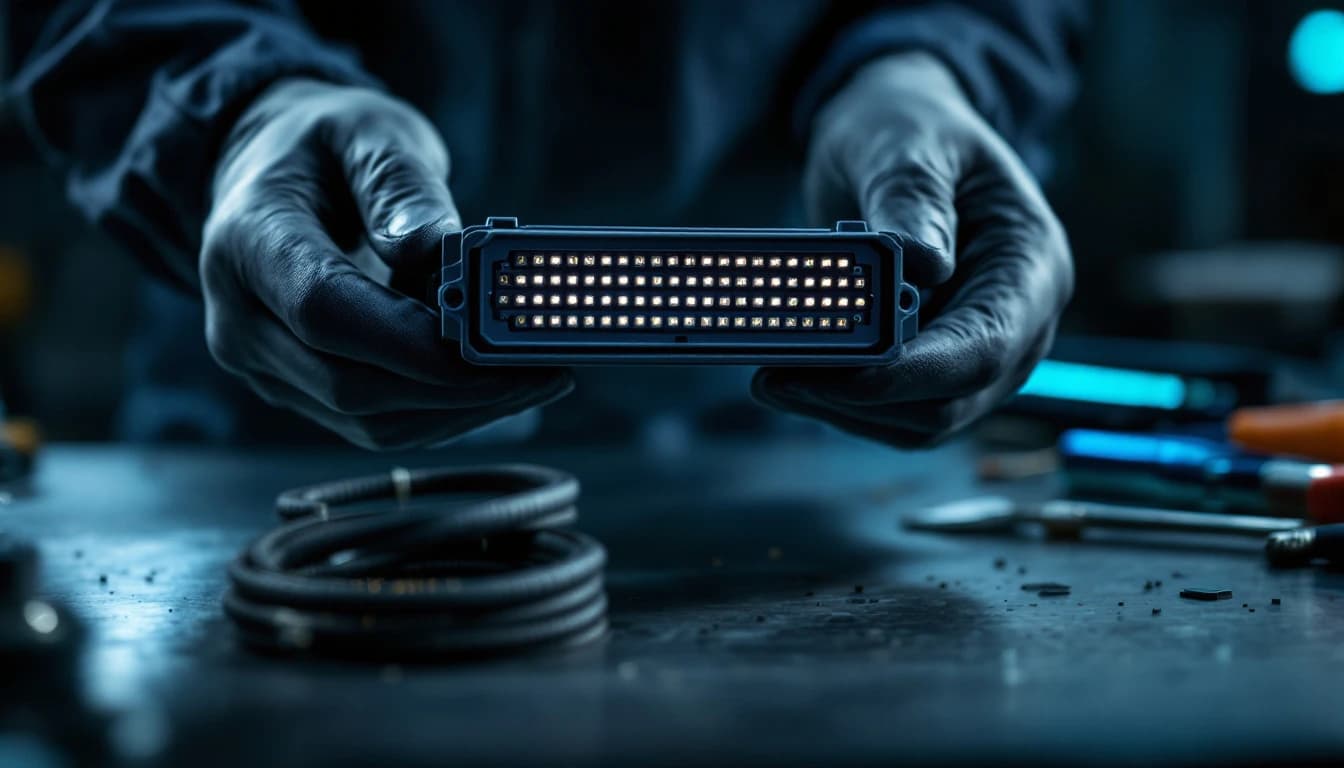
TCM Programming and Cloning: The Complete Transmission Control Module Replacement Guide
12 min · July 20, 2026

Car Module Repair vs Replacement vs Reprogramming: How to Decide Before You Spend
14 min · July 26, 2026

Can a Mail-In Service Really Program a Module to My VIN Without the Dealer?
13 min · July 26, 2026
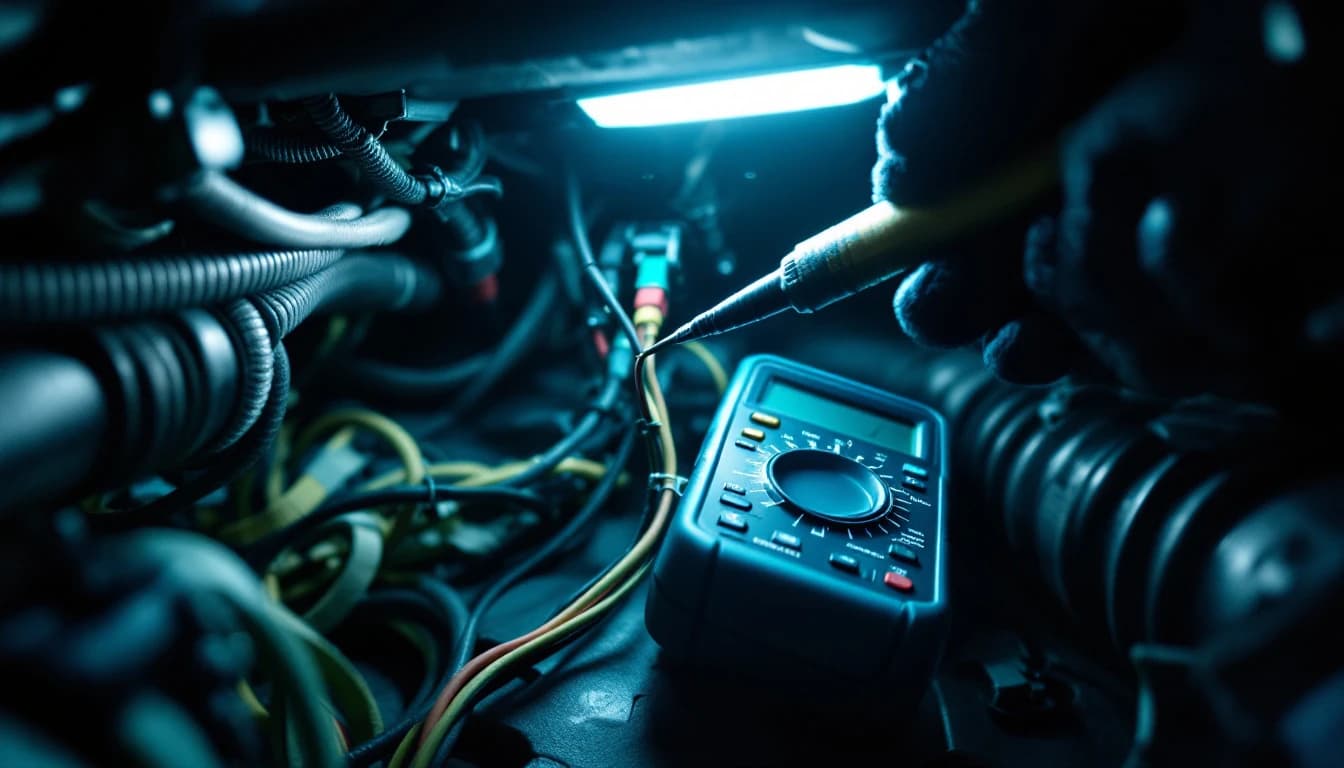
How to Know Which Module Actually Failed Before You Ship It: A Pre-Ship Diagnostic Checklist
16 min · July 26, 2026