
"Used EPS Modules Don't Work" — Why That's Only Half True, and How a VIN Mismatch Turns a $2,000 Steering Job Into a $449 One
The quote that makes people sell the car
A 2018 Durango throws a steering warning and the assist goes heavy. The scan tool reports C2217. The owner takes it in and gets a number back that does not seem to match the symptom: eighteen hundred dollars, maybe twenty-seven hundred, for a complete steering rack assembly.
The instinct is to find a used part. The steering module from a wrecked Durango is a couple of hundred dollars, and there are plenty available. Then the research begins, and every source says the same discouraging thing: used electric power steering modules do not work, because they are VIN-programmed to the original vehicle and will throw a VIN mismatch if installed in another car.
So the owner concludes the four-figure quote is the only option. That conclusion is where a great deal of money gets wasted, because the premise is only half true — and this guide is about the other half.
What the VIN mismatch actually is
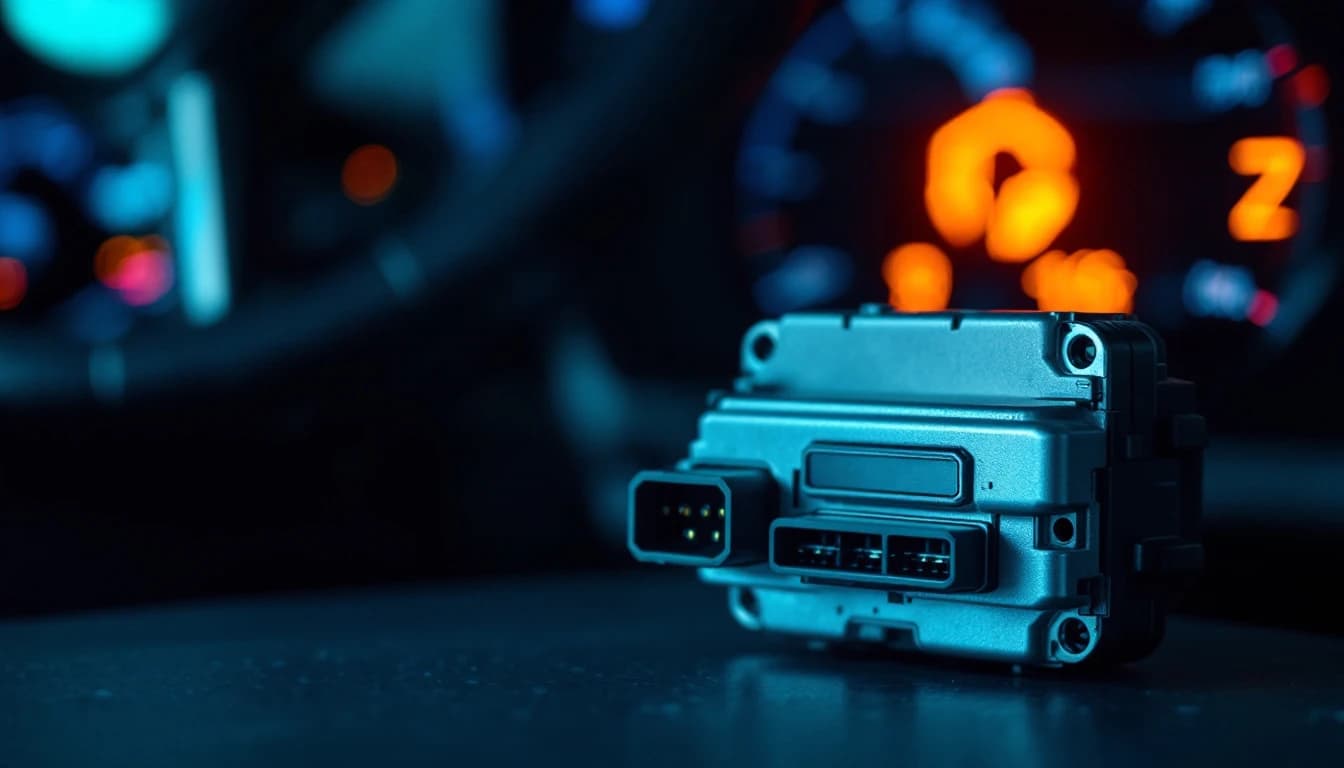
An electric power steering module is a small computer that decides how much assist to give, and because steering is a safety-critical system, it is tied to the vehicle it was built for. The module stores the VIN. On installation into a different vehicle, the network asks who it is, the answer does not match, and the module refuses to provide assist and sets a fault.
Notice what that is and is not. It is not a hardware incompatibility. It is not a wear item that failed. It is not a calibration problem. It is a data mismatch — the module is holding the wrong seventeen characters.
This is the same class of problem that shows up throughout modern vehicles, and we have written about it generally in our guide to VIN-locked modules. The reason the EPS case gets treated as hopeless while others do not is simply that fewer shops have the tooling to rewrite it, so the practical answer for most of the industry has been "you can't."
If the VIN can be rewritten at the module level on a bench, the used module becomes viable. That is exactly what our EPS module service does, and it is why the "impossible" repair has a price.
Two things to check before you spend a dollar
Because steering is a safety system and the parts are expensive, the responsible order of operations matters. Two checks come before any purchase.
A software update may fix it outright. This is underappreciated. On these platforms a reflash of the EPS module resolves the fault in some cases with no parts replacement at all, and it is worth asking a dealer or a capable independent shop whether an update applies to your VIN before you buy hardware. A shop willing to tell you this may cost them a sale is a shop worth using.
The failure may be inside the rack, not the module. C2217 indicates a steering assist fault, and a related code like C1593 points at the steering torque sensor circuit. The torque sensor lives inside the rack assembly on many of these vehicles — which is precisely why the factory answer is "replace the rack." If your fault is genuinely a failed sensor inside the rack, no amount of module work fixes it, and anyone selling you a module for that fault is selling you a disappointment.
The distinction is diagnostic, not commercial. Get the codes read properly, get freeze-frame data if available, and establish whether the module or the rack is at fault before choosing a path.
What the dealer path actually costs
The numbers explain why people go looking for alternatives.
The manufacturer-recommended repair on a steering assist fault is frequently the complete rack assembly, and that job is estimated at $1,800 to $2,700 on these platforms. Even when the repair is scoped down to the control module alone, RepairPal puts power steering control module replacement at roughly $1,122 to $1,195 once parts and labor are counted.
Against that, a VIN-matched module at a few hundred dollars is not a marginal saving — it is the difference between repairing the vehicle and deciding it is not worth repairing. That decision point matters more every year: with full-size and mainstream vehicles routinely crossing 200,000 miles, the cars needing this repair are increasingly out of warranty and in the hands of owners for whom a $2,000 steering bill exceeds the vehicle's value.
"Every week someone tells me a used steering module is impossible. It isn't impossible, it's locked — those are different words. The part of that sentence people should actually care about is whether the fault is in the module or in the rack, because that's the one that decides if any of this helps you." — a master automotive locksmith (ALOA-credentialed) on our bench team
Which vehicles this affects
The electric power steering architecture spans a wide slice of the Chrysler, Dodge and Jeep lineup. The applications we see most often:
- Dodge Durango (2016 and newer), where C2217 is a familiar code
- Dodge Charger (2016 and newer), the same generation of fault
- Jeep Grand Cherokee, including the platform where C1593 torque sensor circuit faults appear
- Dodge Dart, where EPS complaints are common enough to fill forum threads
- Chrysler 200, Jeep Compass, and Dodge Journey
Because equipment and part numbers vary within a model year, the same verification rule applies here as everywhere else in module work: confirm the part number on your existing module against your VIN before ordering anything. On a safety system we are stricter about that than on any other product we sell.
What "programmed to your VIN" means on an EPS module
The bench work is conceptually simple and operationally careful. The module's stored vehicle identity is rewritten so it matches your car, the unit is verified before it ships, and it arrives ready to install without throwing the mismatch that makes untouched used modules useless.
What that does not do — and any honest seller will say this plainly — is substitute for the on-vehicle steps that any EPS replacement requires regardless of where the part came from. Replacement of a steering component requires electronic programming and a wheel alignment to function correctly and safely. Plan on a proper alignment and a steering angle sensor calibration after installation. That is not an upsell; it is the standard of care for steering work, and skipping it is how a saved repair becomes an unsafe one.
How electric power steering actually works
Understanding the system explains why the module is both the cheapest and the most commonly misdiagnosed part of it.
Older vehicles used a hydraulic pump driven off the engine. Electric power steering replaces that with a motor and a computer. A torque sensor measures how hard you are twisting the wheel, the control module decides how much help to add based on that input plus vehicle speed and steering angle, and an electric motor applies it. There is no pump, no belt, and no fluid.
That architecture has two consequences that matter for repair. First, assist is a software decision, so a calibration problem can produce symptoms identical to a hardware failure. Second, on many of these vehicles the torque sensor is integrated into the rack assembly rather than being separately serviceable — which is exactly why the factory repair for a sensor fault is "replace the rack," and why that recommendation gets applied to module faults too.
The practical upshot: C2217 generally indicates the assist system has faulted, which can be module, motor, or sensor. C1593 points specifically at the steering torque sensor circuit — and that one usually does live in the rack. Reading the distinction correctly is worth well over a thousand dollars.
What the used-module market actually looks like
If you search for these modules you will find plenty of them. Salvage EPS units from wrecked vehicles are widely available on eBay and through dismantlers, typically at a small fraction of a rack assembly.
You will also find that almost none of the listings promise they will work in your car. The honest sellers say "programming required" or stay silent on the subject; the less careful ones say "plug and play" and generate a steady stream of returns. Both are describing the same underlying reality — the module holds another vehicle's identity and there is no on-car procedure the average shop can run to change it.
That gap between abundant cheap hardware and almost no one able to make it usable is the entire reason this repair has the reputation it does. It is not that the parts are rare. It is that the capability to re-identify them is.
Why the bench matters on a safety system
Steering deserves a higher standard than convenience electronics, and there are two reasons this work belongs on a controlled bench.
The first is the same one that governs all module programming: writing to a module's memory is when it is most fragile, and SAE International's J2534 framework treats stable power and an uninterrupted link as preconditions for reprogramming precisely because interrupted writes destroy modules. A bench supplies both; a vehicle with a marginal battery does not.
The second is verification. A module that has been re-identified should be confirmed functional before it is installed in a car that someone's family will drive. That means powering it, confirming it communicates, and confirming it reports the correct identity — checks that are straightforward on a bench and impractical in a driveway.
The technician community has been working through exactly these questions in public for years; discussions on professional networks like Diagnostic Network show the same pattern across manufacturers, where the difference between a repair that works and one that fails is usually whether the identity step was done properly and verified, not whether the hardware was good.
None of that removes the on-car obligations. An alignment and a steering angle sensor calibration after installation are not optional on any EPS work, regardless of where the module came from.
How this fits the broader repair-or-replace decision
The EPS case is a clean illustration of a principle that runs through all modern module work: the question is rarely "is this part broken" but "which of four things is actually wrong."
- Software. A calibration or update issue, fixable with no parts.
- Data. The module is functional but holds the wrong identity — the VIN-mismatch case.
- The module's hardware. Genuine electronic failure, requiring repair or replacement.
- The mechanical assembly around it. The rack, the torque sensor, the wiring.
Only the third and fourth cost real money in parts, and the industry's default advice on EPS collapses all four into "buy a rack." Working through them in order — which we walk through generally in our repair versus replacement versus reprogramming guide — is what separates a few hundred dollars from a few thousand.
It is worth noting the same logic applies elsewhere on these vehicles. A no-start with security symptoms is usually the engine computer and its SKIM immobilizer relationship rather than anything mechanical, and it is equally often quoted as a much larger job than it needs to be.
Straight answers to the common objections
"If used modules worked, everyone would sell them." Most sellers cannot rewrite the VIN, so for them the statement is true. The tooling for Chrysler-family module identity work is specialized and not widely held; the constraint is capability, not physics.
"Isn't rewriting a VIN sketchy?" Writing your own vehicle's VIN into a replacement module for your own vehicle is ordinary repair work — the identical operation a dealer performs when configuring a new module to your car. The legitimacy question is about ownership and disclosure, which is why any responsible shop verifies the vehicle and documents the work.
"Will it be as reliable as new?" A tested used module of the correct part number, verified on the bench, is a normal used-part proposition — which is how the entire remanufactured-electronics industry operates. What you should insist on is verification before shipping and a real warranty. We bench-verify and warrant ours for six months.
Quick answers
Do used EPS modules really never work? An untouched one will not — it holds the donor vehicle's VIN and refuses to provide assist, throwing a mismatch. That lock is stored data, however, and it can be rewritten at the module level on a bench, which is what makes a used module usable.
Could a software update fix my steering fault for free? Sometimes, yes. On these platforms a reflash occasionally clears the fault with no parts at all. Ask about it before buying hardware.
What is the difference between C2217 and C1593? C2217 indicates a steering assist fault, which may be the module, the motor, or the sensor. C1593 points specifically at the steering torque sensor circuit — and on many of these vehicles that sensor lives inside the rack assembly, where a module will not help.
Why do dealers quote a whole steering rack? Because the factory repair strategy for assist faults is frequently the complete assembly, which runs roughly $1,800–$2,700. Module-only replacement is often quoted around $1,100–$1,200.
Do I still need an alignment if I only change the module? Yes. Plan on a wheel alignment and a steering angle sensor calibration after any EPS work. This is the standard of care on a safety system regardless of where the part came from.
The bottom line
The received wisdom that used EPS modules never work is describing a lock, not a law. An untouched used module genuinely will not function in your vehicle — it holds another car's VIN and refuses assist. But that lock is data, and rewriting it on the bench is what makes a used module viable.
That said, the money-saving move is not rushing to buy one. It is establishing, in order: whether a software update fixes your fault for free, whether the failure is actually inside the rack rather than the module, and only then whether a VIN-matched module is the right repair. If it is, you are looking at a few hundred dollars against a dealer quote that starts at four figures — and on a fifteen-year-old vehicle that is frequently the difference between fixing it and giving up on it.
Whatever you decide, do not skip the alignment and steering angle calibration afterward. This is the one system where cutting the last corner is not worth the savings.
Ship your module today
Flat-rate pricing, 24-hour bench turnaround, return speed your choice at checkout. Most jobs back on your bench within a week.
More from the Lab

Chrysler PCM Replacement and SKIM: Why the Donor Computer Runs for Two Seconds and Dies
12 min · July 31, 2026

TIPM Replacement Done Right: Why a Used Chrysler TIPM Won't Accept Your Truck, and the One Step Dealers Charge $850 For
12 min · July 30, 2026
TIPM Replacement and Programming: New vs Used vs Rebuilt on Chrysler, Dodge, Jeep and Ram
15 min · July 28, 2026
Chrysler, Dodge & Jeep PCM Replacement: Why a Used PCM Won't Start (SKIM / Sentry Key)
11 min · July 13, 2026