

How Repair Shops Add OEM Programming Without a Full-Time Programmer
The bottleneck moved
Twenty years ago the hard part of a module job was the module. Sourcing it, fitting it, not breaking the connectors. Today the part is a phone call, and the hard part happens after it is bolted in: software.
A modern repair order routinely touches a PCM, TCM, BCM, ABS unit, power steering module, gateway, or an ADAS-adjacent controller — and an increasing share of those, once replaced, are inert until programmed. The repair is mechanically complete and commercially unfinished. At that moment a shop without programming capability has a short list of options, all bad:
- outsource the vehicle and watch the margin leave with it
- call a mobile programmer and inherit their schedule
- tow it to the dealer — the competitor — and pay for the privilege
- decline the job next time, which is the quiet, compounding version of the same loss
None of those failure modes is about skill. The shop that diagnosed the failed BCM correctly is obviously capable of the work. The gap is a piece of hardware and fluency in eight different OEM software environments — and only one of those is worth buying.
The remote programming model, in one paragraph
Auto Module Lab does not need the vehicle in our building for supported programming work. Your shop maintains four things: a J2534 interface, a Windows laptop, good internet, and proper battery support equipment. When a job needs programming, your tech connects the vehicle and contacts us; our technician takes a remote session through your interface, runs the supported OEM procedure while your tech watches, and the vehicle never leaves your bay. You pay per job. There is no subscription, no retainer, and no equipment rental — because the equipment is yours.
The mechanics of an individual job are covered step-by-step in the customer-journey article; what a pass-thru actually is gets the full treatment in the J2534 explainer. This article is about what the model does to a business.
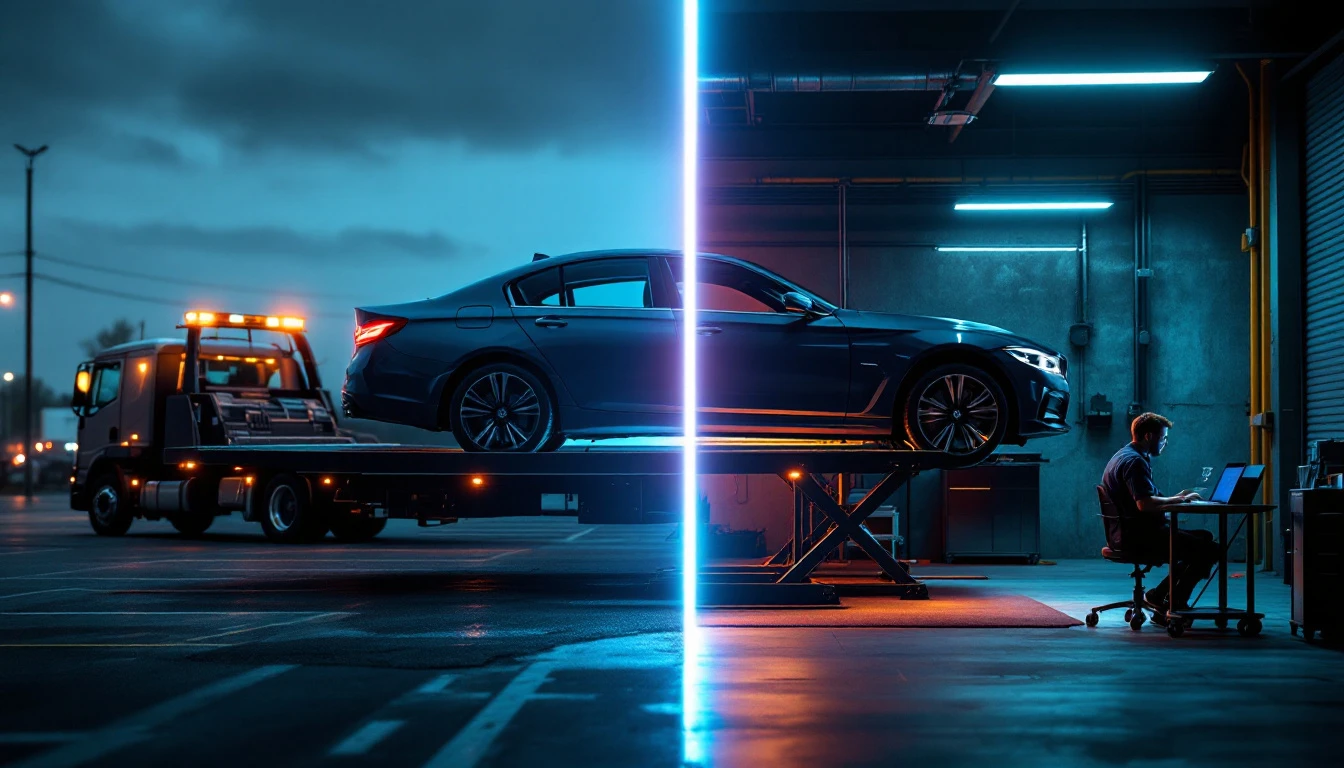
The tool gets more valuable after job one
This is the part of the economics that surprises owners, because most equipment works the other way — it depreciates. The interface appreciates in usefulness, because the expensive part (acquiring it, setting it up, learning the workflow) happens exactly once.
First job. A programming-dependent repair lands. The shop does not own an interface, buys one, uses Auto Module Lab remotely to finish the vehicle — and keeps the interface. The job that forced the purchase also paid the setup cost of every job after it.
Second job. No purchase, no shipping wait. Connect the hardware already on the shelf, contact us, pay for the programming service. The marginal cost of being programming-capable has dropped to the price of the job itself.
Third, fourth, fifth jobs. Same interface, same laptop, same workflow. The shop is progressively building a programming habit — and a reputation for taking the jobs competitors decline — without ever needing to master FDRS, SPS2 or wiTECH internally.
That is the honest version of "capability building": not a training course, just a tool that stays and a phone number that answers.
An ROI sketch — labelled as exactly that
Illustrative example only.
These are round hypothetical numbers to show the shape of the math — not industry averages, not measured data, and not a promise of savings. Your jobs, rates and mix will differ.
Consider what a single outsourced programming job actually costs a shop once everything is counted: the tow or transport both ways, the days the vehicle occupies someone else's schedule, the dealer or mobile programmer's invoice, and the technician time spent coordinating instead of wrenching. Then set that against the in-house path: a Domestic Kit at $199, one-time.
If keeping one additional repair in-house produces, say, $300 of gross profit that would otherwise have been declined or handed away, the equipment has effectively paid for itself on that single job — and every subsequent job runs on hardware that is already bought. The per-job programming fee remains, but it buys exactly what a subscription or a staff specialist would have bought, without the fixed cost hanging over the quiet months.
The uncomfortable corollary is what declining does over a year. A shop that turns away one programming-dependent job a month is not losing twelve invoices; it is training twelve customers to have a relationship with someone else's shop.
Who this actually fits
General repair shops
Stop routing finished mechanical work to the dealer for the last software step. The PCM/TCM/BCM replacements you already do become fully in-house jobs.
Automotive locksmiths
Module replacement keeps intersecting key and immobilizer work. An interface on the van plus remote support covers the programming half without new tooling per make.
Collision centers
Post-repair module replacement and configuration are on the critical path to delivery. Remote sessions keep cycle time inside your building instead of on a sublet's calendar.
Used car dealers
Recon vehicles arrive with module faults and mismatched used parts. Programming on your lot beats transporting inventory to a service department you do not own.
Mobile mechanics
A J2534 and a laptop travel well. Supported programming happens in the customer's driveway with our technician on the session.
Module repair & fleet facilities
Bench-repaired or replacement units still need in-vehicle programming and relearns; fleets get downtime back by finishing everything in their own yard.
You handle the repair. We handle the programming.
You do not need a technician on payroll who knows every version of FDRS, SPS2, wiTECH, Techstream, ISTA, Xentry and every other OEM environment — that person is expensive, hard to find, and mostly idle in a general shop. For supported jobs, keep the vehicle in your facility and bring Auto Module Lab into the bay remotely. Your customer sees your shop finishing the whole job; we are the department they never meet.
The boundaries, stated plainly because they are part of the deal: programming support varies by vehicle, module and procedure. OEM subscriptions and security credentials may be required for some operations and are separate unless stated. A stable internet connection, a Windows PC and battery support during programming are on your side of the table. Not every procedure can be performed remotely — and some module repair, cloning and dead-module jobs still belong on our mail-in bench, which is precisely why having both under one roof works in your favour. When you are uncertain whether a job is supported, ask before you schedule the bay.
Ready to set it up? Start using remote programming — or if the missing piece is the hardware itself, pick the kit that matches your work and the first session can happen the week it arrives.
Frequently asked questions
Can a repair shop offer programming without hiring a programmer? Yes — that is the entire model described here. The shop owns the interface and supplies the vehicle, laptop, internet and battery support; Auto Module Lab supplies the OEM software fluency remotely, per job. The customer's experience is that your shop completed the whole repair.
Can Auto Module Lab really connect remotely? Yes. With a supported J2534 interface connected to the vehicle and a Windows laptop online, our technician joins a remote session, operates the programming software through your interface, and your tech watches everything happen. The vehicle stays on your lift throughout.
What equipment does my shop need? Four things: a compatible J2534 interface, a Windows laptop with a free USB port, reliable internet, and a programming power supply or battery maintainer. If you are missing the interface, the kits arrive configured and session-ready.
Can I reuse my J2534 across jobs and vehicles? Yes — nothing about the interface is tied to one vehicle or one session. It is shop equipment, exactly like your scan tool, and reuse is where the economics come from.
How much does each programming job cost? It depends on the vehicle, module and procedure, so we quote per job rather than publishing one misleading flat number. What the model guarantees is the shape of the cost: hardware once, programming per job, no subscription in between.
Can I use a J2534 I already own? In many cases yes — several common pass-thru devices work with remote sessions. Tell us what you have and the platforms you service, and we will confirm whether it fits or whether a specific job needs different hardware (Ford FEPS work is the classic example, covered in the buying guide).
What vehicles can be supported? Domestic coverage (Ford, GM, Stellantis) plus a broad range of Asian and European platforms, varying by module and procedure. No provider supports everything, and we say "no" up front rather than mid-session. When a job is not remotely supportable, the mail-in bench is usually the answer.
Is this only for repair shops? No — locksmiths, collision centers, used car dealers, mobile mechanics and fleet facilities run the same model. If your business replaces modules and loses time or margin to the programming step, the economics apply.
What do you need?
I don't own a J2534
Get a programming kit — configured, shipped, and yours to keep.
Get a Programming KitI already own a J2534
Connect it and have our technicians program the vehicle remotely.
Request Remote ProgrammingI'm not sure
Tell us the vehicles you see and we will say what fits — no charge.
Ask Auto Module LabBuy once. Program with us anytime.
Kits from $199 ship configured and session-ready — add your first programming session in the same checkout, and keep the interface for every job after.
More from the Lab
Remote GM Module Programming — SPS2 Without the Dealer Trip
8 min · August 23, 2026
Remote Ford Module Programming — PMI & FDRS Without the Dealer
8 min · August 23, 2026

PROXI Alignment & wiTECH Programming — Done Remotely
8 min · August 23, 2026
Remote Toyota & Lexus Programming — Techstream Sessions
7 min · August 23, 2026