
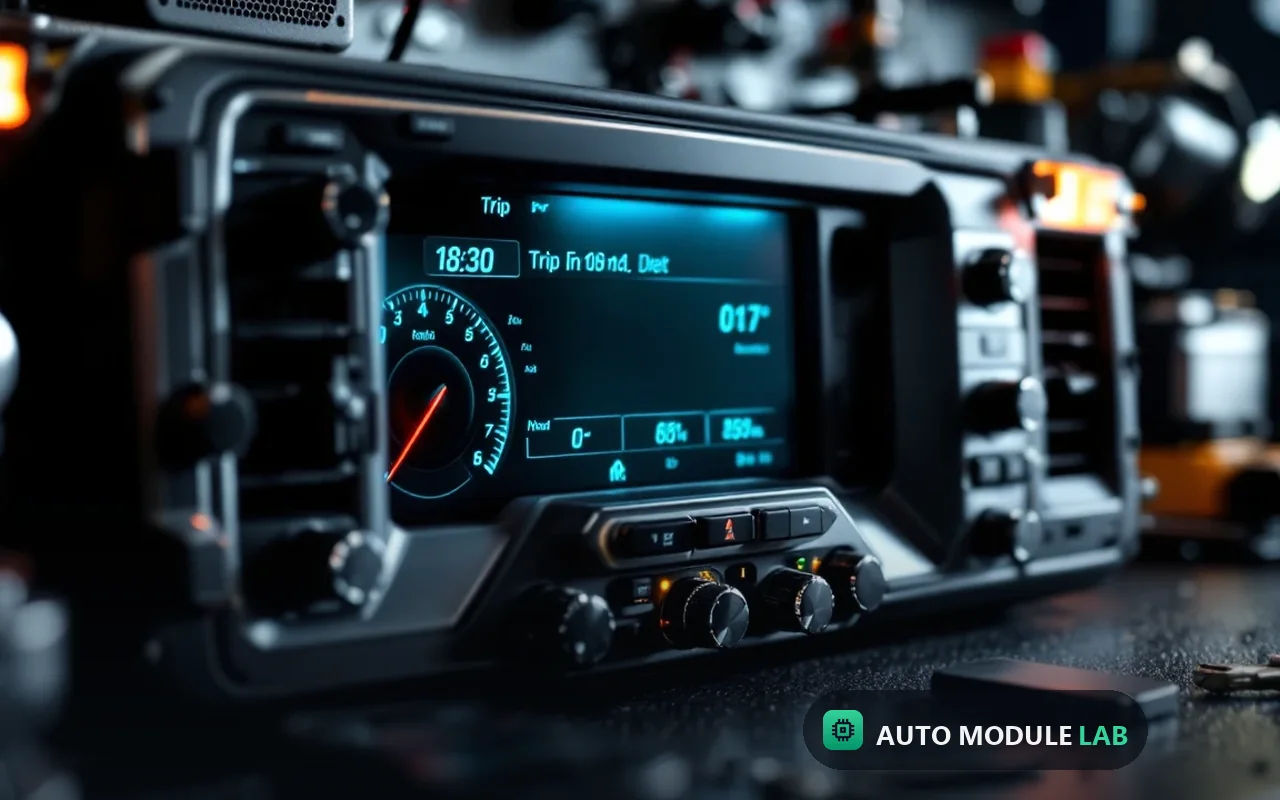
GM Instrument Cluster Upgrade + Swap Guide: GMT800 Stepper Failures, Base-to-Uplevel Swaps, and Why Every Cluster Needs VIN + Mileage Programming
Who this is for
You own a GM full-size truck or SUV and one of these is happening:
- The speedometer on your 2003-2006 Silverado, Sierra, Tahoe, Yukon, Suburban, or Escalade is stuck, bouncing, reading 40 mph at a stoplight, or pinned past the peg
- Other needles — tach, fuel, volts, oil pressure — have joined the mutiny one at a time
- You bought a used replacement cluster and it shows the donor truck's mileage instead of yours
- You installed a swapped cluster and now the dash says "Theft" or the truck cranks but won't start
- You want to upgrade a base-trim cluster to the uplevel version — the LTZ/Denali-style unit with the full gauge package and message center — and need it to actually work in your truck
- You have a 2007+ truck with a cluster problem and want to know how the newer NBS, K2, and T1 clusters change the picture
This is the complete guide: why the GMT800 cluster fails the way it does, what your three fix paths actually cost and involve, and the part almost everybody underestimates — the VIN, mileage, and anti-theft programming that makes a swapped cluster legal and functional. The programming half is exactly what our GM instrument cluster upgrade service does on the bench.
The GMT800 stepper-motor failure — a defect with a fan club
GM's GMT800 platform — the 1999-2006 (and 2007 "Classic") Silverado, Sierra, Tahoe, Yukon, Suburban, Escalade, and Avalanche — was built in enormous numbers. The full-size pickup segment those trucks anchor is the largest in the U.S. market: the Chevrolet Silverado and GMC Sierra together have sold well over 750,000 units in a single year at their peak, per Car and Driver sales reporting, and the small-block V8 family under most of those hoods has passed 100 million units produced since 1955 according to GM. When a component defect appears in a platform that big, it doesn't become a footnote — it becomes a genre of forum thread.
The defect in question lives in the 2003-2006 instrument cluster. The gauge needles in these clusters are driven by tiny micro stepper motors — one per gauge — and a marginal internal design means they fail early and often. The classic progression: the speedometer starts sticking or reading absurdly wrong (60 mph at idle is the meme version, and it's real), then other gauges follow. Sometimes a needle buzzes at the peg; sometimes it just lies quietly, which is worse — a speedometer that under-reads by 20 mph is a ticket generator and a genuine safety problem.
This got big enough that GM issued a special coverage adjustment for instrument cluster gauge function on affected 2003-2006 (and some 2007 Classic) full-size trucks and SUVs, extending coverage to 7 years or 70,000 miles — a program documented in the technical-service and complaint records searchable through NHTSA, where owner complaints about these clusters accumulated in volume. Do the math on the model years, though: that coverage expired for every affected truck many years ago. Today's owner pays out of pocket, which is why the aftermarket fix ecosystem is so mature.
And these trucks are worth fixing. The U.S. fleet keeps getting older — S&P Global mobility analysts have reported the average light vehicle on American roads is now roughly 12.5 years old, a record — and the GMT800 generation specifically has crossed from "old truck" to "modern classic." Collector-market observers at Hagerty have tracked rising enthusiasm and values for clean 2000s GM trucks and SUVs, and outlets like MotorTrend have covered the GMT800's ascent into affordable-classic territory. A truck you plan to keep for another decade deserves a dashboard that tells the truth.
Your three fix paths — and what each really involves
When a GMT800 cluster starts lying, you have three honest options:
Path 1: Repair the stepper motors in your original cluster. Replacement stepper motors are cheap, and a competent electronics bench (or a patient DIYer with soldering skill) can swap all of them. The huge advantage: your original cluster keeps your original mileage and security data, so nothing needs programming afterward. Be clear about our role here: this service programs clusters — we don't rebuild stepper motors or needles under it. If your cluster is otherwise healthy and you just want the motors done, a stepper rebuild is the right call and we'll say so.
Path 2: Swap in a good used donor cluster. Salvage-yard and online donor clusters are plentiful and cheap for these trucks. But a donor cluster is not plug-and-play, and this is the part that catches people: it arrives carrying the donor truck's mileage in its memory, and GM's theft-deterrent logic can refuse to let your truck run with an unmarried cluster. It must be programmed — VIN-matched, mileage-synced, anti-theft cleared.
Path 3: Upgrade to the uplevel cluster. Same swap mechanics as Path 2, but instead of a like-for-like donor you install the higher-trim unit — the LTZ/Denali-style cluster with the fuller gauge set and driver information display that GM fitted to the top trims. Enthusiasts love this one because the uplevel cluster drops into the same dash opening on these platforms. It needs exactly the same programming as any donor swap, plus configuration appropriate to your truck.
| Repair steppers (original cluster) | Used donor swap | Uplevel / LTZ-style upgrade | |
|---|---|---|---|
| Fixes stuck/dead needles | Yes — new motors | Yes — donor's motors (verify condition) | Yes — plus more gauges/features |
| Mileage handling | Untouched — original data stays | Donor mileage MUST be synced to your true mileage | Same — sync required |
| Theft-deterrent / Passlock | Untouched | Must be cleared or truck may not start | Must be cleared |
| VIN programming | Not needed | Required | Required |
| Our service covers it | No — we program, not rebuild | Yes — full programming, $200 flat | Yes — full programming, $200 flat |
| Watch out for | Age of everything else in the cluster | Donor's own tired stepper motors | Matching the right part number for your year/options |
One bench-earned tip on Path 2 and 3 donors: a fifteen-year-old donor cluster has fifteen-year-old stepper motors. The smart play many owners choose is a donor or uplevel cluster that's already had a motor refresh — then send it to us for programming and the whole job is done once.
Why a swapped GM cluster must be programmed — VIN, mileage, theft
Three separate systems care about which cluster is in your truck:
1. The odometer. On these GM platforms the cluster stores the odometer value. Install a donor and your dashboard now displays the donor's history — maybe 80,000 miles low, maybe 60,000 high. Either way it's wrong, and driving around with a materially wrong odometer becomes a legal problem the moment the truck is sold, because federal law requires accurate mileage disclosure. The fix is mileage sync: we write your truck's true, documented mileage into the replacement cluster, sourced from your original cluster, from the mileage records kept elsewhere in the truck (ECM/BCM), or from documentation like a dated odometer photo or inspection record. And the same bright line we hold on every platform applies here: syncing a replacement to true mileage is legal and correct; rolling mileage back to misrepresent it is a federal crime under the odometer statute enforced through NHTSA, and we refuse those requests without exception. Our universal instrument cluster repair and mileage sync service page covers the legal framework in more depth if you want it.
2. The theft-deterrent system. GM's anti-theft logic on these trucks ties into the cluster, and a swapped-in unit can leave the truck showing "Theft" or "Wait to Start" and refusing to crank — the Passlock-era counter has to be cleared so the programmed cluster accepts your existing keys. This is the failure mode that turns a "twenty-minute swap" into a truck stranded in the driveway, and it's cleared on the bench as part of the programming.
3. VIN matching and configuration. The cluster needs to be married to your VIN and configured for your truck so options display correctly and the rest of the network is talking to a module that claims the right identity. On an uplevel upgrade this is also where the added features light up as intended.
"The swap itself is the easy afternoon — four screws, two connectors, done. Then the truck won't start, the odometer says a number that belongs to somebody else's Yukon, and the owner learns that the cluster is a security and records module wearing a gauge costume. I tell every GMT800 customer the same thing: budget for the programming the same day you buy the donor, because the cluster is not really yours until it carries your VIN and your miles." — Independent GM truck electrical specialist, 20+ years on GMT800/GMT900 platforms (anonymized)
That's the whole service in one sentence: we make the donor cluster yours — your VIN, your true mileage, your keys — bench-verified before it ships back.
Beyond GMT800: NBS, K2, and T1 clusters
The programming requirement didn't end in 2006 — it got stricter. Our GM cluster coverage spans four generations:
- 2003-2006 (GMT800, analog cluster): the stepper-failure era described above. Swap-friendly, programming required.
- 2007-2013 (NBS digital cluster): the next-generation trucks moved to a newer digital cluster architecture. Donor swaps still need VIN programming, mileage sync, and theft-deterrent clearing.
- 2014-2018 (K2 cluster): with GM's Global A electrical architecture, modules became VIN-locked in earnest. A used K2-era cluster from a donor truck will sulk until its lock is addressed — and it's not just clusters: swapped radios and HMI infotainment screens from these trucks famously drop to a "Theft Lock" screen, which is a separate bench job covered by our GM HMI, radio, and cluster VIN unlock service for 2014+ modules.
- 2019-2024 (T1 cluster): the current-generation trucks continue the pattern with tighter security still. Donor-module swaps remain possible — with the right bench work, in the right order.
The arc across those generations mirrors the whole industry's: vehicle electronics standards bodies like SAE International have documented the steady migration of identity, security, and configuration data into networked body modules, and GM has been one of the more aggressive adopters. The practical takeaway for an owner is simple: the newer the GM truck, the more certain it is that a used electronic module needs bench programming before it will serve a different VIN.
When it's not the cluster: the BCM
One honest diagnostic note, because we'd rather lose a cluster job than program the wrong module. On these trucks the body control module (BCM) sits underneath a lot of the same symptoms — theft-system complaints, no-crank conditions, gauges acting up because the network feeding them is unhappy. If your cluster tests fine but the truck fights you on security or body functions, the BCM may be the real patient. For 2003-2015 GM trucks and cars we offer a separate GM BCM standalone clone service that copies your original BCM's VIN, mileage, theft data, and option coding onto a donor unit so it drops in without a dealer visit. Text us the symptoms before you ship anything and we'll help you aim at the right module — cluster-side Passlock issues belong to the cluster service, BCM-side faults to the clone service, and some jobs legitimately need both.
The mail-in workflow
- Confirm the job. Text us the year, model, and trim, your VIN, the current true mileage with whatever documentation you have (dash photo, inspection record), and what you're doing — like-for-like swap, uplevel upgrade, or mileage sync on a cluster you already installed.
- Source your donor smart. Match the part number and options for your year and trim. For an uplevel upgrade, confirm the target cluster fits your model year's architecture — send us the donor's part number and we'll sanity-check it before you buy.
- Pull and pack. The cluster comes out with basic hand tools on these trucks. Ship BOTH the replacement cluster and your original (or a clear photo of its last odometer reading if it's dead) — the original is the best source of your true mileage and makes the sync airtight.
- Ship to the bench. Anti-static wrap, padded box, to PO Box 120241, Arlington TX 76012 if you ship USPS — or 1009 Oakwood Ln # 120241, Arlington TX 76012 if you ship UPS or FedEx (UPS and FedEx cannot deliver to a PO Box), with a printed order confirmation, your VIN, current odometer reading, and return details.
- Program, sync, clear. We program the cluster to your VIN, write your documented true mileage, clear the theft-deterrent/Passlock counter so your existing keys work, and bench-verify the result — with a photo of the bench test before it ships back.
- Return with tracking. 24-hour turnaround from receipt, 6-month warranty on the programming, return shipping at the tier you chose at checkout — Standard $24.95, 2-day, or overnight. Reinstall is plug-and-play: no dealer trip, no tow.
Frequently asked questions
Can you upgrade my base Silverado cluster to the uplevel LTZ-style one? Yes. Source the correct uplevel cluster for your year, and we program it to your VIN, sync your true mileage, and clear the anti-theft counter. The upgraded trim's gauges and display features light up as intended.
Will my truck start after I install the programmed cluster? Yes — clearing the theft-deterrent/Passlock counter so the cluster accepts your existing keys is part of the job. The "Theft" / "Wait to Start" no-crank condition after a raw swap is exactly what the programming prevents.
Do you rebuild the stepper motors? No — this is a programming service, not a needle-and-motor rebuild. If your original cluster just needs motors, a stepper rebuild is the right fix and we'll tell you so. Where we come in is the swap path: making a donor or uplevel cluster work legally and correctly in your truck.
The donor cluster shows 82,000 miles and my truck has 214,000. Is fixing that legal? That's not just legal — it's required for the odometer to be honest. We sync the replacement to your documented true mileage. What we will never do is the reverse: writing a lower number to misrepresent the truck is federal odometer fraud, and we refuse it every time.
What if my original cluster is completely dead — how do you know my true mileage? Send a photo of the last known reading, a recent inspection record, or similar documentation. GM trucks also keep mileage data beyond the cluster, which gives us a cross-check.
My 2015 Sierra radio shows Theft Lock after a swap — same service? Same family of problem, different bench job. 2014+ Global A modules — HMI screens, radios, clusters — are VIN-locked, and used ones need the lock cleared. That's the GM HMI, radio, and cluster VIN unlock service.
How fast is turnaround? 24 hours from when the cluster arrives at the Arlington workshop. We send a photo of the bench-verified result, then it ships back with tracking at the return speed you picked at checkout.
The bottom line
The 2003-2006 GM full-size cluster earned its reputation: failing stepper motors put bad information in front of millions of drivers, GM's special coverage came and went, and a generation of Silverados, Sierras, Tahoes, Yukons, Suburbans, and Escalades aged into trucks their owners genuinely want to keep. Fixing the dashboard is the easy decision. The part that separates a clean job from a stranded truck — or a titled lie — is what happens after the swap: the replacement cluster must carry your VIN, your true documented mileage, and a cleared theft-deterrent counter, whether it's a like-for-like donor or an uplevel LTZ/Denali-style upgrade.
That programming is a flat $200 bench job here: 24-hour turnaround from receipt, bench-test photo before return, 6-month warranty, return shipping chosen at checkout from $24.95, all performed at 1168 W Pioneer Parkway, Arlington TX 76013. Coverage spans the 2003-2006 analog clusters through the 2007-2013 NBS, 2014-2018 K2, and 2019-2024 T1 generations — and mileage goes one direction only: to the truth.
Start at the GM instrument cluster upgrade service page, or text us your VIN, trim, and what you're planning, and we'll confirm the right cluster and the right service before you spend a dime on shipping.
Ship your module today
Flat-rate pricing, 24-hour bench turnaround, return speed your choice at checkout. Most jobs back on your bench within a week.
More from the Lab
GM Instrument Panel Coded: VIN, Mileage + Theft Deterrent
12 min · August 17, 2026
GM ECM Replacement: Why the Junkyard Engine Computer Cranks But Never Runs Right — E38, E67 and E92 Explained
12 min · July 31, 2026
GM BCM Replacement: Why a Junkyard Body Control Module Never Just Works — and What "Programmed to Your VIN" Actually Means
12 min · July 30, 2026

How to Disable DRL on a Canadian or Imported GM Truck (US-Spec BCM Conversion)
11 min · July 23, 2026