

Is Odometer Correction Legal? Mileage Sync After a Cluster Repair, Explained
Two things people call the same name
Search "odometer correction" and you'll find a confusing mix of legitimate repair shops and shady offers, all using words that sound alike. The confusion is dangerous, because two completely different operations hide behind that phrase — one is routine, honest repair work, and the other is a federal crime.
The first is mileage sync: carrying a vehicle's true, already-accumulated mileage onto a new or repaired instrument cluster so the odometer keeps displaying the correct number. The mileage doesn't change — the car has done what it has done — it just needs to live in hardware that can actually show it after a repair or a part swap. That is legal, ordinary work.
The second is odometer rollback: altering the recorded mileage to read lower than the vehicle has actually traveled, almost always to make it look newer and worth more than it is when selling it. That is fraud, full stop. It's illegal under federal law and under the law of every state, and it's the thing the "we can lower your miles" corner of the internet is quietly offering.
This article is about drawing that line clearly, because our shop does the first and refuses the second. If you've repaired or replaced a cluster and need the real mileage restored to it, that's exactly what a mileage sync is for. If what you actually want is a lower number than the car has driven, we can't and won't help — and you should understand why no honest shop will either.
What the law actually says
The federal rule is not vague. The Motor Vehicle Information and Cost Savings Act, codified at 49 U.S.C. Chapter 327, makes it unlawful to disconnect, reset, alter, or cause the alteration of a vehicle's odometer with intent to change the mileage reading, and it prohibits operating a vehicle knowing the odometer has been altered to reflect less than the true mileage. Enforcement sits with the National Highway Traffic Safety Administration, which administers federal odometer-fraud law and requires accurate mileage disclosure on title transfers.
The key word in the statute is intent. The law targets altering a reading to deceive — to show mileage that is false and lower than reality. Restoring a vehicle's genuine, documented mileage to a cluster after a legitimate repair is the opposite of that: the intent is to keep the reading accurate, not to falsify it. But because the statute is written broadly and enforced seriously, honest work has to be done carefully and documented, which is exactly why a reputable shop syncs only to the true, evidenced number and keeps records.
State law reinforces all of this. Odometer tampering is a crime in every state, layered on top of the federal statute, and the Federal Trade Commission — which oversees used-car sales practices through its Used Car Rule and buyer-protection guidance — treats odometer fraud as a core consumer-protection issue. Between NHTSA on the federal side and the FTC on used-car disclosure, the message is consistent: the mileage a car shows must be its true mileage.
The scale of odometer fraud — why enforcement is serious
This isn't a theoretical concern. Odometer fraud is a real and costly problem, which is why the statutes have teeth.
NHTSA has estimated that odometer fraud costs American car buyers on the order of hundreds of millions to over a billion dollars every year, and that in the range of 450,000 vehicles a year are sold with false odometer readings, according to figures published through the NHTSA odometer-fraud program. Those are large numbers, and they explain why the agency and state prosecutors pursue rollback cases aggressively.
Vehicle-history providers see the same pattern from the data side. Carfax has reported that well over a million vehicles on U.S. roads carry rolled-back or otherwise inaccurate odometer readings, a count its analysts have described as trending upward as more mileage data lives in electronics that can be tampered with. The FBI has likewise treated odometer fraud as a fraud category worth investigating, particularly in organized schemes that move altered vehicles across state lines.
The financial motive behind rollback is obvious once you see how mileage drives value. Used-car valuation guides such as Kelley Blue Book treat odometer reading as one of the single biggest inputs to a vehicle's price, and coverage from outlets like Car and Driver has explained how each additional increment of mileage measurably lowers what a used vehicle commands — which is exactly why a fraudster is tempted to falsify the number downward, and exactly why the law treats doing so as a crime.
"There's an honest job and a dishonest job hiding under the same three words, and customers don't always realize which one they're asking for. When someone brings me a repaired cluster and a stack of service records showing the real miles, restoring that number is clean, documented work. The second someone asks me to make the number lower than the car has driven, the conversation is over — that's fraud, and it's not worth my license or anyone's freedom." — Instrument-cluster and module programming specialist, 15+ years on the bench (anonymized)
Where the mileage actually lives
To understand when a sync is needed, it helps to know where the number is stored. On a modern car, the odometer reading is not a mechanical count on a spinning drum — it's a digital value written to memory. In most vehicles that value lives in an EEPROM (electrically erasable programmable read-only memory) chip, or in similar non-volatile flash memory, inside the instrument cluster — the gauge panel behind your steering wheel.
That single fact drives everything about cluster repairs. When the cluster fails, or has to be replaced, the memory that holds the mileage goes with it. A replacement cluster from a donor car or a repaired board doesn't automatically know your vehicle's mileage — it knows whatever was last written to its memory. Without a sync, a replacement cluster will display the wrong number: often the donor car's mileage, or zero, or garbage.
Two complications make this trickier than "just copy the number":
- Mirrored storage. On many platforms the mileage isn't stored only in the cluster. It can be mirrored in other modules — an engine or transmission controller, a body control module, or a dedicated security module — as an anti-tamper check. If the cluster's number and a mirrored copy disagree, the car may flag it, throw a warning, or refuse to show a clean reading. A proper sync accounts for those mirrored copies.
- Locked or encrypted memory. Newer clusters increasingly protect the mileage memory, so reading and writing it requires bench access to the right chip rather than a quick plug-in.
This is why cluster work belongs on a bench. Reading an EEPROM, restoring the correct documented value, and making sure any mirrored copies agree is precise electronics work — not something done reliably in a parking lot. Our instrument cluster repair and mileage sync service is built around exactly this: repair the cluster, then restore the true, documented mileage to it.
When a cluster swap or repair needs a sync
A mileage sync is called for in a specific set of legitimate situations. Here are the common ones.
A failed cluster is replaced. Clusters die — backlighting fails, gauges stick, the display goes dark, communication drops. When you fit a replacement (new, used, or refurbished), it arrives showing its own memory's mileage, not yours. Syncing carries your vehicle's true, documented mileage onto the replacement so the odometer reads correctly.
A cluster is repaired and its memory is affected. Some cluster repairs involve replacing the very chip that stores the mileage, or a board-level repair that clears memory. After that repair, the documented mileage has to be written back so the display matches the car's real history.
A GM cluster upgrade or swap. GM owners sometimes upgrade to a different-generation cluster for features or appearance. That swap is a mileage-sync case by definition — the new cluster must carry the vehicle's real mileage. Our GM instrument cluster upgrade service covers that swap and the sync together, again to the documented true mileage only.
A donor cluster is adapted to your car. Using a cluster from another vehicle means its stored mileage belongs to that other car. Adapting it to yours requires writing your true mileage to it — and, where relevant, matching it to your VIN.
In every one of these, the legitimate target is the same: the vehicle's actual, documented mileage. The number that goes onto the cluster is the number the car has really traveled, evidenced by records — never a lower figure. That's the difference between restoring an odometer and falsifying one, and it's the only way we do the work.
Legal mileage sync vs illegal rollback — the clear comparison
This is the distinction the whole article turns on, so let's make it explicit.
| Legal mileage sync | Illegal odometer rollback | |
|---|---|---|
| What happens to the number | Restored to the true, documented mileage | Changed to show fewer miles than actual |
| Intent | Keep the reading accurate after a repair | Deceive a buyer / inflate value |
| When it applies | Cluster repaired, replaced, upgraded, or adapted | Preparing a car to be sold under false pretenses |
| Direction of the number | Matches real mileage exactly | Lowered below real mileage |
| Documentation | Kept — service records prove the true figure | Hidden or fabricated |
| Legal status | Legal repair work | Federal crime (49 U.S.C. Ch. 327) + state crime |
| Will we do it | Yes, to the documented figure | No — refused every time |
If you can point at the difference between the two columns, you understand this topic better than most. Legal sync moves the true number to hardware that can display it. Rollback invents a false, lower number to trick someone. One is repair; the other is fraud that NHTSA, the FTC, and state prosecutors actively pursue.
Documentation you should keep
Because honest mileage work depends on the true figure being provable, keep a paper trail. It protects you as the owner and it's what a legitimate shop relies on.
- Records showing the real mileage at the time of repair — recent service invoices, a state inspection or emissions record, a prior title, or a dashboard photo taken before the cluster failed. These establish the documented true figure the sync targets.
- The reason for the repair or swap — the failure symptom, the replacement part, or the upgrade — so the file shows why a sync was legitimately needed.
- The sync record itself — what the mileage was set to and why. Reputable shops keep this; you should too.
- Accurate disclosure at sale. When you eventually sell, federal law requires truthful odometer disclosure on the title. If a cluster was ever replaced or repaired, being transparent about it and about the synced true mileage is both required and the right thing to do.
Good documentation is also what lets an honest shop say yes to your job with confidence. If someone can't show any evidence of the true mileage and is pushing for a specific lower number, that's the profile of a rollback request — and it's why we ask questions before we ever touch a cluster.
How we perform a mileage sync
Our process is built to keep the work honest and the electronics safe.
- Establish the true mileage. Before anything, we work from your documented real mileage — the evidence you provide. The sync targets that figure and only that figure. We do not set a cluster below a vehicle's true, documented mileage.
- Confirm the module and platform. Text us the year, make, model, and VIN, plus what happened (failed cluster, replacement, GM upgrade, donor adaptation) so we confirm the exact cluster and how its memory is stored.
- Ship the cluster to the lab. Send the cluster to PO Box 120241, Arlington TX 76012 if you ship USPS — or 1009 Oakwood Ln # 120241, Arlington TX 76012 if you ship UPS or FedEx (UPS and FedEx cannot deliver to a PO Box), packed in an anti-static bag inside a padded box. You pick your inbound carrier; return shipping back to you is a flat rate you choose at checkout, from $24.95, paid by you.
- Bench read and archive. On a regulated bench supply we read the cluster's memory and archive its current state before any change, so there's always a baseline.
- Repair, then sync to the documented figure. We complete any cluster repair or prepare the replacement, then write the documented true mileage to the EEPROM, accounting for mirrored copies where the platform stores mileage in more than one module.
- Verify and return. We confirm the cluster reads the correct value and communicates cleanly on the bench, then ship it back with tracking. You reinstall it and the odometer shows your vehicle's real mileage.
Doing the read-and-write on a clean, regulated supply matters — memory operations on a car with a weak battery are a classic way to corrupt a cluster. For a deeper walkthrough of the repair side, our instrument cluster repair and mileage sync explainer goes further into the failure modes, and our GM instrument cluster upgrade and swap guide covers the GM-specific swap in detail.
The prices
Bench pricing for this work is flat and quoted up front, with return shipping paid by you from $24.95:
- Instrument cluster repair + mileage sync — $200. Repair the cluster and restore the vehicle's documented true mileage to it.
- GM instrument cluster upgrade — $300. Adapt or upgrade a GM cluster and sync the vehicle's true mileage onto it.
Any replacement parts, mechanical labor, and your inbound and return shipping are separate from the bench fee. We confirm the exact service for your VIN before you ship, and we sync only to the documented true mileage — never lower.
Frequently asked questions
Is odometer correction legal? Legal mileage sync — restoring a vehicle's true, documented mileage to a repaired or replacement cluster so the odometer reads correctly — is legal repair work. Altering the reading to show fewer miles than the car has actually traveled, to deceive a buyer, is illegal odometer fraud under 49 U.S.C. Chapter 327 and state law. The direction and intent are what separate the two.
Why does replacing an instrument cluster change the odometer reading? Because on modern cars the mileage is stored digitally in memory, usually an EEPROM chip inside the cluster itself. A replacement cluster shows whatever mileage lives in its own memory — the donor car's number, or zero — not your vehicle's. A mileage sync writes your true, documented mileage onto the new cluster so it reads correctly.
Can you lower my mileage to make my car worth more? No. Setting an odometer below a vehicle's true mileage to inflate its value or deceive a buyer is federal odometer fraud enforced by NHTSA, plus a crime under state law. We only sync a cluster to the documented true mileage, and we refuse any request to show a lower figure. No honest shop will do otherwise.
What documentation do I need for a legitimate mileage sync? Keep records that establish the vehicle's real mileage at the time of repair — recent service invoices, an inspection or emissions record, a prior title, or a pre-failure dashboard photo — plus the reason for the repair or swap. This proves the true figure the sync targets and supports accurate odometer disclosure when you eventually sell.
Where is the mileage stored, and can it be in more than one place? The primary store is usually an EEPROM or flash chip inside the instrument cluster. On many platforms the mileage is also mirrored in other modules — an engine or body control module, or a security module — as an anti-tamper check. A proper sync accounts for those mirrored copies so the values agree and the car doesn't flag a mismatch.
Do I ship the whole car or just the cluster? Just the cluster. You remove the instrument cluster and mail only that part to the lab, so no tow or vehicle drop-off is involved. We repair or prepare it, sync the documented true mileage, verify it on the bench, and ship it back with tracking for you to reinstall.
How much does a cluster repair with mileage sync cost? Instrument cluster repair plus mileage sync is a flat $200, and a GM instrument cluster upgrade is a flat $300, both to the documented true mileage only. Return shipping is paid by you from $24.95, and any replacement parts or mechanical labor are separate. We confirm the exact service for your VIN before you ship.
The bottom line
"Odometer correction" hides two opposite things. Legal mileage sync carries a vehicle's true, documented mileage onto a repaired, replaced, or upgraded instrument cluster so the odometer keeps reading correctly — the number never changes, it just moves to hardware that can display it. Illegal odometer rollback falsifies the reading to show fewer miles than the car has driven, and it's a federal crime under 49 U.S.C. Chapter 327 enforced by NHTSA, plus a crime under every state's law, that the FTC and prosecutors take seriously.
We do the first and refuse the second. When a cluster fails, gets replaced, or is upgraded, the mileage stored in its EEPROM has to be restored to your vehicle's real, evidenced figure — instrument cluster repair with mileage sync at $200, or a GM instrument cluster upgrade at $300, both to the documented true mileage only, with return shipping paid by you from $24.95. Keep your records, disclose honestly when you sell, and text us your VIN and the documentation of your true mileage, and we'll confirm exactly what your cluster needs before anything ships. See the full services hub for the rest of what we handle on the bench.
Ship your module today
Flat-rate pricing, 24-hour bench turnaround, return speed your choice at checkout. Most jobs back on your bench within a week.
More from the Lab
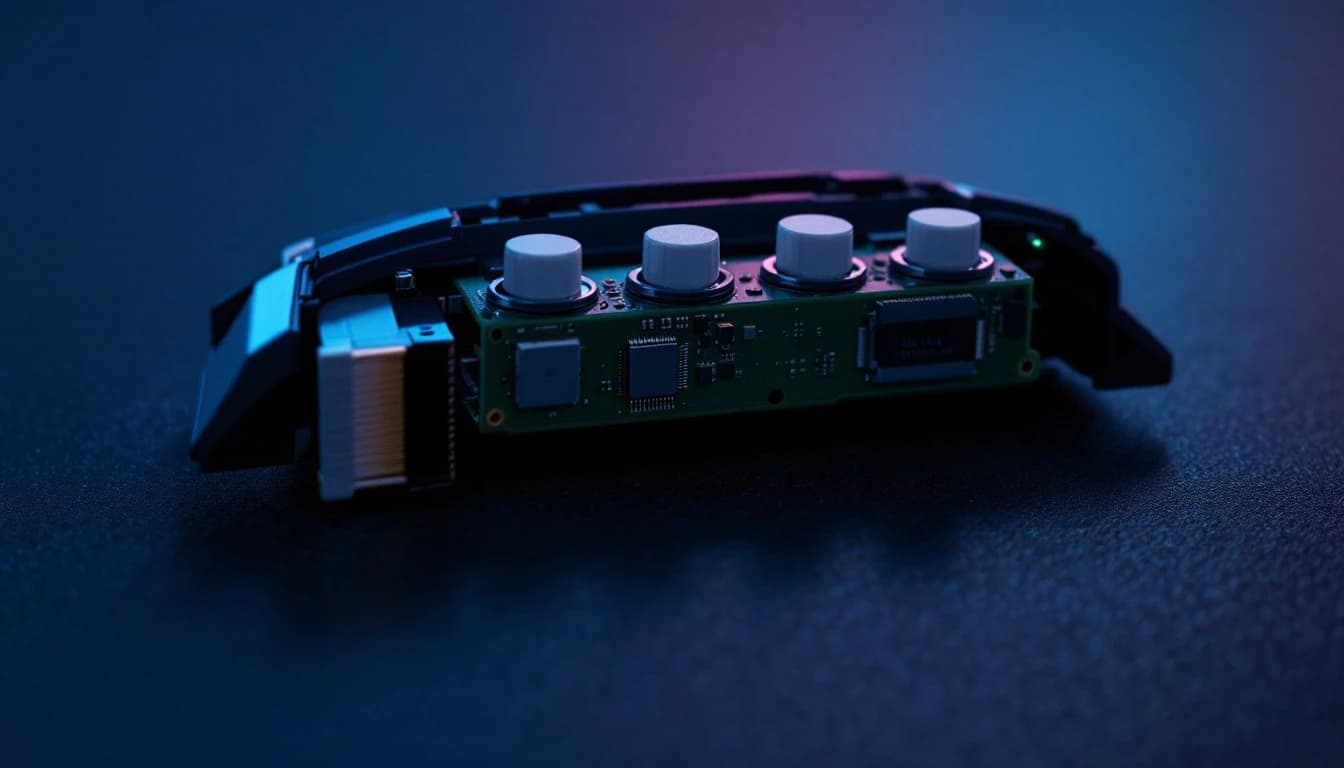
GM Instrument Panel Coded: VIN, Mileage + Theft Deterrent
12 min · August 17, 2026

Instrument Cluster Replacement Programming: VIN, Mileage, Immobilizer Data and Configuration Explained
15 min · July 28, 2026
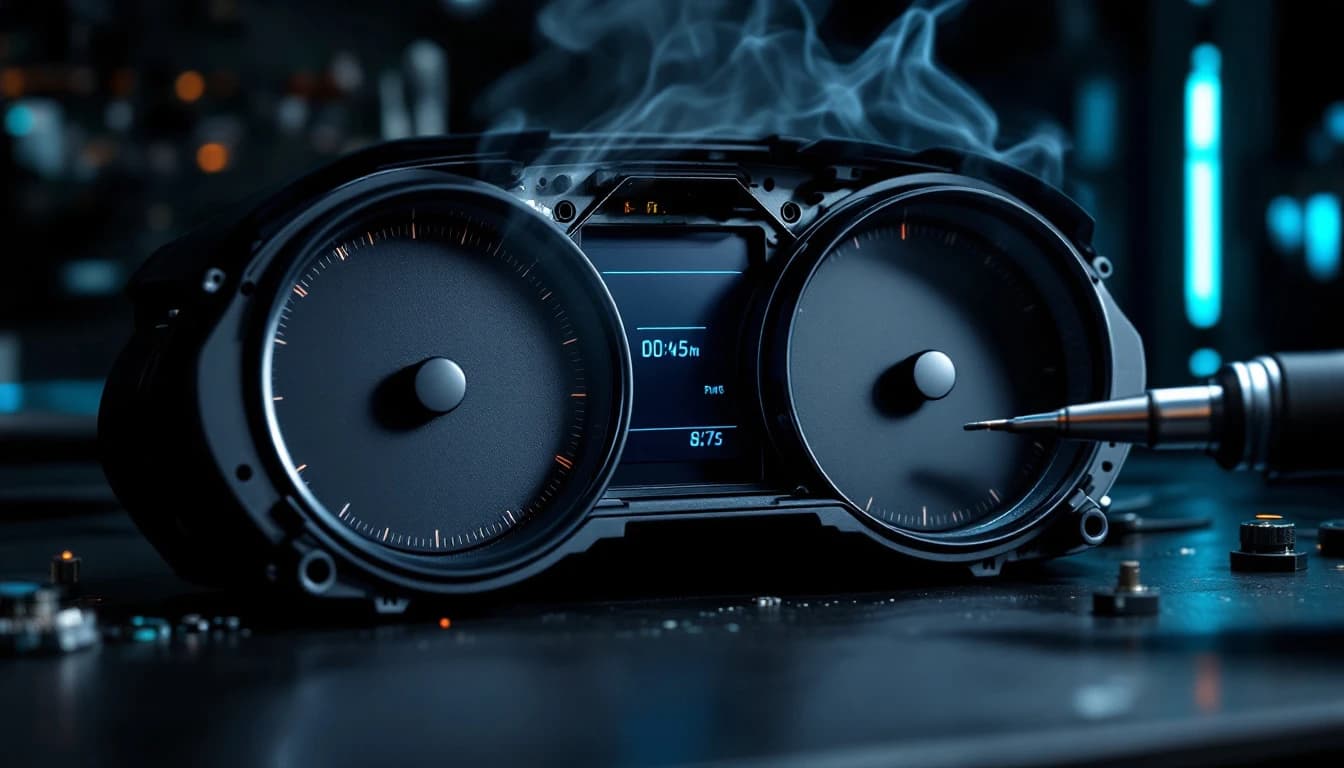
Instrument Cluster Repair: What Is Actually Fixable, What Is Replace-Only, and What It Costs
15 min · July 26, 2026

Instrument Cluster Not Working? Dead Gauges, Black Screen, and No-Communication Diagnosis
13 min · July 13, 2026